For Detroit residents, the arrival of warmer weather signals more than just the end of winter; it marks the beginning of the annual battle against deteriorating pavement. As the freeze-thaw cycle wreaks havoc on asphalt, Detroit road conditions have once again become a central topic of conversation for commuters, city officials, and local mechanics alike. The City of Detroit’s Department of Public Works (DPW) has announced an aggressive strategy to address the pothole crisis while outlining a broader roadmap for long-term infrastructure improvements.
The Current State of Detroit Streets
Driving through Detroit’s neighborhoods and main arteries often feels like navigating an obstacle course. The fluctuation in temperatures over the recent winter months—rapidly freezing and thawing moisture trapped beneath the road surface—has accelerated the formation of potholes across the metro area. While this is a statewide issue in Michigan, the density of traffic in Detroit exacerbates the wear and tear.
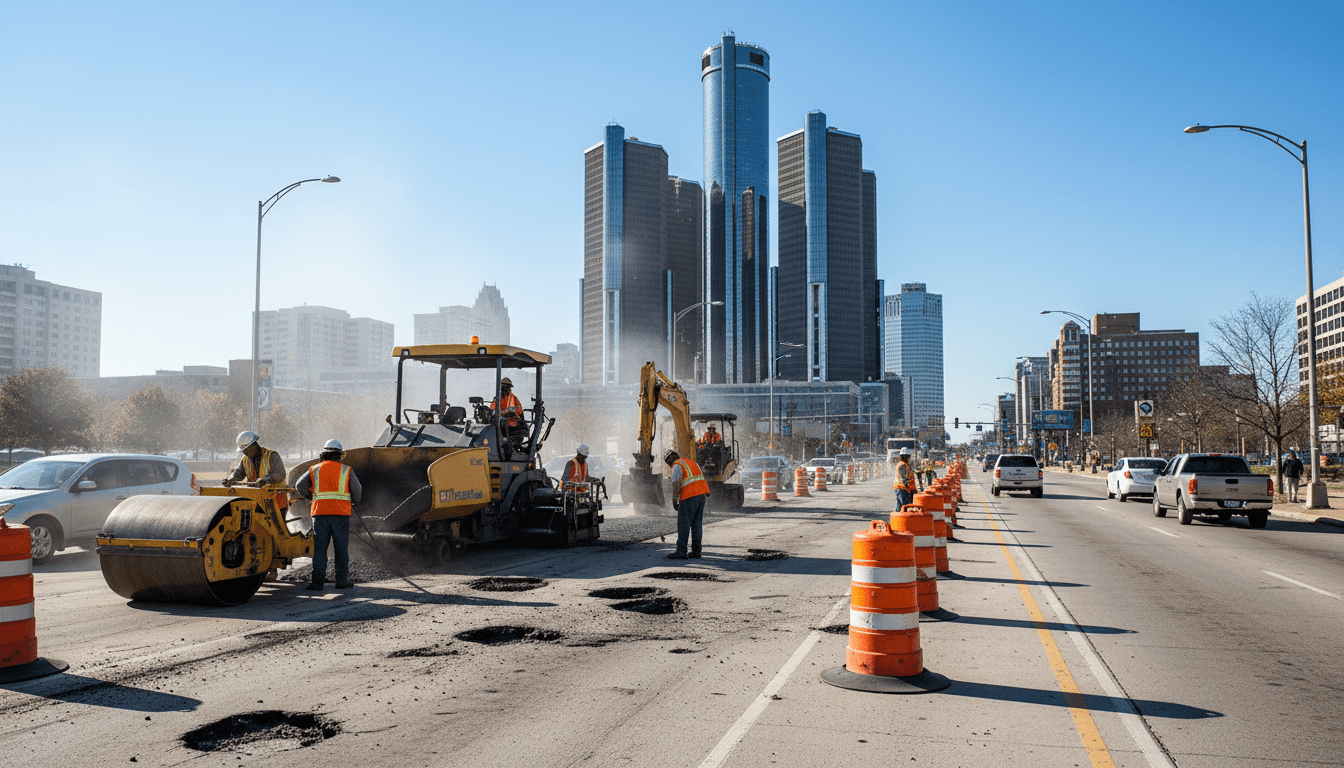
According to data from the City of Detroit Department of Public Works, crews are currently deployed across all seven districts, utilizing thousands of tons of asphalt to patch hazardous areas. Officials have noted that priority is strictly given to main roads with high traffic volume before moving into residential side streets. This triage approach is standard, yet it often leaves neighborhood residents frustrated with the pace of repairs on their specific blocks.
“Our crews are working twelve-hour shifts to address the most dangerous road hazards reported through the Improve Detroit app,” a DPW spokesperson stated in a recent press briefing. “We are transitioning from cold-patch material, which is a temporary winter fix, to hot-mix asphalt as the asphalt plants reopen for the season, which provides a much more permanent solution.”
Impact on Detroit Residents and Commuters
The state of Detroit road conditions has a direct financial impact on the local population. Often referred to as the “pothole tax,” the cost of repairing blown tires, bent rims, and damaged suspension systems can run into hundreds or thousands of dollars annually for daily commuters. In a city where reliable transportation is essential for workforce participation, these unexpected costs can be debilitating.
Local mechanics report a surge in business whenever the roads crumble. “Every spring, we see a 30% to 40% increase in customers coming in with alignment issues and tire blowouts explicitly caused by hitting craters on roads like Mound or 8 Mile,” said a service manager at a repair shop in Midtown.
Beyond the cost to drivers, poor road quality affects public transit efficiency. SMART and DDOT buses are forced to navigate slowly to avoid damaging heavy equipment or injuring passengers, leading to delays in a transit system that residents rely on heavily. For more on how infrastructure affects daily life, read our coverage on Detroit transportation updates and transit reliance.
Understanding the Jurisdiction Confusion
One of the persistent challenges in improving Detroit road conditions is the confusion regarding jurisdiction. Not every road within the city limits is maintained by the City of Detroit.
- City Streets: Maintained by Detroit DPW (mostly residential and some commercial arteries).
- County Roads: Maintained by Wayne County Roads Division (often major thoroughfares connecting suburbs).
- State Highways: Maintained by MDOT (Interstates like I-75, I-94, and roads like Woodward Ave/M-1, Gratiot/M-3).
This fragmentation often leads to delays in reporting. A resident might report a massive pothole on Woodward Avenue to the City of Detroit, only to find out days later that the complaint needed to go to the Michigan Department of Transportation (MDOT). Clarifying these reporting channels is a major focus for local council members this year.
Background & Data: The Budget for Repairs
The funding for road repairs comes from a mix of local taxes, state bond programs, and federal infrastructure grants. Recently, Governor Gretchen Whitmer’s administration highlighted the progress of the “Rebuilding Michigan” plan, which utilizes bond financing to accelerate projects on state trunklines.
However, inside the neighborhoods, the City of Detroit relies heavily on the Strategic Neighborhood Fund and general capital improvement funds. In recent budget proposals, Mayor Mike Duggan has emphasized the need to move beyond patching and towards full resurfacing. Patching is a band-aid; resurfacing is the cure.
Statistics from the Southeast Michigan Council of Governments (SEMCOG) indicate that while the percentage of roads rated in “good” condition has seen marginal improvements due to recent investments, a significant portion of the network remains in “poor” condition. The cost to bring all roads up to a “good” rating is estimated in the billions, a figure that dwarfs the annual maintenance budget.
How to File a Claim for Damages
For drivers who have sustained damage due to poor Detroit road conditions, there is a process to file a claim, though success rates vary.
- Identify the Road Owner: Determine if the road is City, County, or State.
- Document Everything: Take photos of the pothole, the damage to the vehicle, and keep all repair receipts. Police reports can also be helpful.
- File Within Timelines: State law requires that claims against governmental agencies be filed very quickly—often within 45 days of the incident for the state, though timelines vary by municipality.
It is important to note that under Michigan law, the government agency must have been aware of the defect for a period of time and failed to repair it to be held liable. This “notice” requirement makes it difficult for many drivers to successfully receive compensation, but filing is still encouraged by consumer advocacy groups to create a record of the hazard.
What Happens Next?
Looking ahead to the summer construction season, Detroit is slated to begin several major streetscape overhauls. These projects go beyond simple paving; they include widening sidewalks, adding bike lanes, and improving lighting to boost the local business corridors.
Residents are encouraged to download the “Improve Detroit” mobile app to report potholes directly to the DPW. The city claims that geo-tagged reports from the app are the most efficient way to deploy patch crews. As the asphalt plants remain open and the weather stabilizes, the frequency of repairs is expected to double in the coming weeks.
While the frustration of pothole season is a perennial Detroit tradition, the shift toward complete street redesigns offers a glimmer of hope that the long-term trajectory of Detroit’s infrastructure is heading in the right direction.