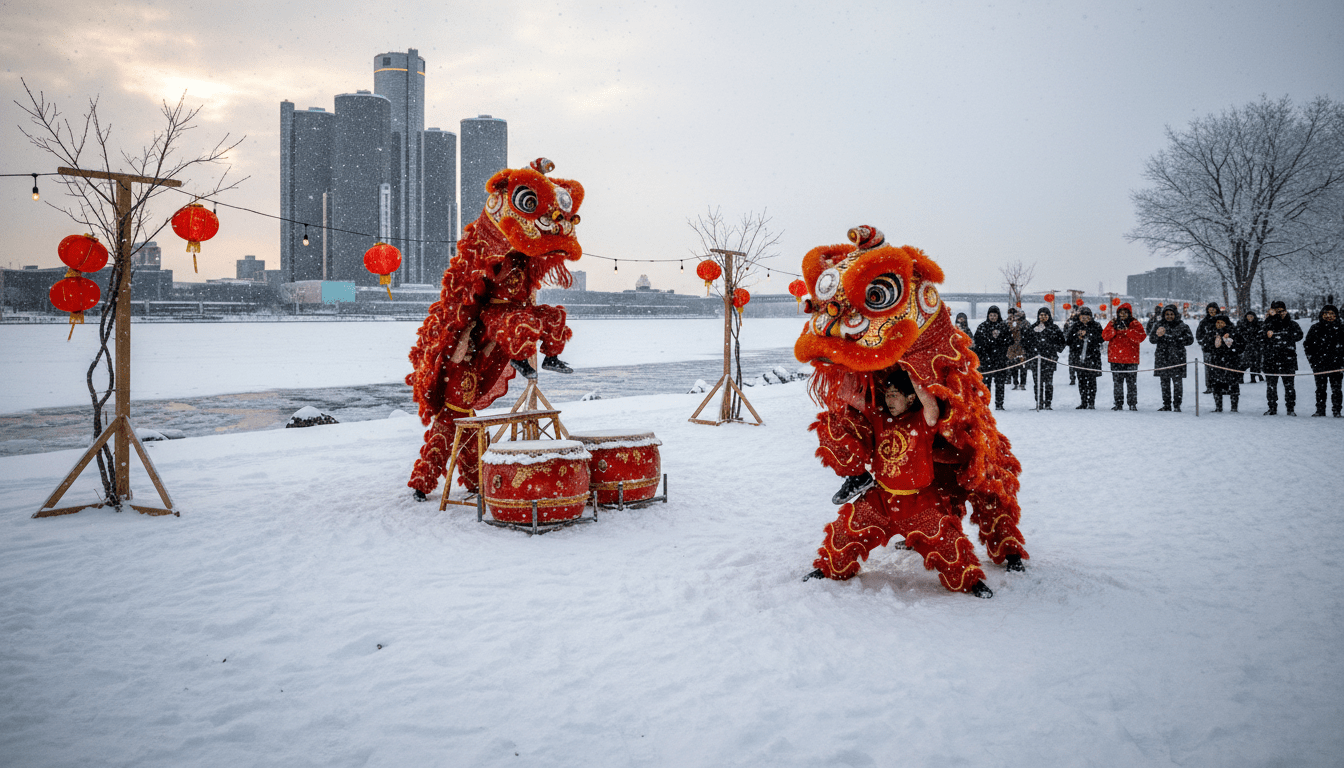
As the winter chill settles over the Detroit Riverfront, the city is preparing to warm up with vibrant displays of red and gold. The Lunar New Year, a holiday celebrated by billions worldwide, is finding an increasingly prominent stage within Detroit’s city limits. Marking the Year of the Snake, 2025 promises a robust lineup of cultural programming that highlights the region’s growing diversity and the enduring traditions of its Asian American communities.
While the suburbs of Madison Heights and Troy have long been the traditional hubs for Metro Detroit’s Asian commercial activity, cultural institutions in downtown and Midtown Detroit are taking significant steps to center these celebrations in the heart of the city. From the Detroit Institute of Arts (DIA) to the Detroit Riverfront Conservancy, local organizations are launching events designed to educate residents and celebrate a demographic that, according to census data, is steadily increasing its footprint in Southeast Michigan.
A Shift to City-Center Celebrations
For decades, many Detroiters traveled north of 8 Mile to participate in major Lunar New Year festivities. However, the Detroit Institute of Arts has become a focal point for bringing these traditions to Midtown. This year, the museum is continuing its tradition of hosting elaborate performances, including the iconic Lion Dance, traditional Korean drumming, and intricate paper-cutting workshops.
According to program organizers at the DIA, the goal is to provide a space where cultural heritage is not just displayed but experienced. The museum’s Great Hall is set to host performances that blend traditional folk arts with contemporary interpretations, reflecting the evolving identity of Asian Americans in the Midwest.
“The Lunar New Year celebration is one of our most energetic weekends of the year,” said a representative from the DIA’s community engagement team. “It allows us to showcase the artistry of local performers and connect Detroit residents with traditions that date back thousands of years.”
Similarly, the Detroit Riverfront Conservancy has integrated diverse cultural programming into its “Winter at Valade” series. While the riverfront is often associated with summer festivals, the winter programming aims to keep Detroiters engaged with public spaces year-round. Elements of Lunar New Year traditions, including lantern displays and cultural food vendors, have become part of the broader winter strategy to activate the riverwalk.
Impact on Detroit Residents and Culture
The visibility of Lunar New Year Detroit events serves a dual purpose: cultural education for the broader public and a sense of belonging for the Asian American community living within the city. For local residents, these events offer an accessible way to engage with neighbors’ traditions without leaving the city limits.
Community leaders emphasize that these celebrations are about more than just spectacle; they are about representation. The presence of high-profile events in downtown Detroit signals a recognition of the Asian American contribution to the city’s history and future. This is particularly poignant given the historical context of Detroit’s Chinatown, which was displaced decades ago by highway construction and urban renewal projects.
“Seeing the Lion Dance performed in front of the Detroit skyline is powerful,” said a spokesperson for the Association of Chinese Americans (ACA), which serves the Metro Detroit area. “It reminds the community that our culture is part of the fabric of this city.”
For more on how local festivals influence neighborhood cohesion, read our coverage on Detroit community festival impacts.
Economic Opportunities for Local Business
Beyond the cultural significance, the Lunar New Year period drives economic activity. Local restaurants, particularly in the Cass Corridor and areas bordering Midtown, often see an uptick in traffic as residents seek out celebratory meals. The holiday is traditionally associated with foods symbolizing luck and prosperity, such as dumplings and noodles.
Restaurateurs in the city are increasingly offering special menus to coincide with the holiday. This alignment allows small business owners to capitalize on the foot traffic generated by institutional events at the DIA and the Historical Museum.
Data from the Detroit Small Business Economic Report suggests that cultural heritage months and major holidays provide critical revenue spikes for independent hospitality businesses during the slower post-holiday winter months. By coordinating with city-wide events, these businesses can extend the holiday spending season well into February.
Background and Demographics
The expansion of Lunar New Year programming aligns with demographic shifts across Michigan. According to data from the U.S. Census Bureau, the Asian population in Michigan grew by nearly 30% between 2010 and 2020. While much of this growth occurred in Oakland and Washtenaw counties, Wayne County and the City of Detroit are seeing a renewed interest in retaining and attracting diverse populations through inclusive cultural policies.
The Year of the Snake, which officially begins on January 29, 2025, is associated with wisdom, charm, and intuition in the Chinese zodiac. It follows the Year of the Dragon, which brought high energy and large-scale events. Organizers anticipate a more reflective but equally engaging atmosphere for the 2025 celebrations.
Historically, Detroit’s engagement with this holiday was fragmented. Today, coordination between the City of Detroit’s Office of Arts, Culture, and Entrepreneurship (Detroit ACE) and various non-profits has helped streamline promotion, ensuring that residents across all neighborhoods are aware of the festivities.
What Happens Next
As Detroit continues to develop its cultural infrastructure, residents can expect the scale of these celebrations to grow. Discussions are ongoing among community groups regarding the potential revitalization of a designated cultural district or marker acknowledging the history of Detroit’s Chinese American community near the Peterboro area.
For the immediate future, Detroiters looking to participate in the Year of the Snake festivities are encouraged to check the schedules of the Detroit Institute of Arts and the Detroit Historical Museum. As the city pushes to become a year-round destination for culture, the integration of global traditions like the Lunar New Year plays a vital role in defining a modern, inclusive Detroit.