As 2026 begins, the Detroit housing market remains at a critical crossroads. After nearly a decade of post-bankruptcy resurgence, the city’s real estate landscape has transitioned from a period of rapid speculative growth to one defined by sustained, though more moderate, appreciation. While the days of thousand-dollar abandoned properties are long gone, the central question for residents and investors alike is whether the current price trajectory is sustainable for the average Detroiter.
Data from the Southeast Michigan Council of Governments (SEMCOG) suggests that while the feverish pace of price hikes seen in the early 2020s has cooled, Detroit homes are still gaining value. This growth is driven by a combination of limited inventory in desirable neighborhoods and a steady influx of professionals drawn to the city’s strengthening employment hubs. However, this upward trend is also placing new pressures on the city’s long-term inhabitants and the affordable housing sector.
The Current State of Michigan Real Estate
The broader Michigan real estate market has seen a cooling effect due to nationwide economic shifts, yet Detroit continues to outpace many of its suburban counterparts in terms of percentage growth. According to reports from the City of Detroit Housing and Revitalization Department, the median sale price for single-family homes in neighborhoods like Bagely, University District, and East English Village has seen a 5% year-over-year increase as of early 2026.
This growth is not uniform across the city. While the core areas of Midtown and Downtown have reached a saturation point with high-end luxury rentals and condos, the “middle neighborhoods” are seeing the most significant activity. In these areas, property trends indicate a shift toward owner-occupancy rather than investor-led flipping. This change is partly attributed to city-led initiatives that prioritize local buyers over out-of-state corporate landlords.
Impact on Detroit Residents
For local residents, the rising Detroit housing market is a double-edged sword. On one hand, long-term homeowners who stayed through the city’s toughest years are finally seeing significant equity growth. This wealth accumulation is a vital component of the city’s economic recovery strategy. Many residents are utilizing this equity to fund home repairs or support local businesses, creating a circular economic benefit within the community.
On the other hand, the increase in home prices Detroit has experienced is making it increasingly difficult for first-time buyers to enter the market. “We are seeing a narrowing window for middle-income families,” noted a representative from a local housing non-profit. “While programs like the Detroit Down Payment Assistance Program have helped, the gap between wages and housing costs is a growing concern for the municipal government.”
Renters are also feeling the squeeze. As property values rise, so do property taxes, which are often passed down from landlords to tenants. To combat this, the city has doubled down on the Strategic Neighborhood Fund, which aims to preserve affordability while still encouraging private investment in under-served corridors.
Supply, Demand, and New Construction
One of the primary drivers of the 2026 price stability is the chronic lack of inventory. The U.S. Census Bureau data indicates that while Detroit’s population has stabilized, the number of move-in-ready homes has not kept pace with demand. Much of the city’s housing stock consists of aging structures that require significant capital to bring up to modern building codes.
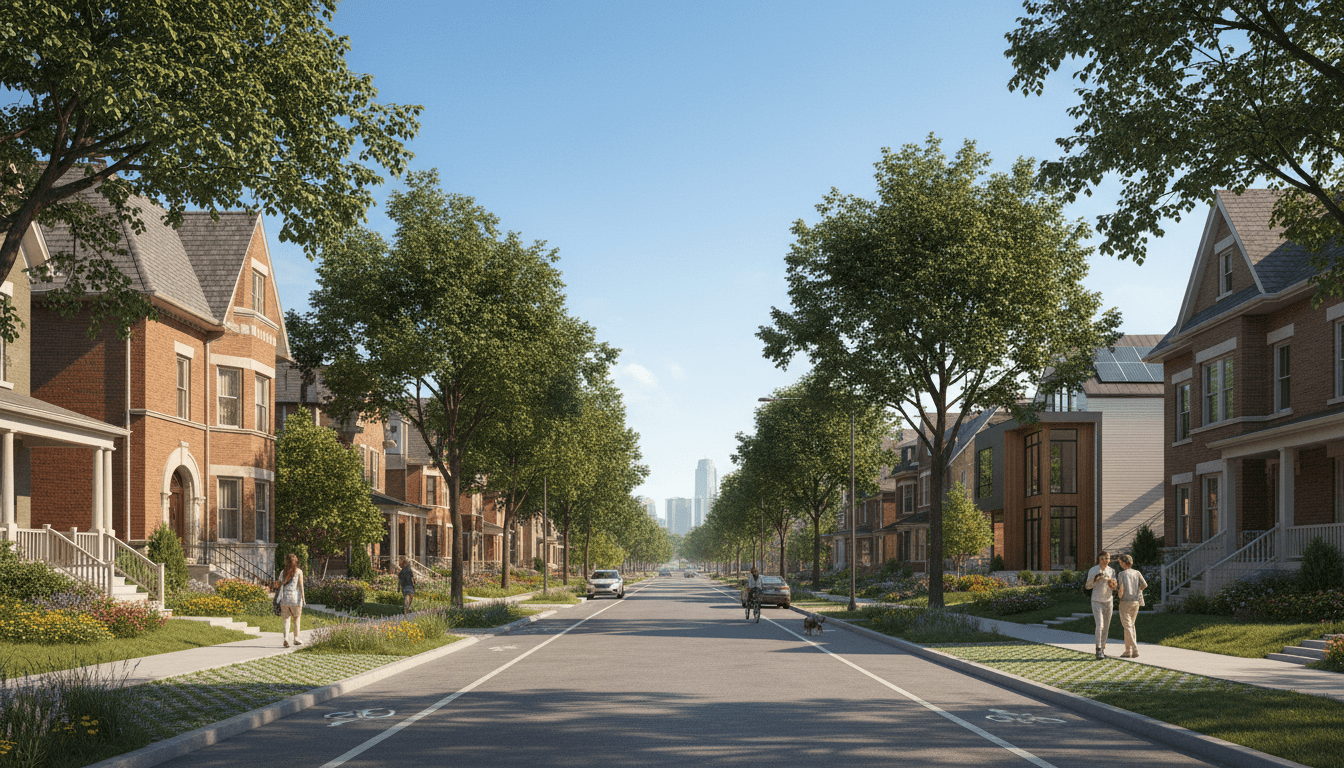
In response, 2026 has seen a surge in “infill” housing—new construction built on formerly vacant lots within established residential blocks. These projects, often supported by the Detroit Land Bank Authority, are designed to blend with the existing architecture while providing energy-efficient options for modern buyers. These new builds are setting new price ceilings in neighborhoods that hadn’t seen new construction in over fifty years.
Background & Data: Understanding the Shift
To understand the 2026 Detroit housing market, one must look at the historical context provided by the S&P CoreLogic Case-Shiller Index. Historically, Detroit was one of the last major American cities to see a recovery after the 2008 financial crisis. This late-start recovery meant that the city had more room for growth when other markets were already peaking. According to the City of Detroit, the focus has now shifted from “stabilization” to “quality of life,” with investments in parks, streetscapes, and commercial strips directly correlating with property value increases in adjacent residential zones.
What Happens Next?
Looking toward the remainder of 2026 and into 2027, experts expect the Detroit housing market to remain resilient. The city’s diversified economy—no longer solely dependent on the automotive industry but bolstered by tech, healthcare, and green energy—provides a more stable foundation for real estate than in previous decades.
However, the city’s ability to maintain this momentum will depend on its success in addressing the “appraisal gap.” In many neighborhoods, the cost of renovating a home still exceeds its eventual market value. Continued intervention from state and local government will be necessary to bridge this gap and ensure that the Michigan real estate recovery reaches every corner of the city. For now, the Detroit housing market remains a beacon of urban revitalization, offering a unique mix of historical charm and modern potential that continues to attract a new generation of Detroiters.