As temperatures begin to rise across Southeast Michigan, the City of Detroit is accelerating its investment in public green spaces, signaling a robust season for Detroit outdoor activities. The administration has recently moved forward with several high-profile infrastructure projects designed to connect neighborhoods and improve access to the city’s natural resources. From the ongoing expansion of the Joe Louis Greenway to the revitalization of smaller neighborhood parks, the city’s landscape is undergoing a transformation aimed at enhancing the quality of life for residents and visitors alike.
The Expansion of the Joe Louis Greenway
Central to the city’s strategy for increasing Detroit outdoor activities is the Joe Louis Greenway, a planned 27.5-mile loop that will eventually connect Detroit, Hamtramck, Highland Park, and Dearborn. According to the City of Detroit General Services Department, the project is moving into critical phases of construction this spring. The greenway is not merely a bike path; it is designed as a multi-use trail system that provides safe passage for commuters and recreational space for families.
City officials have noted that the project is a cornerstone of the city’s long-term development goals. By repurposing abandoned rail corridors and underutilized city land, the project aims to create a continuous ribbon of parkland. The latest updates from the city indicate that several new segments are slated for completion later this year, providing more residents with direct access to non-motorized transportation options and outdoor exercise spaces. This development is part of a broader trend in Detroit neighborhood growth that prioritizes walkability and community connectivity.
Riverfront Revitalization and Spring Programming
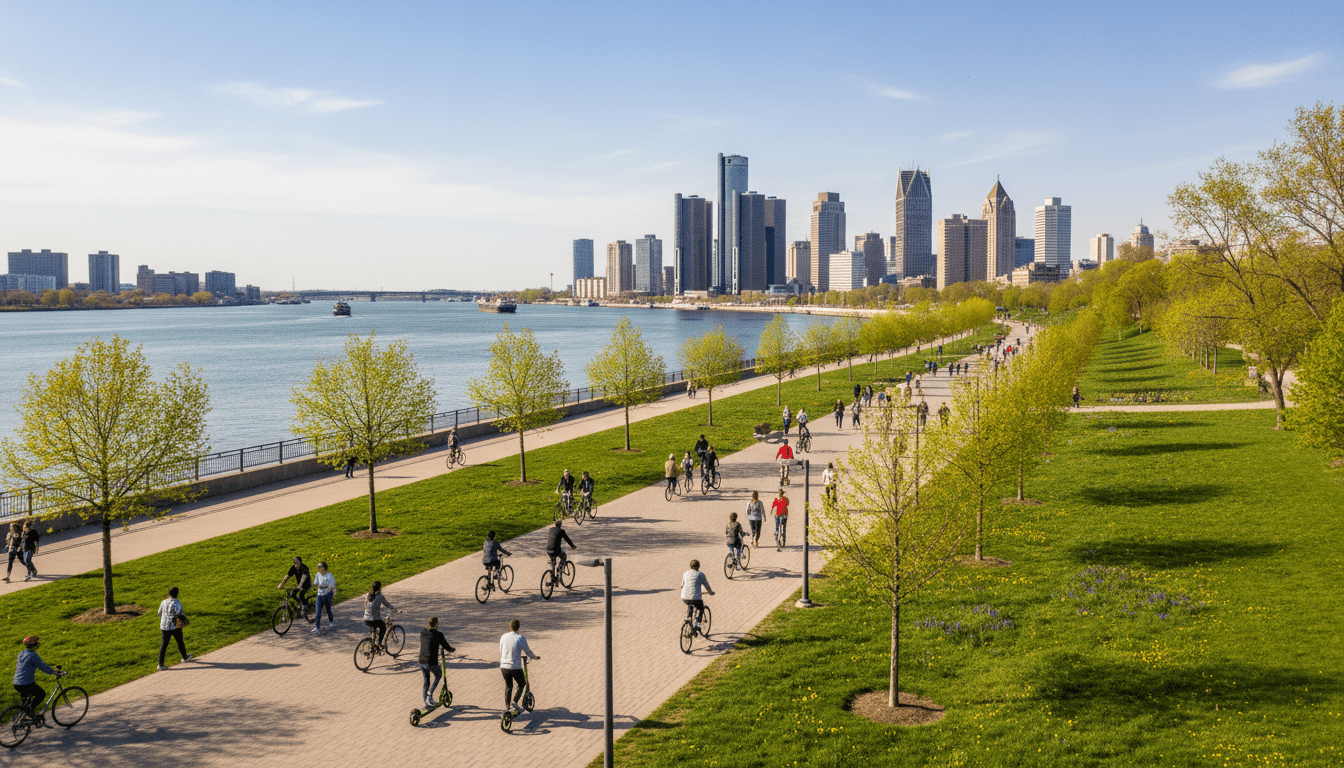
Parallel to the inland greenway projects, the Detroit Riverfront Conservancy continues its work on the award-winning Riverwalk. Consistently ranked as one of the best riverwalks in the United States, the area is preparing for a surge in visitors as spring activities commence. The Conservancy recently reported that major progress has been made on the Ralph C. Wilson, Jr. Centennial Park, a 22-acre site on the West Riverfront that will feature large-scale play structures and gathering spaces.
Data from the Detroit Riverfront Conservancy suggests that the riverfront attracts millions of visitors annually, contributing significantly to the local economy. For those seeking Detroit outdoor activities this spring, the riverfront offers everything from yoga classes to organized walking tours. The integration of these spaces with the city’s transportation network remains a priority. Recent transportation updates highlight the city’s effort to make these recreational hubs more accessible via public transit and bike-share programs.
Impact on Detroit Residents and Health Equity
The expansion of parks in Detroit is about more than just aesthetics; it is a matter of public health and equity. Historically, certain neighborhoods have lacked adequate access to well-maintained green spaces. According to a report by the Trust for Public Land, access to parks is a key indicator of community health. The city’s Strategic Neighborhood Fund has been instrumental in addressing these disparities, funneling millions into the renovation of parks such as Patton Park and O’Hair Park.
Local residents have already begun to see the benefits. For many families, these renovations provide a safe environment for children to play and for seniors to remain active. The inclusion of new lighting, upgraded playground equipment, and paved walking paths has made these areas more usable during the spring and summer months. Public health experts suggest that increasing the availability of outdoor things to do in Detroit can lead to lower rates of chronic illness and improved mental health outcomes for urban populations.
Background and Funding Data
The funding for these ambitious recreation projects comes from a variety of sources, including federal grants, philanthropic donations, and city tax revenue. According to the Detroit Parks and Recreation Department, the city has utilized a significant portion of American Rescue Plan Act (ARPA) funds to clear a backlog of park maintenance and to launch new construction initiatives. This infusion of capital has allowed the city to move faster than previously anticipated.
In addition to federal funds, the Michigan Department of Natural Resources (MDNR) has provided several Land and Water Conservation Fund grants to assist with land acquisition and trail development. These state-level partnerships are crucial for the sustainability of the city’s park system. The MDNR has emphasized that Detroit’s recreation plan serves as a model for other post-industrial cities looking to leverage their natural geography for economic and social revitalization.
What Happens Next: Future Outlook
As the construction season picks up, residents can expect to see more ribbon-cutting ceremonies across the city. The General Services Department has indicated that several smaller park improvements will be completed by the early summer, specifically focusing on athletic fields and community gardens. These localized projects ensure that the benefits of the city’s investment are felt in every zip code, not just the downtown core.
Looking forward, the city is also exploring new ways to maintain these spaces. Partnerships with local non-profits and neighborhood associations are being strengthened to ensure that the parks remain clean, safe, and vibrant throughout the year. As Detroit continues to reinvent itself, the focus on outdoor recreation remains a central pillar of its identity, offering a greener and more active future for all Detroiters.