For Detroit sports fans, the question has become familiar: are the Detroit Lions still NFC North favorites? With each week shifting expectations, conversations across Metro Detroit—at watch parties, in barbershops, and on local sports radio—have focused less on where the Lions started the season and more on where they stand now in a crowded NFC North race.
On the field, the Lions’ case for contention is rooted in their overall identity: competitiveness in close games, an offense that can generate stretches of production, and a defense that has shown moments of disruption. But the debate reflects a broader reality in the division—standings can swing quickly, and a “favorite” label can become outdated within days.
The question matters beyond bragging rights. In a city where NFL success can change the volume of local commerce and civic conversation, whether the Lions are “favorites” can shape fan energy—and influence how residents plan Sundays, where they spend money on game days, and which storylines dominate Detroit’s sports headlines.
Main Section: The NFC North debate and the meaning of “favorite”
Calling a team an NFC North favorites contender usually blends several factors: win-loss performance, strength of schedule, injuries, and whether a club has the kind of margin that holds up late in the season. In public debate, the label often becomes shorthand for “who looks most likely to win the division” or “who is most equipped for the playoffs.”
Analysts frequently point to the AFC and NFC playoff picture as the bigger constraint: a team doesn’t just need to finish first in the division; it also has to earn the right kind of postseason positioning. According to data compiled by Pro Football Reference, playoff probabilities rise and fall with both conference results and how head-to-head tiebreakers play out—meaning a team’s “favorite” status is always conditional.
But the Lions debate in Detroit has also turned toward the practical: how the team has performed in high-leverage moments, and whether the roster has the depth to maintain execution when opponents adjust. Even supporters who believe in the Lions playoff chances often talk about what it takes to sustain drives, protect the ball, and limit big plays—issues that can separate contenders from the rest of the field over the long haul.
That’s where fans in Detroit football debate tend to diverge. Some argue the Lions remain the standard because they have the most complete pathway to the postseason: a formula that combines scoring efficiency, physical defensive matchups, and a consistent ability to compete against top-tier opponents. Others say the division’s parity is the main problem—if multiple teams keep winning, the “favorite” label is less reliable, and every game becomes an audition for the final seeds.
Local sports media coverage mirrors that tension. When standings tighten, public conversation shifts from “can they make it?” to “can they finish?”—especially once teams enter stretches where division games can function like playoff games.
What the NFC North standings are really saying right now
While fans often focus on who sits atop the NFC North standings, the more informative indicators tend to include:
- Head-to-head outcomes against division rivals, which can matter in late-season tiebreaker scenarios.
- Road performance, particularly against playoff-bound opponents.
- Turnover margins and penalty trends, since these can swing close games and affect scoring differential.
- Injury impacts, especially at quarterback, offensive line depth, and defensive coverage roles.
Those components help explain why the Detroit Lions NFL conversation is dynamic. Even if Detroit is competitive, the division’s teams can trade wins in ways that change the math quickly—making the “favorites” argument feel different each week.
Impact on Detroit Residents: game-day spending, community energy, and local businesses
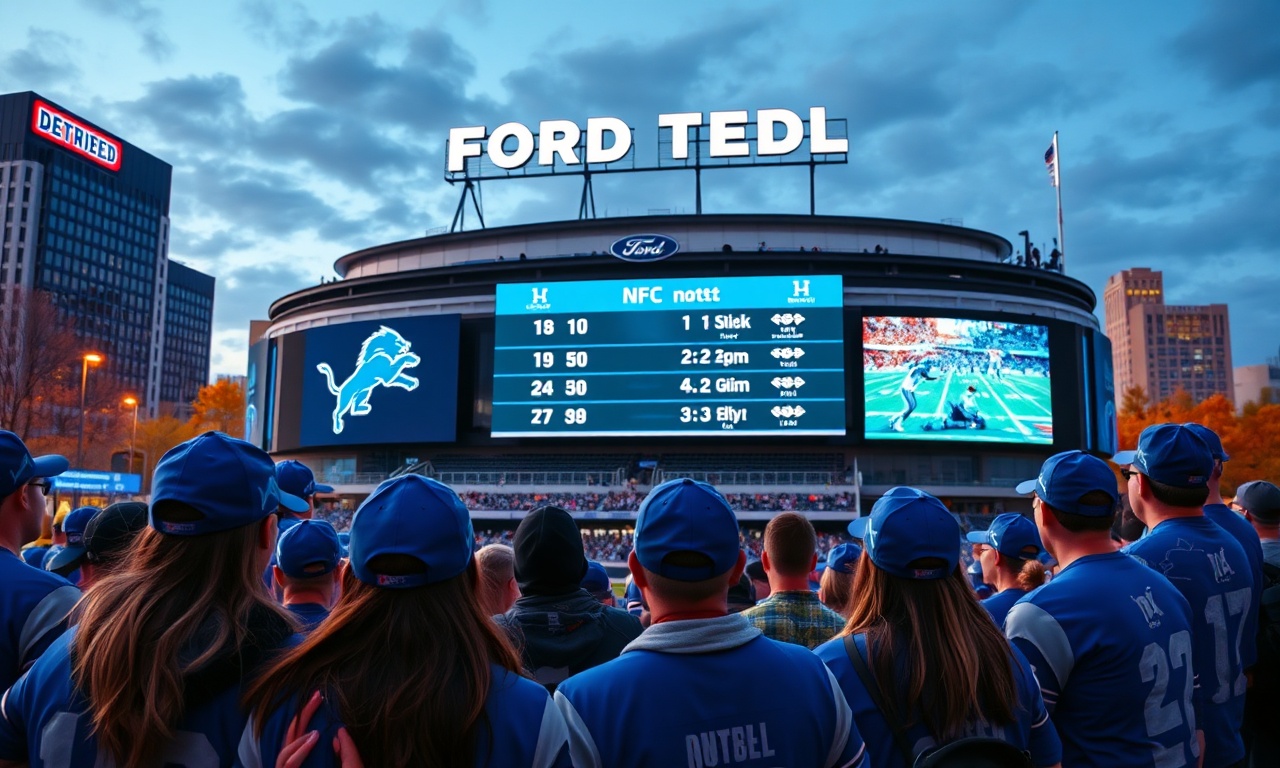
In Detroit, NFL seasons aren’t just entertainment—they’re also economic touchpoints. When Lions games go well, the city’s social calendar expands. More residents plan outings, and local businesses see demand from groups looking for food, drink, and televisions for shared viewing.
According to the U.S. Bureau of Labor Statistics, service-sector categories tied to leisure and hospitality track consumer spending patterns over time. While BLS data is broad and not specific to any single team, it underscores a key point for Detroit residents: game-day activity can move foot traffic for restaurants, bars, and retail during peak weekends.
“We notice more game-day traffic when the Lions are playing meaningful football,” said a manager at a local Detroit-area sports bar, who requested anonymity due to company policy. The manager described how fan turnout can increase not only on Sundays but also when Detroit’s schedule creates heightened stakes.
That local effect is part of why the Lions debate carries extra weight in Detroit. If fans believe the Lions are still NFC North favorites, watch parties often feel more urgent and more widely scheduled. If fans feel the division is slipping away, community gatherings can shift toward viewing with a more cautious tone.
It’s also visible in neighborhoods across the city and suburbs—where residents balance the cost of outings with the desire to celebrate. In practice, the “favorites” conversation can influence whether people treat games as routine entertainment or as must-attend events.
Background & Data: why “favorite” is hard to sustain in the NFL
“Favorite” status is rarely stable in the NFL because outcomes are heavily shaped by short-term factors: injuries, matchup styles, and weekly execution. The Lions’ supporters point to resilience as a key indicator—performance trends that show the team can regroup after setbacks.
Still, the broader NFC North environment tends to reward consistency. Teams in the division often prepare intensely for one another, and by late season, each game can compress the margin for error. That makes the Lions playoff chances conversation more complicated than it looks in preseason projections.
For Detroit residents trying to gauge whether Detroit is still in the top tier, one useful reality check is to view odds and standings together. Public-facing models and probability tools—such as those referenced by major sports outlets—tend to update weekly. In other words, NFC North favorites can change not just because Detroit performs differently, but because rivals do.
On the civic side, the Detroit Lions remain a high-visibility institution for the city’s sports culture. Whether the team wins the division or fights for a wild-card spot, the result influences how Detroit talks about itself nationally. For some fans, it’s also intertwined with stadium-era identity and the long arc of football in a city that has waited for sustained success.
In that context, the debate isn’t simply about optimism. It’s about interpreting signals: can Detroit keep its strengths while minimizing the mistakes that allow opponents to seize momentum?
What Happens Next: key checkpoints for Detroit’s “favorite” argument
As the season continues, fans will likely keep asking the same question, but the way to answer it in practice will be clearer after a few critical checkpoints:
- Division-game results: wins against NFC North opponents tend to strengthen the Lions’ claim to be favorites.
- Late-game performance: fourth-quarter scoring, defensive stops, and turnover discipline often decide close weeks.
- Health and roster depth: the ability to absorb injuries without significant drop-off can separate contenders.
- Momentum into the postseason: the Lions’ playoff position matters, not only the final division rank.
If Detroit separates from the pack in the NFC North standings, the “favorites” label will likely return with renewed confidence. If the division remains tight, fans may keep treating the Lions as one of several contenders—still serious, but not unquestionably favored.
For now, Detroit’s NFL debate shows what sports fans already know: in the Detroit Lions NFL story, the question changes with the scoreboard. The city’s faith is steady, but the math is always moving—and that’s exactly why the discussion is still happening.
Bottom line for Detroit residents
Whether the Detroit Lions are still NFC North favorites may come down to the next few outcomes—especially against division rivals and in games that test execution under pressure. For Metro Detroit, the stakes extend beyond the standings: they’re also felt in game-day routines, local business traffic, and the collective mood that surrounds Sunday football.