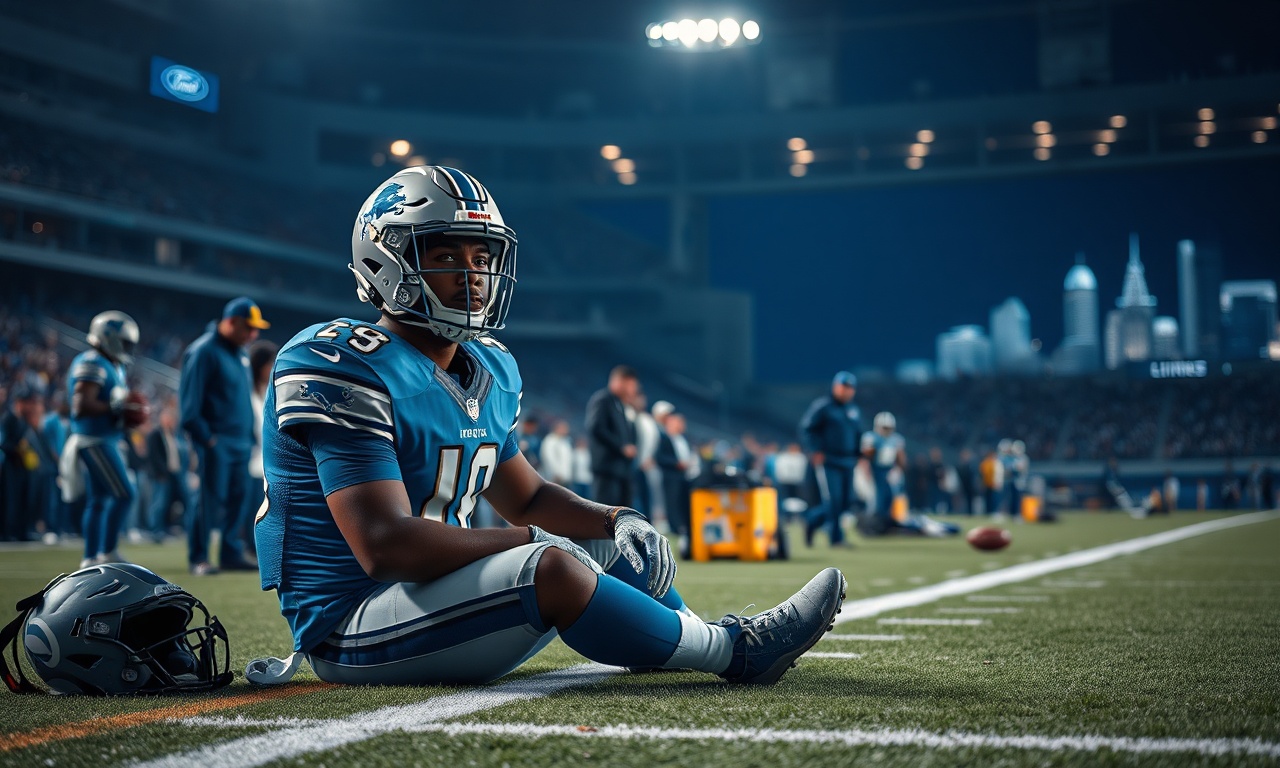
The Detroit Lions said Kerby Joseph will not undergo knee surgery, according to a recent update that provides clarity for fans following a midseason knee injury. The news comes as the team continues to balance performance goals with the need for proper recovery, and it may influence how Detroit manages its defensive secondary over the next stretch of the NFL calendar.
As part of the Detroit sports news cycle, the no surgery update is being closely watched by both fans and local broadcast partners because it affects practice availability, roster usage, and game-day expectations. For a Lions organization that has emphasized continuity and depth in recent seasons, even small changes to a player’s treatment plan can ripple through the defensive preparation process.
What the no-surgery update means for Joseph’s timeline
While details of a player’s medical plan are often limited for privacy and competitive reasons, the core message for Detroit supporters is straightforward: Kerby Joseph won’t have knee surgery, suggesting the team believes conservative treatment and rehab are sufficient to restore function. In the NFL, that distinction can matter because surgery can extend recovery windows and require a structured return-to-play process before full participation.
The Lions’ communication to the public aligns with how teams typically approach orthopedic decisions, according to sports medicine guidance. The American Academy of Orthopaedic Surgeons (AAOS) notes that many knee injuries can be managed with physical therapy and nonoperative care, depending on the specific diagnosis and severity. In practice, clinicians evaluate factors such as stability, range of motion, pain response, and imaging results before recommending whether surgery is necessary.
In this case, the knee injury appears to be trending toward a rehabilitation-focused approach rather than an operating-room plan, meaning Joseph’s availability will likely hinge on day-to-day progression rather than a single post-surgical milestone.
How the Lions may adjust defensively in Detroit
From a football operations standpoint, the Lions’ coaching and training staff will likely use the coming practices to determine Joseph’s role and workload. Even without surgery, knee rehabilitation commonly requires careful monitoring—especially for players who rely on quick lateral movement, acceleration, and tackling angles.
That matters because Detroit’s defensive schemes typically place high demands on defensive backs’ positioning and timing. If Joseph is limited early in the return, the coaching staff may shift responsibilities among safeties and cornerbacks, adjust coverage shells, or emphasize different matchups depending on the week’s opponent.
According to the NFL’s official injury report framework, teams must designate players’ statuses leading up to games, which can include designations such as “questionable,” “doubtful,” or “out.” The Lions’ final week-by-week participation decisions will be reflected on that NFL injury report as the organization updates Joseph’s practice status.
Local Detroit fans often interpret these designations as signals about how close a player is to returning to full-contact action. However, the Lions’ approach here underscores that “no surgery” doesn’t automatically mean “ready immediately”—instead, it typically indicates that treatment aims to restore mobility and strength without the added recovery time that follows surgery.
Impact on Detroit residents: more than just game coverage
For Detroit residents, a player update like the Joseph decision can influence more than Sundays at Ford Field. Detroit’s sports ecosystem—media schedules, ticket sales dynamics, and local fan events—often responds quickly to changes in injury status. When a key defensive piece is expected to avoid surgery, it can reduce uncertainty around upcoming matchups, which in turn affects how local partners plan programming.
At the community level, the Lions’ roster decisions also play a role in youth football participation and local sports programming. In many Detroit-area neighborhoods, high school and youth coaches use NFL examples to teach fundamentals and resilience. A “no surgery update” can serve as a talking point about recovery and the importance of training staff-led rehab, reinforcing that long-term health planning matters.
It also highlights the broader reality of sports medicine and infrastructure in the region. Detroit is home to leading healthcare systems and specialized physical therapy providers, and the Lions’ injury management draws attention to the connectivity between pro athletics and local medical expertise. While fans won’t see Joseph’s internal rehabilitation schedule, the public-facing decision to avoid surgery underscores the value teams place on nonoperative treatment pathways when appropriate.
Background & data: how teams decide on surgery vs. rehab
Knee injuries are common in football, and the course of treatment depends on the underlying diagnosis—such as ligament involvement, meniscus injury, cartilage damage, or tendon strain. The AAOS emphasizes that clinicians often consider both the patient’s symptoms and the structure of the knee as seen through examination and imaging. In some scenarios, targeted physical therapy can address strength and stability deficits without surgery.
For NFL teams, the practical objective is also to minimize time away from full participation while keeping long-term risk in mind. According to the AAOS, knee rehabilitation programs typically focus on restoring range of motion, improving muscle strength (particularly around the quadriceps and hamstrings), and regaining neuromuscular control. Those steps can be essential for athletes returning to the stop-and-start demands of the secondary.
From Detroit’s perspective, the Lions’ decision not to pursue surgery with Joseph points to a medical assessment that conservative care may be enough at this stage. Still, teams remain cautious because knee pain and functional limitations can fluctuate during recovery, and a premature return can increase the risk of setbacks.
What happens next for Kerby Joseph and the Lions’ roster
Next, the Lions’ focus will center on Joseph’s practice participation, which will be updated through the team’s weekly reporting process and the NFL injury report. For fans, the most meaningful indicators will include whether Joseph can progress from limited sessions toward full practices and how he performs in drills tied to his typical defensive responsibilities.
Detroit coaches and athletic trainers will also coordinate with game-week preparation to determine how Joseph fits into coverage assignments and special teams roles, if applicable. If he returns in phases, expect continued emphasis on workload management—especially in practices that simulate live tackle angles and high-speed movement.
Should Joseph continue to avoid surgery, the coming weeks could offer a clearer window into his availability without requiring a post-operative timeline. But until his participation status reaches full practice and game readiness, the Lions will likely maintain depth plans to protect defensive performance.
For now, the message for Detroit supporters is one of cautious optimism: Kerby Joseph won’t have knee surgery, and the team appears prepared to move forward with rehab. As the season progresses, that decision will be reflected in weekly practice designations, team announcements, and the ongoing Detroit sports news updates that fans track to understand who’s in and who’s out at game time.