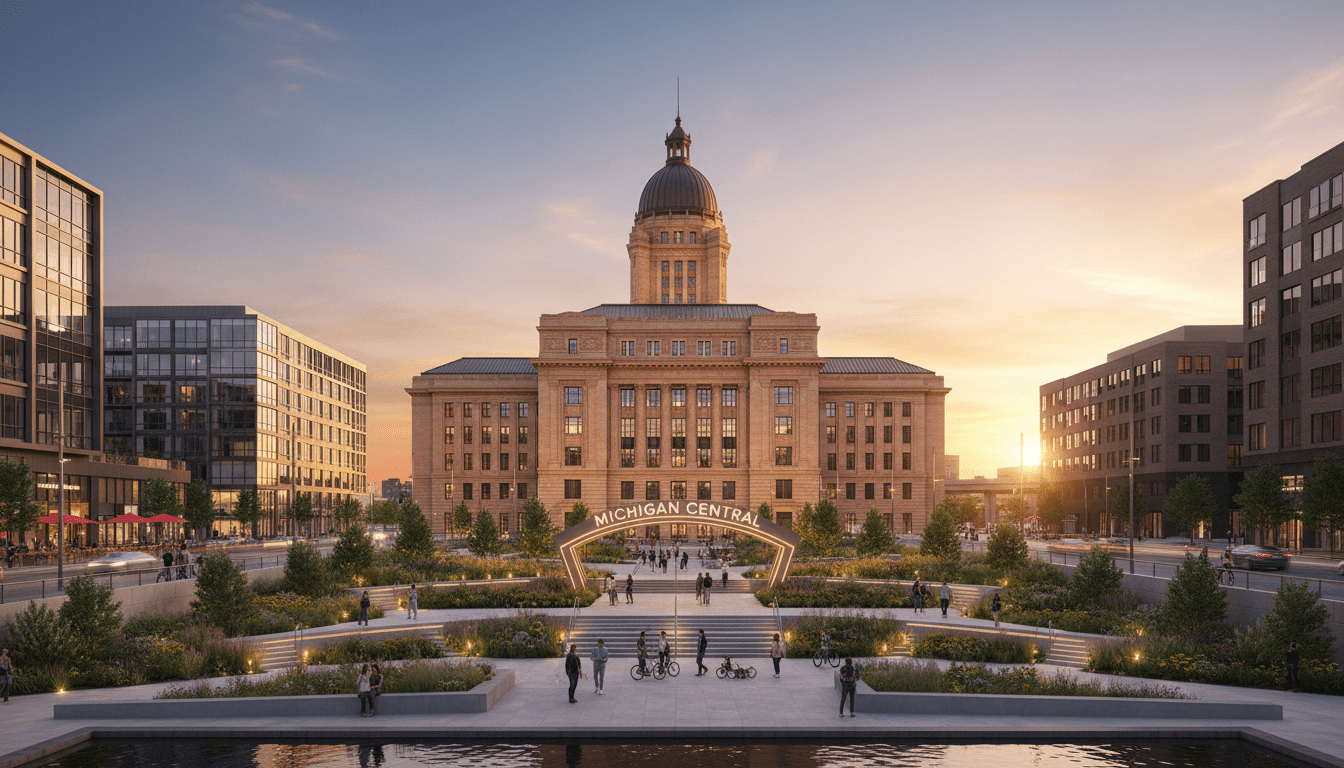
The reopening of Michigan Central Station in Detroit’s Corktown neighborhood has signaled more than just the restoration of a historic landmark; it has served as a catalyst for a sweeping economic shift that is reverberating across the city. Since Ford Motor Company completed the $950 million restoration of the long-vacant train depot, the surrounding district has become a focal point for global technology investment, infrastructure modernization, and a rapidly changing residential real estate market. This Detroit Corktown redevelopment initiative represents one of the most significant private-public partnerships in the city’s history, aiming to position Detroit as a global leader in mobility and innovation.
The Anchor of Innovation: Ford’s Vision for Michigan Central
For decades, the skeletal remains of Michigan Central Station stood as a symbol of Detroit’s industrial decline. Today, the 30-acre campus is designed as a mobility innovation district. According to data released by Ford Motor Company, the project is expected to bring approximately 5,000 jobs to the area, with 2,500 of those being Ford employees and the remainder comprised of startup founders, tech partners, and academic researchers. The vision is to create a ‘walkable’ tech hub where autonomous vehicle testing and urban planning solutions can be developed in a real-world environment.
The City of Detroit has collaborated closely with the Michigan Economic Development Corporation (MEDC) to ensure that the district integrates seamlessly with existing municipal services. This collaborative approach has already attracted high-profile tenants like Google, which is partnering with the innovation district to provide computer science training and mentorship to local youth. As these entities settle in, the economic spillover is becoming increasingly visible in the commercial corridors along Michigan Avenue and Vernor Highway.
Impact on Detroit Residents and Local Neighborhoods
While the influx of corporate investment is a boon for the city’s tax base, the impact on Detroit residents remains a central point of discussion. Long-time inhabitants of Corktown and the adjacent North Corktown and Hubbard Richard neighborhoods are witnessing a transformation that brings both opportunity and pressure. On one hand, the redevelopment has led to significant infrastructure improvements, including better street lighting, new sidewalks, and the expansion of the Joe Louis Greenway—a massive trail system that will eventually link Corktown to dozens of other Detroit neighborhoods.
However, the rise in property values has sparked concerns regarding affordability. According to the Detroit Economic Growth Corporation (DEGC), the surge in interest has led to a flurry of new residential developments, many of which are priced at market rates that exceed the average Detroiter’s income. To combat displacement, the City of Detroit has implemented various affordable housing requirements. You can read more about Detroit neighborhood development projects that prioritize inclusive growth in our previous coverage. For example, several new multi-unit developments in the area are required to set aside 20% of units for households earning 60% or less of the Area Median Income (AMI).
Small Business Resurgence and the Hospitality Boom
The Detroit Corktown redevelopment has also breathed new life into the local small business ecosystem. Iconic establishments like Nemo’s and Slows Bar-B-Q are now joined by a new wave of boutique hotels and high-end dining options. The Godfrey Hotel, a 227-room luxury property, recently opened its doors, catering to the anticipated influx of business travelers and tourists visiting the tech campus. This growth is supported by data from the City of Detroit’s Planning and Development Department, which highlights a 30% increase in commercial building permits in the 48216 zip code over the last three fiscal years.
Background & Data: Real Estate and Demographic Shifts
The scale of the Detroit Corktown redevelopment is best understood through the lens of real estate metrics. Data from the U.S. Census Bureau and local MLS listings indicate that residential property values in Corktown have appreciated at a rate nearly double the citywide average over the last five years. In 2018, the median home price in the area hovered around $215,000; today, renovated historic homes and new construction frequently command prices upwards of $500,000.
This demographic shift is also reflected in the local workforce. A study by the University of Michigan’s Poverty Solutions initiative suggests that the tech-centric nature of the new Corktown economy is attracting a younger, highly educated workforce. While this contributes to the city’s ‘brain gain,’ it underscores the necessity for robust Detroit affordable housing initiatives to ensure the neighborhood remains accessible to diverse socio-economic groups. The city’s Housing and Revitalization Department continues to monitor these trends to adjust policy interventions in real-time.
Infrastructure and Transportation: Connecting the City
A critical component of the Detroit Corktown redevelopment is the focus on transportation. The district is serving as a pilot site for ‘smart’ infrastructure. This includes the installation of inductive charging lanes—roads that can wirelessly charge electric vehicles as they drive—along parts of Michigan Avenue. Furthermore, the Michigan Department of Transportation (MDOT) is currently evaluating plans to redesign Michigan Avenue itself, shifting from a car-centric highway to a ‘complete street’ that accommodates transit, cycling, and pedestrian traffic.
For residents, these changes mean improved connectivity. The expansion of the SMART and DDOT bus services to include more frequent stops near the Michigan Central campus is a direct response to the increased density of the area. Local transit advocates suggest that these improvements are essential for residents who live in outer-ring neighborhoods but work within the new innovation district.
What Happens Next: The Future of the 48216
The next five years will be a defining period for Corktown. As Ford continues to build out its campus and more startups take residency in the refurbished Book Depository building, the focus will likely shift toward long-term sustainability and community integration. The City of Detroit has promised continued transparency in its development deals, ensuring that community benefits agreements are upheld. These agreements often include funding for local parks, job training programs for Detroiters, and grants for long-time homeowners to make necessary repairs.
The Detroit Corktown redevelopment is no longer just a blueprint; it is a living laboratory for how an American legacy city can pivot toward a high-tech future without losing its historic soul. Whether this model can be replicated in other parts of the city remains to be seen, but for now, the eyes of the nation are on Detroit’s oldest neighborhood as it paves a new path forward.