Detroit’s economic landscape has undergone a profound structural shift over the last decade, transitioning from a single-industry manufacturing town into a decentralized network of high-tech corridors. As of mid-2026, the city’s startup ecosystem is no longer confined to a few blocks downtown. Instead, several distinct Detroit innovation districts have emerged, each fostering specialized industries ranging from electric vehicle mobility to biotechnology and sustainable fintech.
The Evolution of the Corktown Mobility Hub
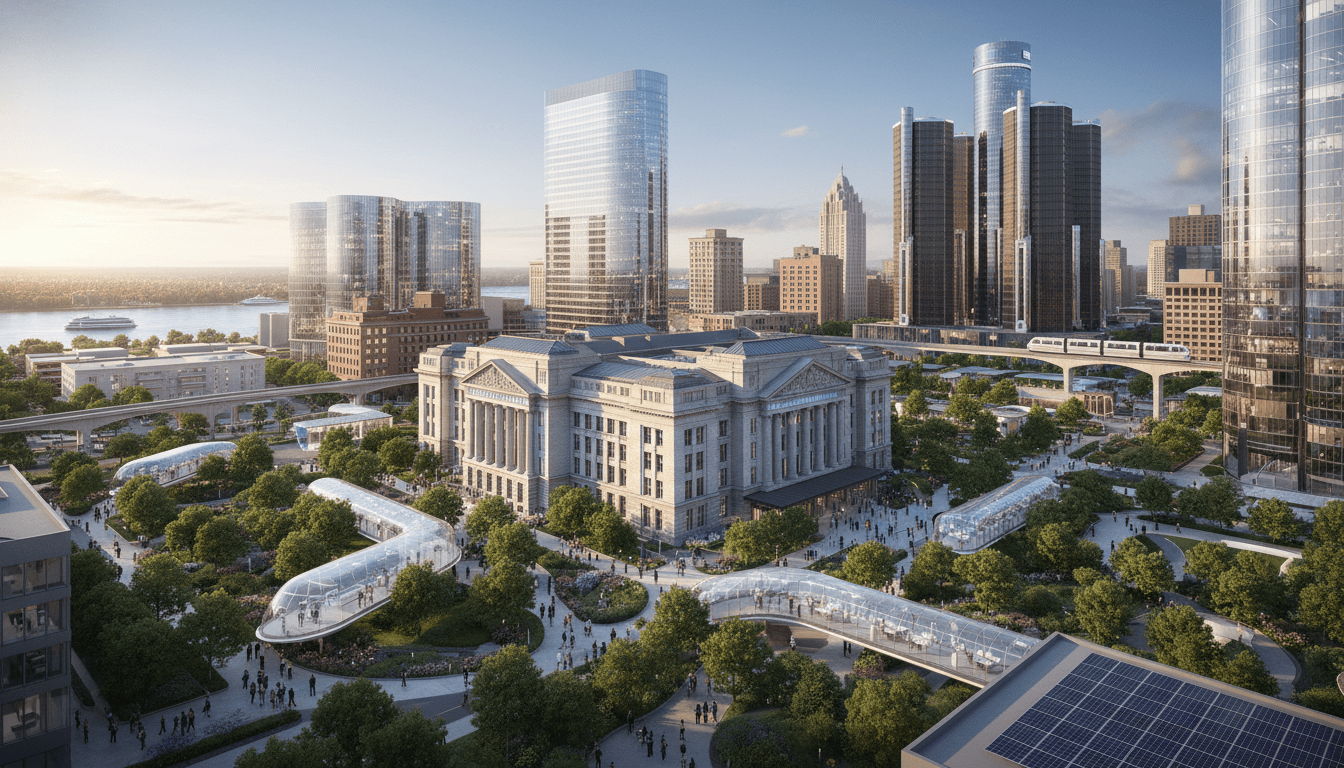
The centerpiece of Detroit’s modern tech resurgence remains the Michigan Central district in Corktown. Since the full restoration of the historic train station and the surrounding campus, the area has become a global magnet for mobility startups. According to the Michigan Economic Development Corporation (MEDC), the district now houses over 100 companies focused on autonomous vehicle software and smart-city infrastructure. The proximity to Ford Motor Company’s research teams allows smaller startups to test hardware in real-time on the adjacent ‘Smart Roads’ equipped with high-speed sensor arrays.
Local entrepreneurs note that the density of talent in Corktown has created a ‘collision effect,’ where serendipitous meetings between engineers and venture capitalists lead to rapid funding rounds. For those looking at neighborhood development updates, the expansion of Michigan Central has also spurred the growth of boutique co-working spaces and hardware labs that cater specifically to mechanical engineers and urban planners.
Midtown and the University of Michigan Center for Innovation
Further east, the University of Michigan Center for Innovation (UMCI) has anchored the Midtown and ‘District Detroit’ corridor as a leader in data science and cybersecurity. The $250 million facility, which reached full operational capacity this year, serves as a bridge between academic research and commercial application. Data from the Detroit Economic Growth Corporation (DEGC) indicates that the Midtown area has seen a 15% increase in patent filings since 2024, largely driven by the collaborative efforts between UMCI and the nearby Wayne State University TechTown incubator.
This district is particularly attractive to startups in the healthcare and life sciences sectors. The Karmanos Cancer Institute and Henry Ford Health’s expanded campus have created a demand for health-tech solutions, prompting dozens of smaller firms to relocate to the area to be closer to clinical trial environments and healthcare data experts.
Impact on Detroit Residents
The rise of these Detroit innovation districts is not just a win for tech founders; it has significant implications for local residents and the city’s labor market. One of the most visible impacts is the shift in job availability. Unlike the manufacturing roles of the past, many of these startups require specialized skills in coding, data analysis, and digital fabrication. To bridge this gap, the City of Detroit has partnered with several innovation hubs to launch community-based training programs.
According to the Mayor’s Office, over 2,000 Detroit residents have been placed in high-growth tech roles through these district-specific vocational programs in the last year alone. However, the success of these districts also brings challenges, particularly regarding housing affordability. As startups thrive, property values in surrounding neighborhoods like North End and Hubbard Richard have risen. Community Benefit Agreements (CBAs) are now standard for new developments in these zones, ensuring that a percentage of new housing remains at workforce-affordable rates. Residents can track these changes through local employment statistics and housing reports published quarterly.
Milwaukee Junction: The Maker District
In the North End and Milwaukee Junction areas, a different flavor of innovation is taking root. Known as the ‘Maker District,’ this area focuses on sustainable manufacturing and clean energy tech. Abandoned warehouses have been converted into multi-tenant ‘flex’ spaces where startups can prototype physical goods using 3D printing and recycled materials. This district has become a destination for companies focusing on the circular economy and green building materials.
Reporting from the Detroit Economic Growth Corporation suggests that Milwaukee Junction’s growth is driven by its relatively lower entry costs compared to Downtown or Corktown. This has allowed a more diverse demographic of founders to establish roots, contributing to Detroit’s reputation as a city with one of the highest densities of minority-owned tech startups in the United States. You can find more details on these initiatives on the official DEGC website.
Background and Future Outlook
The success seen in 2026 is the result of a coordinated strategy initiated in the early 2020s to diversify Detroit’s tax base. Historical data from the U.S. Census Bureau shows that for decades, Detroit’s economy was overly sensitive to the fluctuations of the global automotive market. By establishing these specialized innovation districts, the city has buffered itself against industry-specific downturns.
Looking toward 2027 and beyond, the next phase of growth is expected to move toward the East Side, where city planners are eyeing the Jefferson-Chalmers corridor for a potential ‘Blue Economy’ hub focused on water conservation and Great Lakes logistics. As these districts continue to mature, the focus will likely shift from attracting new companies to ensuring that the existing startup ecosystem can scale into mid-sized enterprises, providing long-term stability for the Detroit workforce.