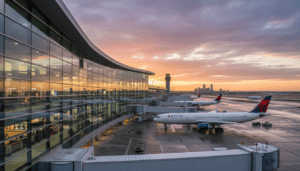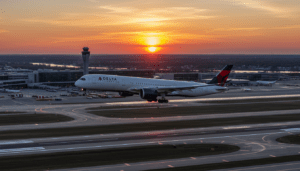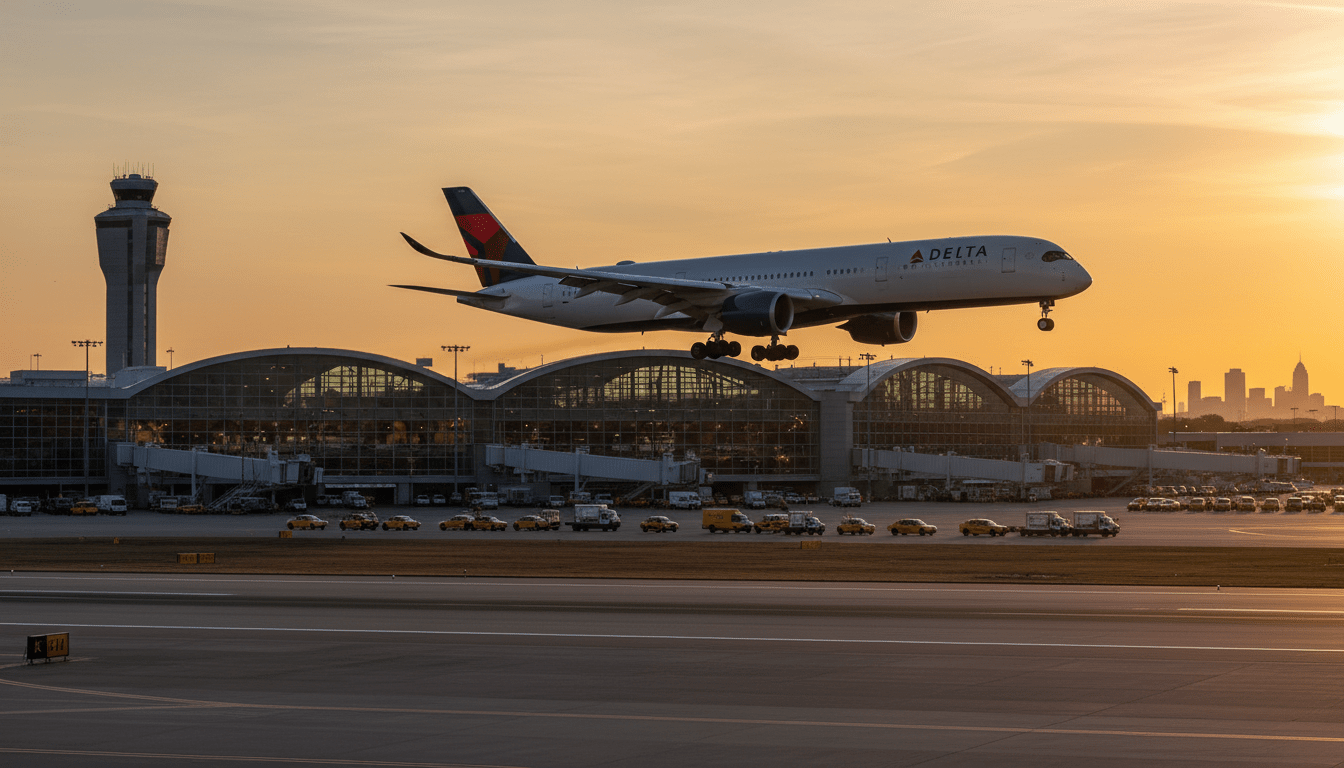
Travelers looking out the windows of Detroit Metropolitan Wayne County Airport (DTW) often notice aircraft bearing the liveries of airlines that do not traditionally serve the Romulus-based hub. From international wide-body jets to regional carriers, Detroit has become a primary relief valve for the North American aerospace system. Understanding the frequency of Detroit flight diversions requires a look at the intersection of geography, infrastructure, and the strategic operations of major carriers like Delta Air Lines.
The Strategic Significance of DTW’s Infrastructure
One of the primary reasons pilots and air traffic controllers favor Detroit during an emergency or weather-related reroute is the airport’s superior infrastructure. According to the Wayne County Airport Authority (WCAA), DTW features six major runways, including four parallel runways capable of handling simultaneous landings even in low-visibility conditions. This capacity is rare among Midwestern airports and provides a level of redundancy that is critical when an aircraft needs to get on the ground quickly.
Furthermore, Detroit’s runways are among the longest in the region. Runway 4L/22R, for instance, spans 12,000 feet, which is sufficient to accommodate the world’s largest aircraft, such as the Airbus A380 or the Boeing 747-8, even if they are heavy with fuel during an unplanned landing. For a pilot facing a mechanical issue over the Great Lakes, Detroit represents the safest and most capable landing site within hundreds of miles.
Weather Patterns and Geographic Advantage
Geography plays a silent but pivotal role in Detroit flight diversions. Situated between major aviation corridors connecting the East Coast to the West and the United States to Europe and Asia, DTW is often the closest high-capacity airport for transcontinental flights. When severe weather strikes other major hubs like Chicago O’Hare (ORD) or Toronto Pearson (YYZ), Detroit often remains in the “clear slot” of the jet stream.
Data from the National Weather Service indicates that while Detroit experience significant winter weather, its localized lake-effect patterns are often less disruptive to aviation than the heavy lake-effect snow seen in Buffalo or the frequent fog delays in San Francisco. Consequently, the Federal Aviation Administration (FAA) frequently utilizes DTW as a primary alternate for flights that cannot land in Chicago due to wind shear or ground stops. This “relief valve” function ensures that the national airspace remains fluid even when other major nodes are constricted.
The Delta Air Lines Hub Factor
As a primary hub for Delta Air Lines, Detroit offers an unparalleled logistical network. When a Delta flight traveling from London to Minneapolis needs to divert due to a medical emergency or a technical glitch, landing at DTW is the most logical choice. According to reports from Delta’s operations center, the airline maintains a massive maintenance base and a high concentration of spare parts and replacement crews at DTW.
Landing at a hub allows the airline to re-accommodate passengers much faster than landing at a non-hub airport. If a plane is grounded for repairs, Delta can quickly swap the aircraft or find hotel accommodations for hundreds of passengers using their established local partnerships. This operational efficiency is a major driver behind the frequency of Detroit flight diversions, as it minimizes the total financial impact of the delay on the carrier.
Impact on Detroit Residents and the Local Economy
While flight diversions are often seen as a headache for passengers, they have a measurable impact on the local Detroit economy, particularly in the city of Romulus and surrounding Wayne County. When a large international flight is diverted and the crew reaches their maximum duty hours, hundreds of passengers require immediate lodging and meals.
Local hotel managers near the airport frequently report sudden spikes in occupancy due to these unscheduled arrivals. “A single diverted wide-body jet can fill an entire hotel wing in two hours,” notes a recent hospitality industry analysis for Southeast Michigan. This translates to increased revenue for local service industries and higher tax collections for the county. Additionally, the presence of these aircraft supports high-skilled jobs in aircraft maintenance and ground handling services, as diversions often require immediate mechanical attention from local crews.
Technical Precision: Category III ILS
Another factor contributing to Detroit flight diversions is the airport’s investment in technology. DTW is equipped with Category III Instrument Landing Systems (ILS). According to FAA technical standards, a Cat III ILS allows aircraft to land in conditions with extremely low visibility—situations where pilots might only be able to see the runway lights a few hundred feet before touchdown. When neighboring smaller airports are forced to close due to heavy fog or blizzard conditions, DTW remains operational, making it the designated safe haven for any aircraft in the vicinity that is low on fuel or unable to wait for weather to clear elsewhere.
What Happens Next: Future Upgrades at DTW
Looking ahead, the Wayne County Airport Authority is not resting on its laurels. Ongoing capital improvement projects, funded in part by federal grants, are aimed at further enhancing runway surfaces and taxiway lighting. These upgrades are designed to ensure that DTW remains the most reliable airport in the Great Lakes region. As air traffic volume continues to recover and exceed pre-pandemic levels, the role of Detroit as a critical waypoint for diverted flights will only grow.
For Detroiters, the sight of a diverted Lufthansa or British Airways jet on the tarmac is a reminder of the city’s vital role in global infrastructure. For more information on local development, see our recent coverage on Detroit’s evolving transit landscape and how the local economy is adapting to 2024 trends. To track current flight statuses and potential diversions in real-time, residents can visit the official Wayne County Airport Authority website.