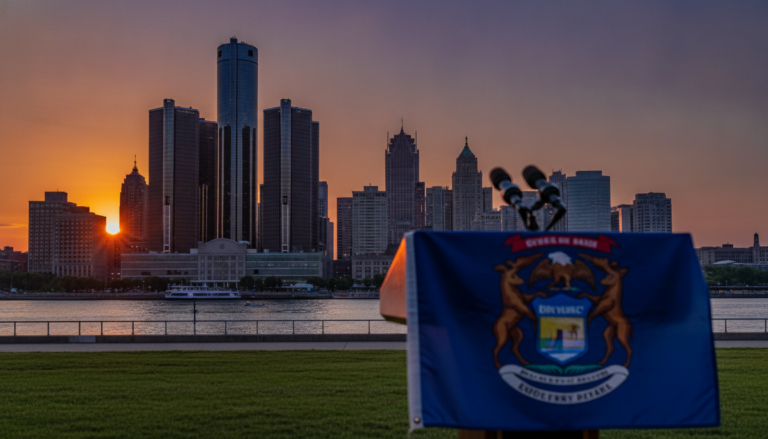
For decades, the narrative of Detroit was inextricably linked to the legacy of the ‘Big Three’ automakers. However, as 2026 unfolds, a new economic engine is shifting the city into a higher gear. The Detroit startup ecosystem has transitioned from a burgeoning collection of niche tech hubs into a nationally recognized powerhouse for mobility, fintech, and clean energy innovation. This evolution is not a matter of chance but the result of a coordinated strategy involving state incentives, corporate partnerships, and a significant cost-of-living advantage over traditional tech hubs like Silicon Valley and New York City.
The Hub of Mobility Innovation
Central to this transformation is the Michigan Central innovation district in Corktown. What began as a massive restoration project by Ford Motor Company has evolved into a neutral ground where startups and legacy manufacturers collaborate. According to the Detroit Economic Growth Corporation (DEGC), the district now houses over 150 early-stage companies focusing specifically on ‘software-defined vehicles’ and autonomous logistics. By providing access to specialized testing tracks and high-bandwidth 5G infrastructure, Detroit offers hardware-focused entrepreneurs resources that are often prohibitively expensive elsewhere.
Local business leaders note that the proximity to automotive R&D allows for a faster feedback loop. As previously reported in our coverage of neighborhood development projects, the physical proximity of engineers and founders is creating a ‘density of talent’ that market analysts say was missing in the early 2010s. This density is a primary driver for the Detroit startup ecosystem’s success in 2026.
Impact on Detroit Residents
The surge in startup activity is having a tangible impact on the local workforce. Unlike the manufacturing booms of the past, the current tech expansion focuses heavily on ‘upskilling’ current residents. Data from the Michigan Economic Development Corporation (MEDC) indicates that roughly 35% of new technical roles in Detroit startups are being filled by graduates from local institutions, including Wayne State University and the University of Michigan. This represents a significant ‘brain gain’ for the region, reversing the decades-long trend of local talent departing for the coasts.
For the average Detroiter, this means more than just high-tech jobs. The influx of venture capital—which reached record levels in the Midwest in late 2025—is funding community-based startups that address local issues such as food insecurity and transportation deserts. ‘The growth of the Detroit startup ecosystem isn’t just about apps; it’s about solving urban problems that have persisted for forty years,’ said one local economic development consultant during a recent roundtable at Newlab.
Background and Economic Data
The financial rationale for choosing Detroit is supported by robust data. A report from the U.S. Bureau of Labor Statistics recently highlighted that the cost of operating a tech-based business in Detroit is approximately 22% lower than in Austin and 40% lower than in San Francisco. When combined with the Michigan Strategic Fund’s aggressive tax credit programs for research and development, the city becomes a fiscally responsible choice for founders seeking to extend their ‘runway.’
Furthermore, the 2026 Michigan Startup Report suggests that seed-stage funding in the city has grown by 18% year-over-year. Large-scale employers like Rocket Companies and Blue Cross Blue Shield of Michigan have established venture arms that specifically target local innovators, ensuring that the Detroit startup ecosystem has a reliable source of early-stage capital. This ecosystem is also benefiting from the city’s stabilizing housing market, as detailed in our latest report on Detroit real estate trends, which makes the area attractive for relocating employees.
What Happens Next
Looking toward the remainder of 2026, the focus is expected to shift toward international expansion. City officials are currently in talks with several European mobility firms interested in establishing their North American headquarters in Detroit. The goal is to solidify the city’s reputation as the global capital of ‘The New Mobility.’ While challenges remain—specifically regarding public transit connectivity between startup hubs and residential neighborhoods—the momentum of the Detroit startup ecosystem shows no signs of slowing. As more founders choose the Motor City, the identity of Detroit continues to expand, proving that the city is capable of being both the historic heart of American industry and the future of global innovation.