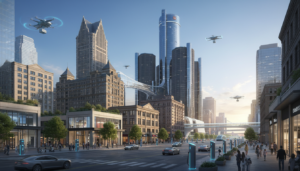
Detroit, long recognized as the global epicenter of automotive manufacturing, is currently undergoing a structural economic transformation. As the city moves further into the post-pandemic era, the traditional reliance on physical factory floors is being supplemented by a robust surge in the digital sector. Recent data suggests that the growth of online business in Detroit is not merely a temporary trend but a fundamental shift in how the local workforce operates and generates income.
The Expansion of Online Business in Detroit
According to reports from the Detroit Economic Growth Corporation (DEGC), there has been a marked increase in the number of small-to-medium enterprises (SMEs) transitioning to digital-first models. While the city’s history is rooted in heavy industry, the new wave of entrepreneurs is focusing on ecommerce and digital services. This transition is being supported by local initiatives like Motor City Match, which has increasingly provided grants and technical assistance to businesses looking to establish a strong web presence.
For many residents, the barrier to entry for starting an online business in Detroit has lowered. The availability of high-speed fiber internet in revitalized corridors and the proliferation of co-working spaces in neighborhoods like Corktown and Midtown have created a fertile environment for digital startups. Business analysts note that the shift toward ecommerce allows local creators to reach a global audience, decoupling Detroit’s economic health from the localized fluctuations of the traditional retail market.
The Impact of Remote Work on Neighborhood Stability
The rise of remote business in Detroit has also altered the residential landscape. Data from the U.S. Census Bureau’s American Community Survey indicates that the percentage of Detroiters working primarily from home has seen a significant uptick compared to pre-2020 levels. This shift toward a work from home Detroit model has had a cascading effect on local neighborhood economies.
When residents spend more of their working hours within their own communities rather than commuting to downtown offices or suburban plants, local spending patterns change. Neighborhood cafes, laundromats, and small grocery stores in areas such as University District and Grandmont Rosedale have reported steadier weekday foot traffic. This hyper-local economic activity is essential for the long-term stability of Detroit’s residential blocks.
Impact on Detroit Residents and Digital Equity
While the growth of digital income in Detroit presents opportunities, it also highlights the city’s ongoing struggle with the digital divide. For this economic shift to benefit all residents, access to reliable technology is paramount. The City of Detroit’s Office of Digital Equity and Inclusion has been working to expand broadband access, noting that an online business in Detroit can only thrive if the entrepreneur has the tools to connect to the marketplace.
Local residents are also benefiting from new workforce development programs. Organizations such as Detroit at Work have integrated digital literacy and ecommerce management into their training modules. For a city that has historically relied on manual labor, the pivot to digital skills represents a significant change in the local labor value proposition. Residents are now finding pathways to careers in software development, digital marketing, and remote administrative support without leaving their zip codes.
Data and Trends in the Digital Sector
A closer look at the numbers reveals the scale of this transition. National ecommerce trends often mirror the local activity seen in Michigan’s largest city. According to a recent study by the Michigan Economic Development Corporation (MEDC), technology-related job postings in the Detroit metro area have outpaced many other sectors over the last 24 months. Furthermore, the diversification of the economy into digital realms provides a safety net against the cyclical nature of the auto industry.
For more information on how these trends are shaping the region, readers can explore our previous coverage on Detroit’s evolving economic landscape and the development of new tech hubs across the city. Additional data regarding state-wide economic initiatives can be found on the Michigan Economic Development Corporation official site.
What Happens Next for Detroit’s Digital Future
Looking ahead, the integration of digital business models into the city’s core economic strategy appears set to accelerate. City officials and private developers are increasingly looking at commercial real estate through the lens of a hybrid workforce. Older office buildings are being reconsidered for residential conversion or flexible “plug-and-play” spaces that cater to the remote business professional.
As Detroit continues to reinvent itself, the growth of online business will likely serve as a primary pillar of the city’s 21st-century identity. The challenge for policymakers will be ensuring that the infrastructure—both physical and educational—remains capable of supporting a workforce that is no longer tied to a physical assembly line, but rather to a global digital network.