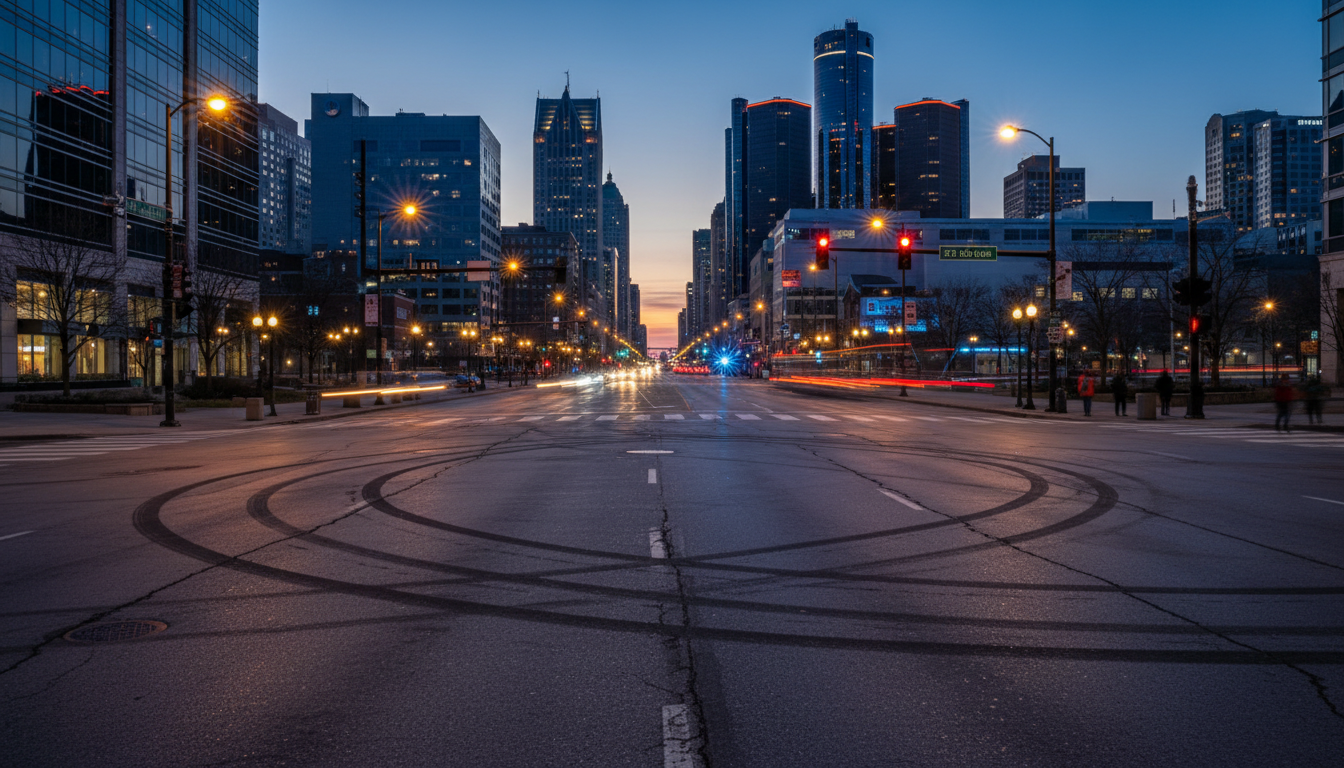
Detroit city officials and law enforcement agencies are intensifying their response to a growing trend of coordinated street takeover events that have disrupted traffic and raised significant safety concerns across the city. These incidents, often organized via encrypted messaging apps and social media, involve large crowds congregating at major intersections to perform illegal stunts, such as drifting and ‘donuts,’ effectively paralyzing local transit for hours at a time.
The Rise of Coordinated Disruptions
According to the Detroit Police Department (DPD), these street takeovers are no longer isolated incidents of reckless driving but have evolved into highly organized spectacles. Participants often arrive in large groups, using ‘scout’ vehicles to block police access and create a perimeter for the activity. Chief James White has repeatedly emphasized that these events pose a severe risk not only to the participants but to the general public and first responders.
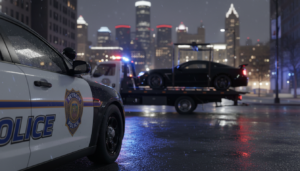
Data from the City of Detroit indicates that the DPD has pivoted its strategy toward a task-force-driven approach. The department’s ‘Operation Brute Force’ has targeted known hotspots where these events occur, resulting in dozens of arrests and vehicle impoundments over the last several months. Unlike standard traffic violations, these enforcement actions often lead to felony charges related to fleeing and eluding or reckless endangerment.
Impact on Detroit Residents
For those living in neighborhoods like Corktown, the East Side, and areas surrounding the Lodge Freeway, the impact of Detroit street takeovers is felt both economically and personally. Residents have reported being trapped in their own driveways or unable to reach local businesses due to the sudden gridlock caused by the crowds. Local business owners have also expressed concerns that the noise and perceived lawlessness deter customers during peak evening hours.
The physical toll on the city’s infrastructure is also a point of contention. The repeated high-friction maneuvers leave thick layers of rubber on the pavement, which can obscure road markings and contribute to faster road degradation. This adds another layer of complexity to ongoing Detroit infrastructure updates, as maintenance crews must often address the residue and damage left behind by these gatherings.
Legislative Response and Background
In response to the surge in these events, the Michigan Legislature has moved to provide law enforcement with more robust tools. Governor Gretchen Whitmer recently signed a bipartisan package of bills—specifically House Bills 5437 and 5438—which specifically define and criminalize ‘street takeovers.’ According to the Michigan Legislature’s bill analysis, the new laws allow for increased fines and make it easier for authorities to permanently forfeit vehicles used in these coordinated events.
The legal framework now distinguishes between individual reckless driving and the organized nature of a takeover. This distinction is crucial for prosecutors who previously struggled to apply existing statutes to the unique dynamics of large-group disruptions. Authorities argue that by targeting the assets—the vehicles themselves—they can more effectively dismantle the culture surrounding these illegal events. This effort is part of a broader set of neighborhood safety initiatives aimed at restoring order to residential corridors.
The Role of Technology and Social Media
One of the primary challenges for the DPD is the speed at which these events are organized. Using platforms like Telegram and Instagram, organizers can change locations within minutes to evade police presence. To combat this, the City of Detroit has invested in real-time intelligence monitoring. The Real-Time Crime Center (RTCC) utilizes a network of cameras and license plate readers to track the movement of large caravans before they can establish a foothold at an intersection.
Official reports from the City of Detroit news portal highlight that cooperation between the DPD, Michigan State Police, and the Wayne County Sheriff’s Office has been vital in sharing intelligence. This inter-agency collaboration allows for a ‘leapfrog’ strategy, where officers can intercept participants at their next destination rather than engaging in high-speed chases through densely populated neighborhoods.
What Happens Next
As Detroit enters the summer months, when street takeover activity typically peaks, residents can expect a visible increase in patrols. Chief James White has stated that the department will continue to use its ‘zero tolerance’ policy regarding vehicle seizures. The focus is shifting from simple dispersal to long-term deterrence through the court system.
While some car enthusiasts argue that the city should provide sanctioned spaces for drifting and stunts, city officials have remained firm that the current illegal events are a matter of public safety, not recreation. The debate over how to balance Detroit’s historic car culture with the modern demands of urban safety is likely to continue, but for now, the priority remains the cessation of unpermitted and dangerous coordinated street takeovers.