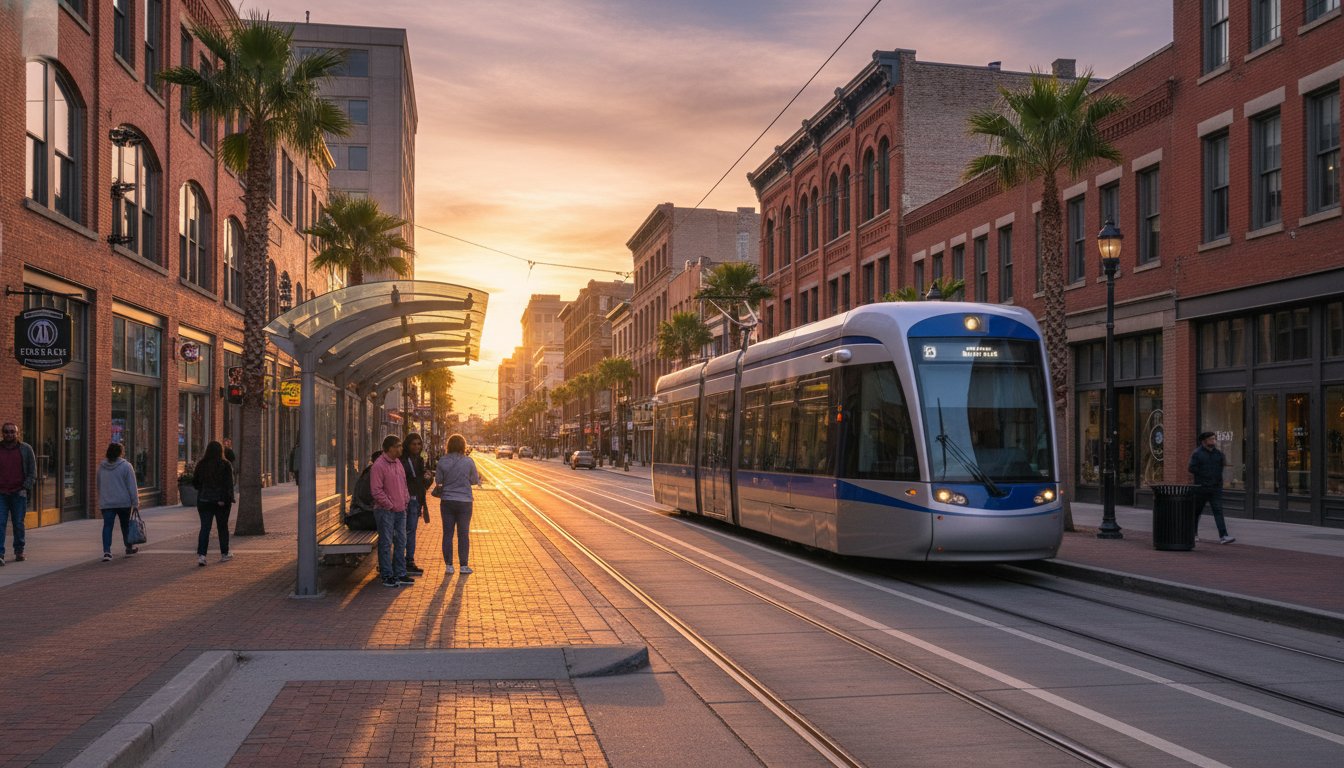
Detroit is at a pivotal crossroads regarding its public transportation infrastructure. As the city continues its post-pandemic recovery, city planners and transit advocates are turning their attention toward the feasibility of a significant Detroit streetcar expansion. Currently anchored by the 3.3-mile QLine loop on Woodward Avenue, the prospect of extending modern streetcar service deeper into Detroit’s neighborhoods is moving from a conceptual dream to a structured policy discussion.
According to reports from M-1 Rail, the non-profit currently operating the QLine, the system has seen a steady increase in ridership as office workers return to the downtown core and major events at Little Caesars Arena and Comerica Park drive weekend traffic. However, for many residents living outside the immediate 7.2-square-mile downtown radius, the current line remains more of a novelty than a primary mode of commuting. The proposed expansion aims to bridge that gap, transforming the streetcar into a legitimate backbone of the city’s transit network.
The Strategic Pivot Toward Detroit Streetcar Expansion
The push for a Detroit streetcar expansion is largely driven by a recent shift in governance. Earlier this year, the Michigan State Legislature approved a plan to transition the QLine from its private-public partnership under M-1 Rail to the oversight of the Regional Transit Authority of Southeast Michigan (RTA). This move is seen as a prerequisite for expansion, as it allows the system to qualify for federal capital investment grants that were previously inaccessible to a private entity.
Data from the U.S. Department of Transportation suggests that streetcar systems are most effective when they connect high-density residential areas with major employment hubs. Current discussions involve extending the tracks northward from the New Center terminus toward the Boston-Edison neighborhood and eventually the University District. There are also preliminary talks about lateral expansions that could connect the Woodward corridor to the burgeoning Corktown district, where Ford’s Michigan Central campus is attracting thousands of new tech workers.
“The transition to public oversight is the first step in making the streetcar a regional asset rather than a local circulator,” said a representative from the RTA of Southeast Michigan. By integrating the streetcar with the existing Detroit public transit upgrades, officials hope to create a seamless transfer system between buses and rail.
Impact on Detroit Residents and Neighborhoods
A primary goal of the Detroit streetcar expansion is to improve the quality of life for long-term residents. Currently, Detroit has one of the highest rates of residents who commute to work without a personal vehicle. For these individuals, reliable rail transit offers a more predictable schedule than traditional busing, which can be subject to traffic congestion and staffing shortages.
In neighborhoods like the North End, residents have expressed a mix of optimism and concern. The prospect of faster access to downtown healthcare facilities and grocery stores is a significant benefit. However, there is also the ongoing discussion regarding property values. Historically, fixed-rail transit projects have led to increased investment along their routes. While this boosts the city’s tax base, the city must balance this growth with protections for residents to prevent displacement.
Local business owners along the proposed extension routes are largely in favor of the move. Data from the Regional Transit Authority of Southeast Michigan indicates that foot traffic in the New Center area increased by nearly 20% within three years of the QLine’s debut. Expanding this effect to neighborhoods further north could provide a much-needed economic catalyst for small businesses that have historically been bypassed by downtown-centric development.
Background, Data, and Technical Feasibility
Modern streetcars differ significantly from the historic trolleys that traversed Detroit until 1956. The current QLine utilizes lithium-ion battery technology, allowing it to operate “off-wire” for roughly 60% of its route. This reduces the need for expensive and unsightly overhead catenary wires, making expansion more aesthetically pleasing and less cost-prohibitive in residential areas.
Funding remains the largest hurdle. A three-mile expansion is estimated to cost between $150 million and $200 million, depending on utility relocation and station design. According to the City of Detroit’s long-term planning documents, the city intends to leverage federal RAISE grants (Rebuilding American Infrastructure with Sustainability and Equity) to cover a significant portion of these costs. This strategy mirrors successful expansions in cities like Kansas City and Cincinnati, which have seen their streetcar lines triple in length through federal support.
Furthermore, the integration of the streetcar into the Woodward Avenue development plan ensures that transit is not built in a vacuum. The city’s Department of Public Works is coordinating with MDOT to ensure that any new rail installation coincides with scheduled road repaving and water main replacements to minimize disruption to local traffic.
Connecting to the Joe Louis Greenway
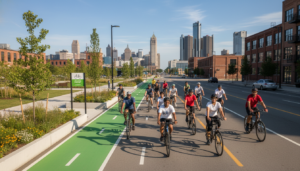
One of the more innovative aspects of the Detroit streetcar expansion is its potential intersection with the Joe Louis Greenway. The Greenway is a planned 27.5-mile loop of walking and biking trails. By placing streetcar stops at key Greenway trailheads, Detroit could create a multi-modal transit network that allows residents to bike from their homes, board a streetcar, and reach their workplace without ever needing a car.
What Happens Next for Detroit Transit
The timeline for the Detroit streetcar expansion is contingent on the finalization of the RTA transition, which is expected to be completed by late 2024. Once the RTA takes full control, a formal Environmental Impact Study (EIS) will be commissioned—a required step for federal funding. This study will provide the final proposed route and station locations.
Public hearings are expected to begin in early 2025, giving Detroiters a direct voice in where the tracks should go. While the physical construction of an expansion is likely several years away, the momentum behind the project suggests that the city is committed to a future where rail is no longer a luxury for visitors, but a daily utility for its citizens. As Detroit continues to redefine itself as a modern urban center, the expansion of its streetcar system will serve as a literal and figurative engine for regional connectivity.