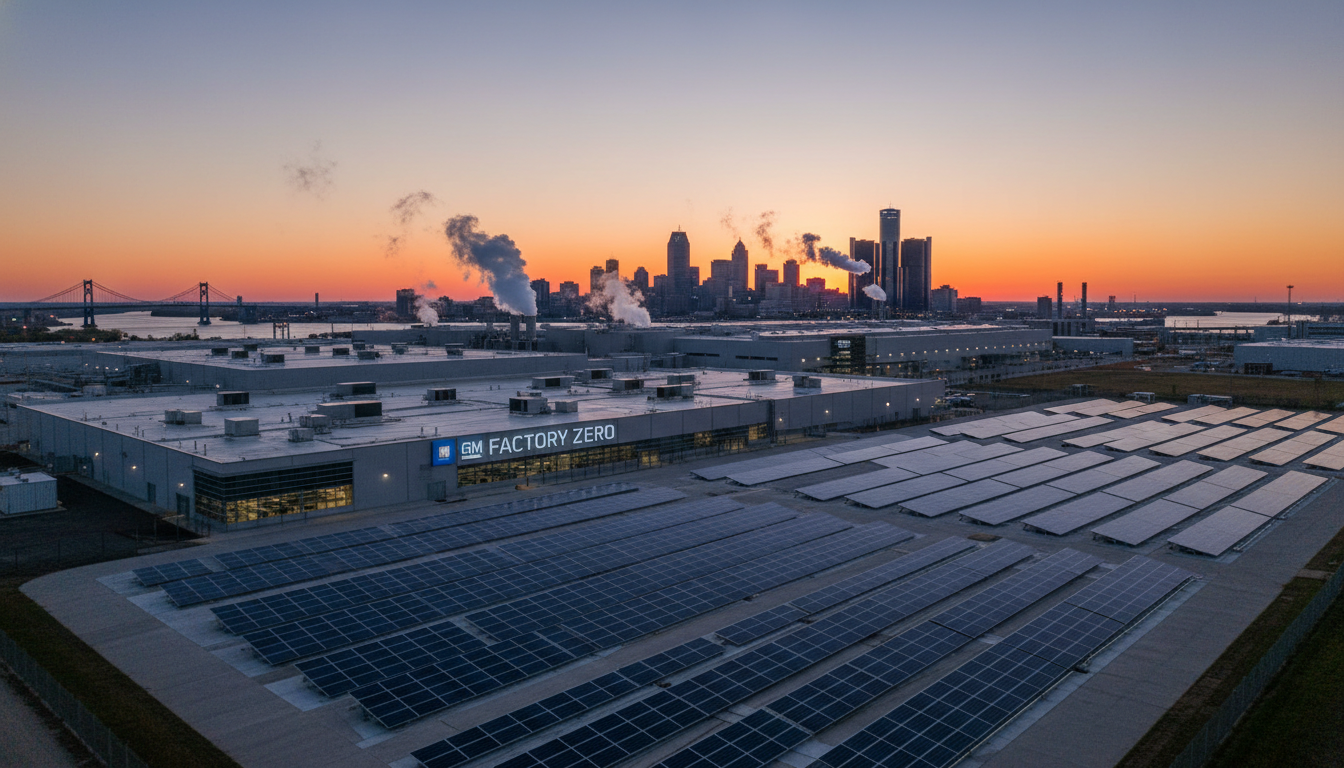
General Motors (GM) has officially signaled a major shift in its industrial strategy, announcing that it has secured the necessary renewable energy agreements to power all of its U.S. sites by 2025. This milestone, reached five years ahead of the company’s original 2030 target and 25 years ahead of its initial 2050 goal, places the Detroit-based automaker at the forefront of the nation’s corporate clean energy transition. The move is expected to have a profound impact on the manufacturing landscape in Southeast Michigan, particularly as the company pivots toward an all-electric future.
A Landmark Shift in Energy Procurement
The achievement is the result of a multi-year effort to diversify GM’s energy portfolio through direct investments, green tariffs, and power purchase agreements. According to General Motors’ latest sustainability reporting, the company has secured a total of 3.25 gigawatts of renewable energy capacity from 25 different solar and wind projects across 10 states. This capacity is roughly equivalent to the electricity required to power 350,000 households annually.
Crucial to this progress is the company’s partnership with local utilities. In Michigan, GM has significantly expanded its participation in DTE Energy’s MIGreenPower program. According to data from the Michigan Public Service Commission, this program is one of the largest voluntary renewable energy schemes in the United States, allowing large industrial users to attribute their energy usage to specific wind and solar parks developed within the state. For GM, this ensures that the electricity running the assembly lines at the Detroit-Hamtramck Assembly Center—now known as Factory ZERO—is sourced from Michigan-based renewable resources.
Impact on Detroit Residents and the Local Environment
The transition to 100% renewable energy is more than a corporate milestone; it represents a tangible shift for the residents of Detroit and its surrounding neighborhoods. Large-scale manufacturing has historically been associated with high carbon footprints and local environmental concerns. By decarbonizing its energy supply, GM is contributing to a reduction in the indirect emissions associated with the city’s industrial sectors.
For local residents, the most immediate impact is the reinforcement of Detroit as a hub for the ‘green economy.’ The investment in renewable energy infrastructure often correlates with job stability in the high-tech manufacturing sector. As GM integrates General Motors renewable energy goals into its operational DNA, it secures the long-term viability of plants like Factory ZERO, which currently employs thousands of Detroiters in the production of the GMC HUMMER EV and the Chevrolet Silverado EV. Furthermore, the reduction in fossil fuel reliance by the city’s largest employer sets a precedent for other local businesses to follow suit, potentially leading to broader improvements in regional air quality over the coming decade.
Data and Economic Context
The economic implications of this energy shift are significant. Data from the U.S. Department of Energy indicates that the cost of utility-scale solar and wind has dropped by over 70% and 40%, respectively, over the last decade. By locking in long-term fixed-rate renewable energy contracts, GM is effectively hedging against the volatility of the natural gas and coal markets. This fiscal discipline is a key component of the current Detroit economy, where industrial stability is paramount to the city’s ongoing recovery.
The company’s strategy also includes a focus on energy efficiency within its facilities. Over the past several years, GM has implemented energy-saving technologies across its Detroit-area campuses, including LED lighting upgrades, advanced building management systems, and heat recovery processes. These internal efficiencies, combined with external renewable sourcing, create a dual-track approach to sustainability that analysts say is necessary for a company of GM’s scale to meet its ‘Science Based Targets’ for carbon reduction.
Strengthening Michigan’s Infrastructure
The scale of GM’s commitment has also spurred infrastructure development across the state. To meet the demand from GM and other corporate partners, utility providers have had to accelerate the construction of wind farms in mid-Michigan and solar arrays in the southern part of the state. This development contributes to a modernized grid that is more resilient and capable of handling the increased load from the growing number of electric vehicles on the road.
Local infrastructure experts suggest that this corporate demand acts as a catalyst for public-sector improvements. As noted in recent reports on Detroit infrastructure, the integration of large-scale renewables requires advanced grid management and storage solutions. The lessons learned from powering massive facilities like the Renaissance Center and the Warren Tech Center with clean energy are expected to inform how the city of Detroit manages its own municipal energy needs in the future.
What Happens Next for GM and Detroit
While the 2025 U.S. goal is a significant achievement, General Motors leadership has indicated that the global journey is far from over. The company still aims to reach carbon neutrality in its global products and operations by 2040. This involves not only energy procurement but also the elimination of tailpipe emissions from new light-duty vehicles by 2035.
In the short term, Detroiters can expect to see more localized renewable projects. GM has expressed interest in exploring ‘behind-the-meter’ solar installations and battery storage at its manufacturing sites, which would allow the plants to remain operational during grid outages while further reducing their reliance on the traditional energy mix. As the city continues to navigate the complexities of the 21st-century economy, the alignment of its most iconic corporation with sustainable energy practices provides a blueprint for an industrial rebirth that is both economically sound and environmentally responsible.