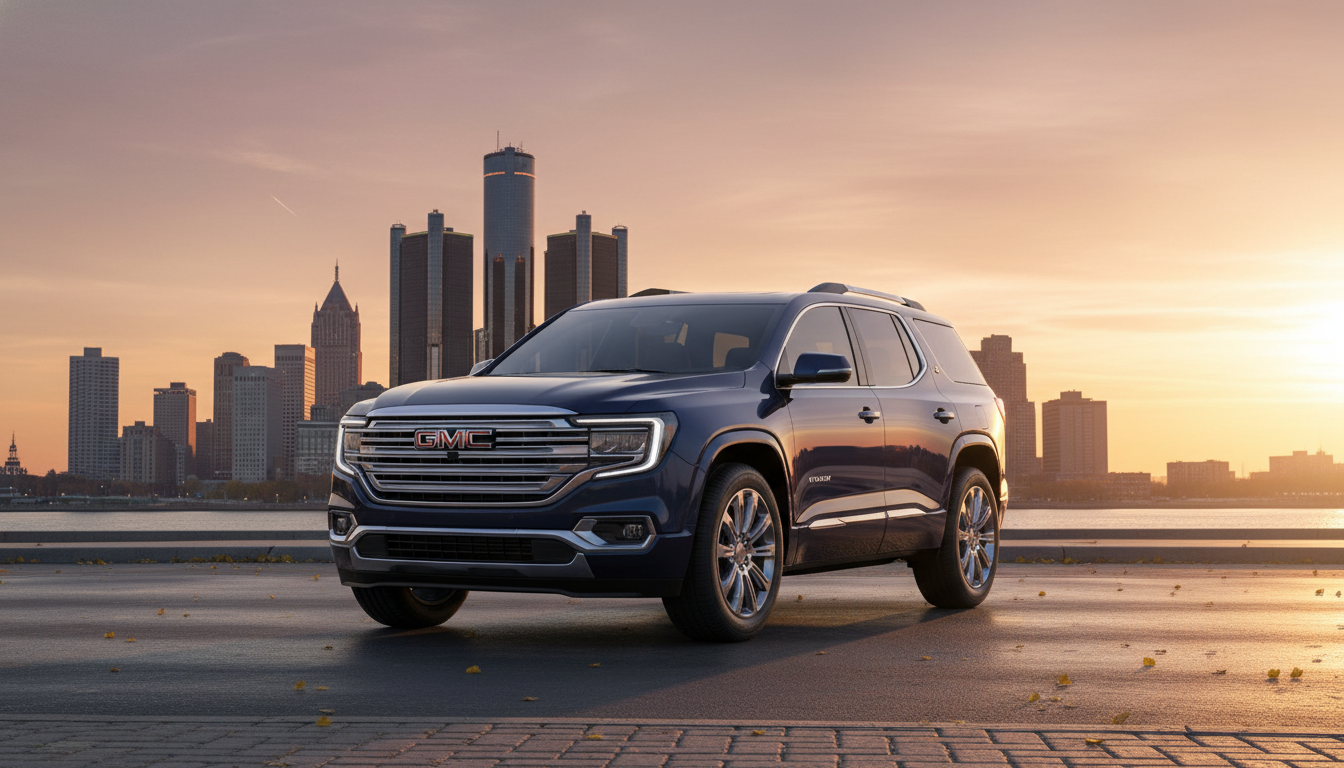
As the automotive landscape shifts toward electrification, the 2026 GMC Acadia Denali stands as a critical pillar for General Motors’ traditional internal combustion lineup. Produced at the Lansing Delta Township assembly plant, just outside the heart of Detroit, the redesigned SUV represents a significant investment in Michigan manufacturing. However, as the latest iteration of this premium family hauler hits the roads of Southeast Michigan, a distinct dichotomy emerges: a cabin that rivals high-end European marques paired with a powertrain that leaves some enthusiasts yearning for the V6 engines of years past.
The Evolution of a Detroit Staple
The GMC Acadia Denali has long been the gold standard for Detroit families who require three rows of seating but desire a level of refinement above the standard Chevrolet Traverse. For the 2026 model year, GMC has leaned heavily into the “professional grade” aesthetic, stretching the wheelbase and widening the track. This physical growth is not just for show; it addresses one of the previous generation’s most common complaints regarding cargo space behind the third row.
According to data from General Motors, the latest Acadia offers nearly 24 percent more total cargo space than its predecessor. This expansion places it firmly in competition with the Ford Explorer and the Jeep Grand Cherokee L, both of which have strong roots in the Motor City. From a design standpoint, the Acadia Denali succeeds in looking expensive. The signature chrome grille, C-shaped LED lighting, and 22-inch machined aluminum wheels give it a commanding presence on Woodward Avenue.
The Interior: A Masterclass in Luxury
Step inside the 2026 GMC Acadia Denali, and the “luxury feel” mentioned in its marketing materials is immediately evident. The cabin is draped in perforated leather, authentic wood trim, and soft-touch materials that extend even to the lower door panels. The centerpiece is a massive 15-inch diagonal infotainment screen that is standard across the lineup, complemented by an 11-inch driver information center.
Technology is where the Acadia Denali truly shines. It features the latest version of Super Cruise, GM’s hands-free driver assistance technology. Testing the system on I-75 showed remarkable composure, handling lane changes and traffic flow with a human-like touch. For Detroit commuters who face long stretches of highway travel, this feature alone may justify the Denali’s premium price tag. However, while the digital experience is top-tier, the mechanical experience tells a different story.
Under the Hood: The Missing Power
The primary point of contention in this auto review is the powertrain. Gone is the 3.6-liter V6 that once defined the Acadia’s smooth delivery. In its place is a high-output 2.5-liter turbocharged four-cylinder engine. While the numbers on paper are respectable—328 horsepower and 326 lb-ft of torque—the real-world application feels strained compared to the effortless pull of a larger engine.
During SUV performance testing, the engine’s note was noticeably coarse under heavy acceleration. While the eight-speed automatic transmission does its best to keep the engine in its power band, there is a palpable lag when merging onto high-speed Detroit freeways. For a vehicle carrying the Denali badge, which signifies the pinnacle of GMC luxury, the lack of a more potent V6 or a hybrid-assisted powertrain feels like a missed opportunity. The turbocharged four-cylinder provides adequate speed, but it lacks the “premium” smoothness that buyers in this $55,000 to $65,000 price bracket typically expect.
Impact on Detroit Residents and the Local Economy
Beyond the technical specifications, the production of the GMC Acadia Denali has significant implications for the local economy. The Lansing Delta Township plant is a vital employer for the region, and the success of the Acadia directly affects thousands of UAW workers. According to reports from the Michigan Economic Development Corporation (MEDC), General Motors’ continued investment in its Michigan-based ICE (Internal Combustion Engine) plants ensures job stability even as the company pivots toward an all-electric future.
For local residents, the Acadia represents the resilience of the traditional Detroit auto industry. While many news cycles are dominated by EV startups, it is vehicles like the Acadia that continue to drive the volume and profits necessary to fund future innovation. In a recent DetroitCityNews.com report on manufacturing growth, it was noted that the supply chain for the Acadia involves dozens of Tier-1 suppliers located within a 50-mile radius of the city, highlighting the interconnectedness of the local economy.
Background & Market Data
The shift to smaller, turbocharged engines is not unique to GMC. Data from the U.S. Environmental Protection Agency (EPA) shows a clear trend across all manufacturers to downsize engines to meet tightening fuel economy and emissions standards. However, competitors like the Mazda CX-90 have managed to implement turbocharged straight-six engines that offer a much more refined experience than the Acadia’s four-cylinder.
Sales data from the first half of the year suggests that while buyers are wary of the smaller engines, the demand for high-trim SUVs like the Denali remains robust. Many consumers are willing to trade engine displacement for the high-end interior features and safety tech that GMC offers. As discussed in our previous coverage of the Detroit Auto Show, the modern consumer prioritizes the “living room on wheels” experience over raw mechanical performance.
What Happens Next
Looking ahead, the question remains whether GMC will introduce a more powerful engine option or a hybrid variant to address the performance gap. With the 2026 model year just beginning, the current focus is on maximizing production and meeting the initial demand. For those who prioritize luxury, technology, and local craftsmanship, the GMC Acadia Denali is a compelling, if slightly underpowered, choice. For those who equate luxury with effortless power, the wait for a mid-cycle refresh or a performance-oriented trim continues.
As Detroit continues to lead the global automotive conversation, the 2026 GMC Acadia Denali serves as a reminder of where the industry is today: highly advanced, deeply rooted in local communities, but still navigating the trade-offs of a rapidly changing technological landscape.