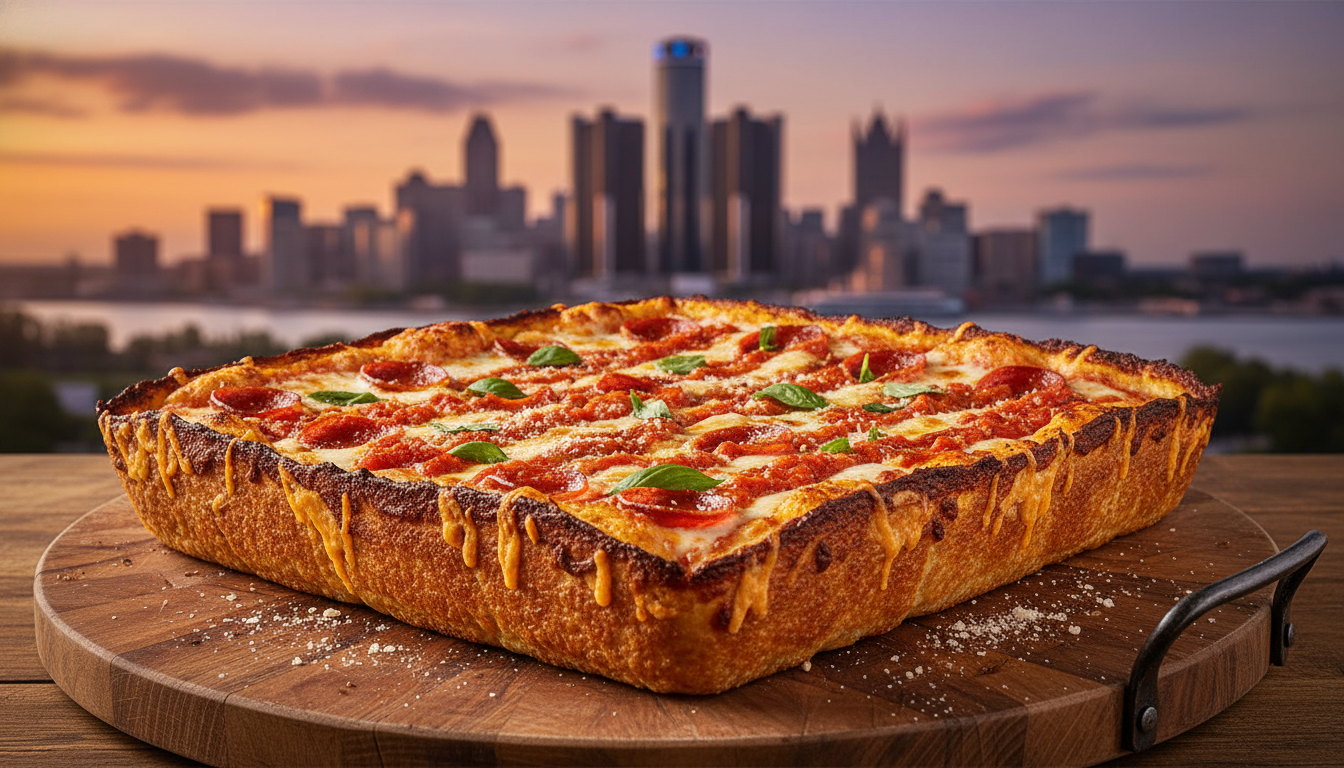
The culinary identity of Detroit has long been anchored by the thick, crispy-edged, rectangular pizza that emerged from the city’s automotive heritage. While locals have spent decades debating the merits of Buddy’s versus Loui’s, the rest of the world has only recently caught on to the unique charms of the Detroit-style pie. Now, national retailers are attempting to package that Motor City magic into the frozen aisle. The latest contender, Trader Joe’s Detroit-Style Pizza, has sparked a significant conversation among local food enthusiasts and industry experts regarding whether a mass-produced frozen product can truly honor a local legacy.
The Rise of Detroit’s Signature Export
Detroit-style pizza is characterized by its rectangular shape, a light and airy dough, and a distinctive caramelized cheese crust known as ‘frico.’ Historically, these pizzas were baked in blue steel pans originally intended for use as industrial parts trays in automotive factories. This industrial DNA is what gives the pizza its signature crunch and structure. According to reporting by the Detroit Free Press, the ‘Detroit-style pizza explosion’ has seen the format move from a local secret to a global phenomenon, appearing on menus from Seoul to San Francisco.
As the style gains international traction, the entrance of Trader Joe’s into the market represents a significant milestone in the commodification of Detroit’s food culture. For Detroiters, seeing their hometown staple in the freezer case of a national California-based grocer is a bittersweet validation of the city’s cultural reach. However, the primary question remains: does the Trader Joe’s version hold up to the standards set by the 8 Mile pizzerias that defined the genre?
Authenticity in the Frozen Aisle
Upon opening the package of the Trader Joe’s Detroit-Style Pizza, the first thing a native Detroiter will notice is the inclusion of the proper cheese blend. Authentic Detroit-style pizza typically utilizes Wisconsin brick cheese, which has a higher fat content and melts into the edges of the pan to create the crust’s signature char. While the Trader Joe’s version uses a blend of mozzarella and cheddar, the results are surprisingly close to the traditional flavor profile. The sauce, as per tradition, is applied in thick ‘racing stripes’ across the top of the cheese rather than underneath it.
In a recent comparison conducted by local culinary bloggers, the dough was praised for its ability to mimic the ‘focaccia-like’ texture that is often lost in frozen varieties. Data from the National Restaurant Association suggests that consumer demand for ‘authentic regional specialties’ in the frozen food sector has risen by nearly 15% over the last three years, and this product appears to be a direct response to that trend. The Trader Joe’s pizza achieves a level of crispness that many other national brands fail to reach, largely due to the high-fat content in the cheese that mimics the oil-frying effect of the traditional blue steel pans.
Impact on Detroit Residents and Local Business
The proliferation of frozen Detroit-style pizzas has a multifaceted impact on the local community. On one hand, it serves as a form of geographic branding, elevating the city’s reputation as a top-tier food destination. This national visibility can drive ‘pizza tourism’ to the city, as consumers who enjoy the frozen version seek out the original experience at local institutions. Many local business owners in the Detroit area have observed that national trends often lead to a renewed interest in the authentic, local versions of those products.
However, some local critics argue that the mass-market version of Detroit-style pizza risks diluting the ‘Detroit’ brand. When a product is simplified for mass production, the nuances—the specific hydration of the dough and the quality of the brick cheese—can be lost. For Detroit residents, the availability of a $6.00 frozen version that is ‘good enough’ might provide a convenient alternative to the $20.00 to $30.00 handmade pies found at local pizzerias, potentially shifting local spending habits during difficult economic times.
Background and Historical Context
To understand why this pizza review matters, one must understand the history of the dish. It began in 1946 at Buddy’s Rendezvous on the corner of 6 Mile and Conant. Gus Guerra, the founder, used those aforementioned blue steel pans to create a pizza that was a hybrid of his wife Anna’s Sicilian dough recipe and the industrial resources available in a manufacturing town. According to the City of Detroit’s historical archives, the success of this style was instrumental in establishing the neighborhood’s identity during the post-war industrial boom.
Since then, Detroit-style pizza has become a symbol of the city’s resilience and ingenuity. When national chains like Pizza Hut and Little Caesars introduced ‘Detroit-style’ items to their menus in 2021, it signaled a shift in the American culinary landscape. The Trader Joe’s iteration is part of a second wave of this trend, where ‘craft’ grocery stores attempt to offer a more artisanal version of the style than the large delivery chains. For more on the evolution of the city’s food scene, readers can visit DetroitCityNews.com/local-eats.
The Final Verdict: Is It Worth It?
For those living in the Detroit metro area, the Trader Joe’s Detroit-Style Pizza is an impressive approximation of a local treasure. It captures the essential elements—the crunch, the airy crumb, and the sauce-on-top presentation—better than almost any other frozen competitor currently on the market. While it cannot replace the experience of a fresh pie from a local oven, it serves as a high-quality tribute to the city’s culinary heritage. It is a testament to the fact that Detroit’s culture is not just surviving, but thriving on a national stage.
Local residents looking for the real deal are still encouraged to support the pizzerias that built this legacy. As the city continues to develop and its influence grows, maintaining the distinction between ‘Detroit-style’ and ‘Detroit-made’ will be vital for the local economy. You can read more about the growth of local businesses at DetroitCityNews.com/business-growth. For those outside the city, this frozen hit offers a legitimate taste of what makes the Motor City so special. External data on pizza trends can be further explored via the U.S. Census Bureau reports on regional retail and food service growth.
What Happens Next
As the trend of regional food recognition continues, we expect to see more Detroit-inspired products hitting the shelves of national retailers. The success of the Trader Joe’s pizza likely paves the way for further expansions, possibly including Coney Island-inspired products or other Midwestern staples. For Detroit, the challenge remains to capitalize on this national fame while protecting the local artisans who keep the city’s food culture authentic and vibrant.