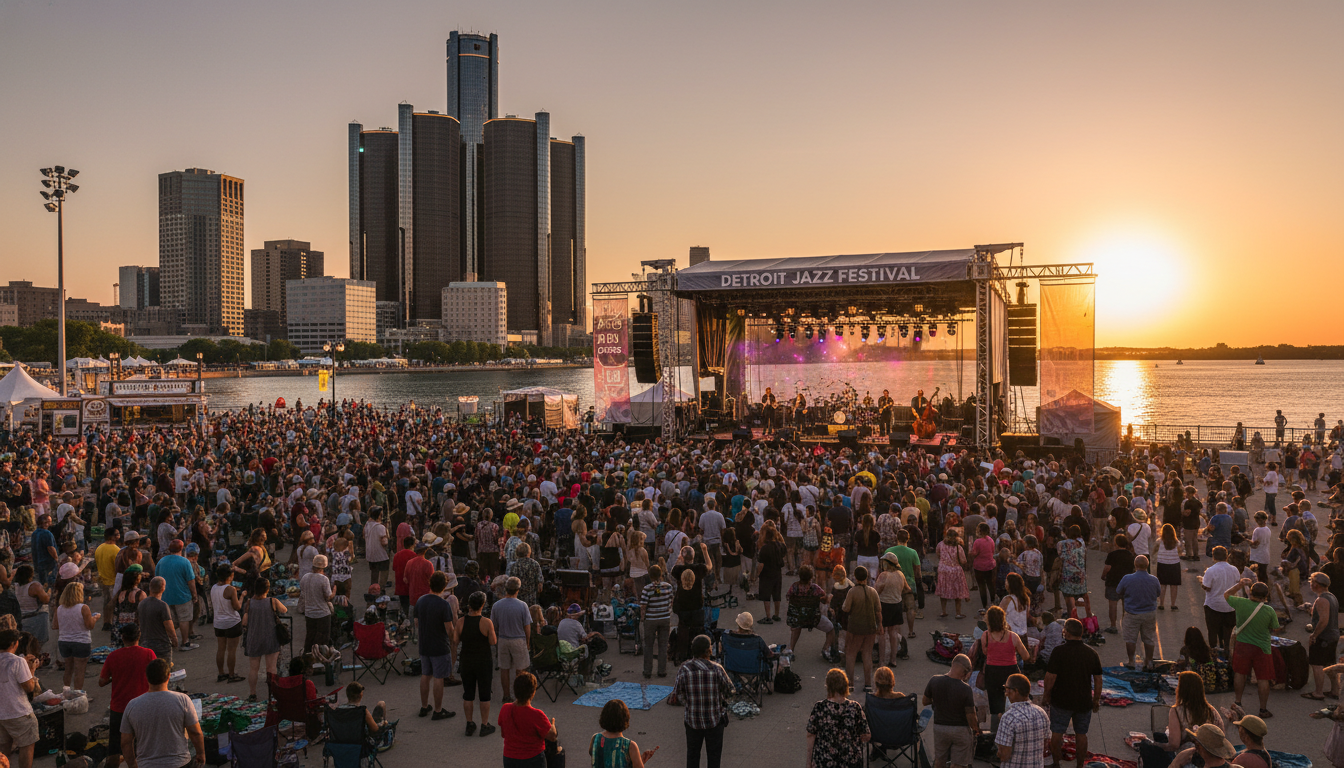
As the summer season reaches its peak, the streets of Metro Detroit are preparing for one of the most significant cultural weekends of the year. With a lineup of events that cater to music lovers, art enthusiasts, and families alike, the region is set to host three major free festivals Detroit residents and visitors can enjoy without an admission fee. These weekend activities Michigan locals look forward to every year serve as a vital economic and social bridge, connecting diverse communities through the power of public celebration and shared space.
The Detroit Jazz Festival: A Global Stage in Hart Plaza
Leading the weekend’s festivities is the 45th annual Detroit Jazz Festival, widely recognized as the world’s largest free jazz event. Spanning from Hart Plaza to Campus Martius Park, the festival continues its tradition of bringing world-class virtuosos to the city’s waterfront. According to the Detroit Jazz Festival Foundation, the event is designed to be accessible to everyone, maintaining its status as a non-ticketed event thanks to significant corporate sponsorships and the support of the philanthropic community. Artistic Director Chris Collins has previously noted that the festival’s mission is to preserve the rich history of jazz in Detroit while providing a platform for both legendary performers and emerging talent.
This year’s lineup features a diverse array of performances ranging from traditional swing to experimental avant-garde jazz. The festival serves not only as a musical showcase but also as a major driver for tourism. Visitors from across the globe converge on the downtown area, filling hotels and patronizing the many local economy anchors that define the city’s commercial district. For residents, the festival offers more than just music; it provides a sense of continuity and pride in Detroit’s enduring musical legacy. The lack of an entry fee ensures that financial barriers do not prevent anyone from experiencing high-caliber art, a core tenet of the foundation’s philosophy.
Dally in the Alley: Midtown’s Grassroots Tradition
In the heart of the North Cass Corridor, the legendary Dally in the Alley is set to return this Saturday. Unlike the grand scale of the Jazz Festival, Dally is a strictly grassroots, volunteer-run event that celebrates the bohemian spirit of Midtown. Organized by the North Cass Community Union, the festival has its roots in the late 1970s and has grown from a small neighborhood block party into one of the most beloved free festivals Detroit offers. The event is characterized by its labyrinthine layout of alleys filled with live music stages, local vendors, and community activists.
Dally in the Alley is unique because it remains fiercely independent. The festival does not accept traditional corporate sponsorships, relying instead on beer and poster sales to fund the following year’s event. This independent streak is a reflection of the Detroit neighborhoods that surround it, areas that have seen significant change but strive to maintain their authentic character. Residents often open their porches and backyards to guests, creating an atmosphere that feels more like a giant family reunion than a city-sanctioned event. The festival features multiple stages highlighting local electronic, hip-hop, and indie rock acts, ensuring that the soundscape is as diverse as the crowd it attracts.
Hamtramck Labor Day Festival: A Celebration of Community
Just a few miles north of downtown, the Hamtramck Labor Day Festival will take over Joseph Campau Avenue. This three-day event is a tribute to the enclave’s multicultural heritage and labor history. Known as the ‘world in two square miles,’ Hamtramck offers a festival experience that combines traditional Polish food with music from the city’s vast immigrant populations. According to official communications from the City of Hamtramck, the festival includes the famous yacht club races—a quirky tradition involving push-carts decorated as boats—and a parade that draws thousands of spectators.
The festival serves as a critical gathering point for the diverse populations living in and around the city. From pierogi-eating contests to performances by international touring acts, the Hamtramck Labor Day Festival emphasizes the importance of community visibility. It provides a platform for small businesses to showcase their offerings to a wider audience, contributing to the economic resilience of the area. For many families, this event is the quintessential way to mark the end of summer, offering free entertainment that spans generations.
Impact on Detroit Residents and the Local Economy
The convergence of these events has a profound impact on the daily lives of Detroiters. Beyond the immediate entertainment value, these free festivals Detroit hosts are significant economic catalysts. Data from the Michigan Economic Development Corporation suggests that large-scale cultural events generate millions of dollars in indirect spending, as festival-goers spend money at gas stations, convenience stores, and independent retailers. For local artists and craft vendors, these festivals often represent their highest-grossing weekends of the year.
Furthermore, these events foster social cohesion. At a time when many cities are seeing a privatization of public space, Detroit’s commitment to keeping its major festivals free of charge is a statement of inclusivity. It allows residents from the outskirts of the city to interact with those living in the downtown core, breaking down the geographic and economic silos that can often divide a metropolitan area. Public safety and transportation officials work in tandem to ensure these events run smoothly. According to the City of Detroit, additional transit options and security measures are typically deployed during this high-traffic weekend to manage the influx of hundreds of thousands of visitors.
Background and Data: The Evolution of Public Events
Historically, Detroit has used public festivals as a tool for urban renewal and community building. In the late 20th century, as the city faced economic challenges, events like the Jazz Festival were established to revitalize the downtown area and provide residents with free, high-quality cultural experiences. Today, that legacy continues as the city experiences a new era of development. The logistical planning for these festivals has become more complex, involving coordination between the Detroit Police Department, the Department of Public Works, and local neighborhood associations. Statistics from the Downtown Detroit Partnership indicate that foot traffic during these festival weekends often triples compared to standard summer weekends, highlighting the massive draw of free, accessible programming.
What Happens Next: Planning Your Weekend
As the weekend approaches, city officials encourage residents to use public transportation, including the QLine and DDOT buses, to navigate the various festival sites. With road closures expected in Midtown, Downtown, and Hamtramck, arriving early is recommended for those driving. While the festivals themselves are free, supporting the local vendors and artists who participate is a great way to ensure the continued success of these traditions. This weekend serves as a reminder of Detroit’s resilience and its status as a cultural powerhouse in the Midwest. Whether you are listening to world-class jazz at Hart Plaza or navigating the historic alleys of Midtown, the message is clear: Detroit remains a city for the people, celebrated through the enduring spirit of its free festivals.