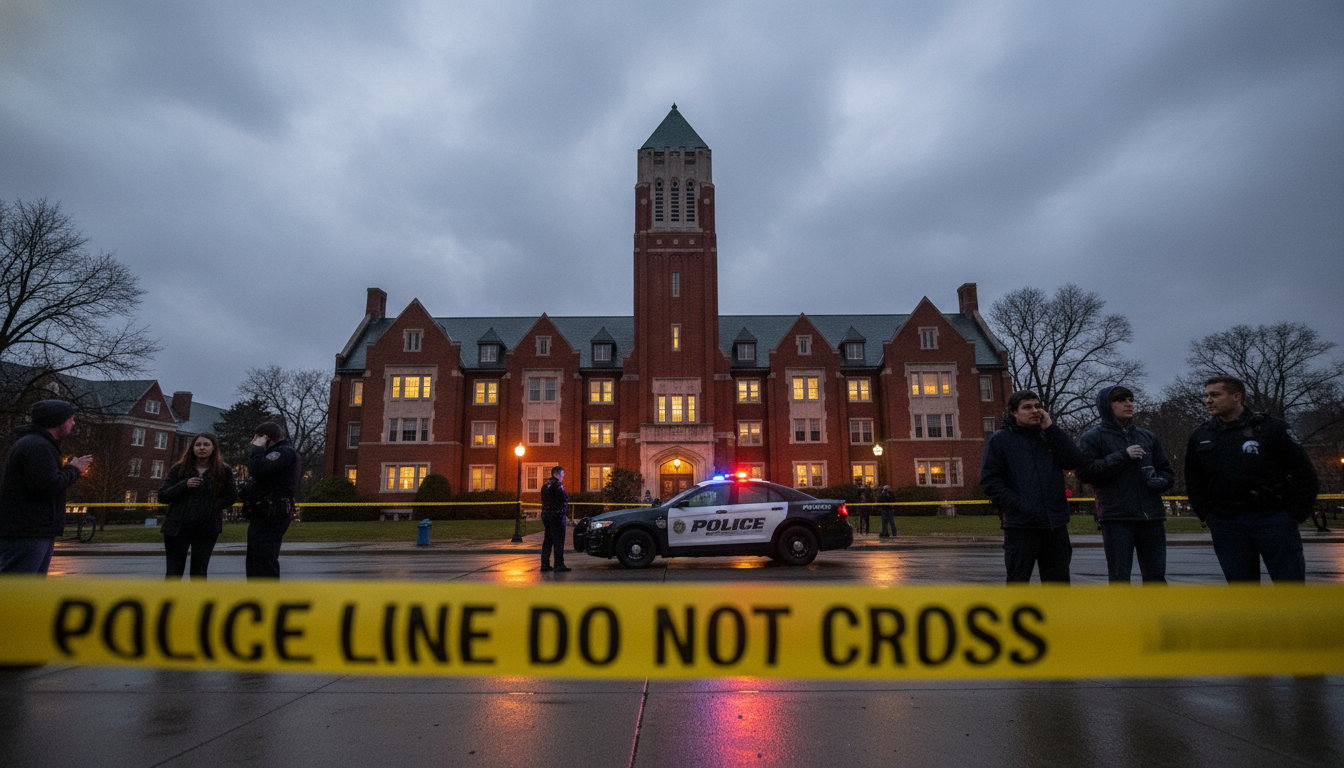
East Lansing, Mich. — The academic serenity of the Michigan State University campus was disrupted this week following the discovery of a clandestine methamphetamine laboratory within one of its campus buildings. The incident, which resulted in a swift law enforcement response and a subsequent arrest, has ignited a serious conversation regarding security protocols at large public institutions and the safety of the thousands of students who call the campus home. According to the Michigan State University Department of Police and Public Safety, the operation was uncovered during a routine inspection of a restricted area, leading to an immediate evacuation of the surrounding vicinity.
The Discovery and Immediate Law Enforcement Response
According to the Michigan State University Department of Police and Public Safety, the discovery was made late Tuesday evening when maintenance staff reported unusual odors and specialized equipment in an area not designated for laboratory research. Upon arrival, campus police identified materials consistent with the production of methamphetamine. The Ingham County Sheriff’s Office and specialized hazardous materials teams were called to the scene to assist in the safe dismantling of the setup.
The university confirmed that a suspect, who is not currently a registered student at the university, was taken into custody shortly after the discovery. This meth lab arrest has highlighted potential vulnerabilities in building access during off-peak hours. While the individual’s motives remain under investigation, authorities have indicated that the laboratory appeared to be in the early stages of a production cycle. For more on regional security and public safety, residents are encouraged to stay informed via local news updates on public safety across the state.
Impact on Detroit Residents and the MSU Community
While Michigan State University is located in East Lansing, the impact of this campus crime resonates deeply within the city of Detroit. Thousands of Detroit families have children enrolled at MSU, making the security of the campus a primary concern for the local metro community. Parents and alumni in Detroit neighborhoods have expressed alarm over how such an operation could be established within a high-traffic academic building.
Beyond the immediate safety concerns, the financial burden of environmental remediation is substantial. According to the Michigan Department of Environment, Great Lakes, and Energy (EGLE), the cleanup of a meth lab requires specialized contractors to remove toxic residues that can linger on surfaces and within ventilation systems for years. These costs are often borne by the institution, potentially impacting tuition rates or resource allocation for student services. For Detroiters, whose economic ties to the state’s flagship universities are significant, any disruption in campus safety is viewed as a disruption to the educational pipeline for the region’s youth.
Hazardous Materials and Environmental Safety
The chemicals used in the production of methamphetamine are notoriously volatile. According to the U.S. Drug Enforcement Administration (DEA), the process often involves flammable solvents, corrosive acids, and toxic precursors that pose an immediate risk of fire or explosion. The discovery at a Michigan State University building is particularly concerning given the proximity to student housing and high-density classrooms.
“The presence of clandestine labs in public buildings presents a multi-faceted risk,” a spokesperson for the Michigan State Police stated in a general safety briefing. “There is the immediate threat of fire, but there is also the long-term health risk to anyone who unknowingly enters a contaminated space.” The university has hired an external environmental firm to conduct air quality testing and surface sampling to ensure the building is safe for re-occupancy. This process is expected to take several weeks, during which time all classes scheduled for the facility have been relocated.
Data on Campus Crime and Regional Trends
Recent data from the FBI’s Uniform Crime Reporting (UCR) program suggests that while drug-related arrests on college campuses have fluctuated, the discovery of manufacturing sites is relatively rare in an academic setting. However, the surge in synthetic drug production across the Midwest has kept law enforcement on high alert. This latest MSU news serves as a reminder that even secure environments are not immune to the broader trends of the regional narcotics trade.
In comparison to other major institutions in the Big Ten, MSU has generally maintained a robust security presence. However, critics suggest that the sprawling nature of the campus makes 24-hour surveillance of every utility closet and storage room a logistical challenge. According to the MSU Department of Police and Public Safety annual security report, the university has been increasing its investment in electronic access control and camera systems over the last three fiscal years to combat unauthorized entry.
What Happens Next: Legal Proceedings and Security Overhaul
The individual arrested faces multiple felony charges, including the manufacture of a controlled substance and operating a laboratory involving hazardous waste. As the legal process unfolds in Ingham County, university administrators are conducting a top-to-bottom review of building access protocols. Interim measures include increased patrols by campus security and the implementation of more stringent sign-in requirements for non-students accessing technical facilities after 6:00 PM.
The university’s leadership has emphasized its commitment to transparency. “Our priority is the safety and well-being of our students, faculty, and staff,” a university spokesperson said in a prepared statement. “We are working closely with law enforcement to understand how this occurred and to ensure it does not happen again.” For Detroit families, the hope is that these changes will restore the sense of security necessary for a productive learning environment. As Michigan State University moves forward, the focus remains on remediation and the prevention of future incidents that could jeopardize the health of the campus community.
Residents interested in how these events influence regional policy and university funding can find more information on Detroit neighborhoods and their connection to state-level educational developments. The outcome of the ongoing investigation will likely influence safety standards not just at MSU, but at universities across the Great Lakes region.