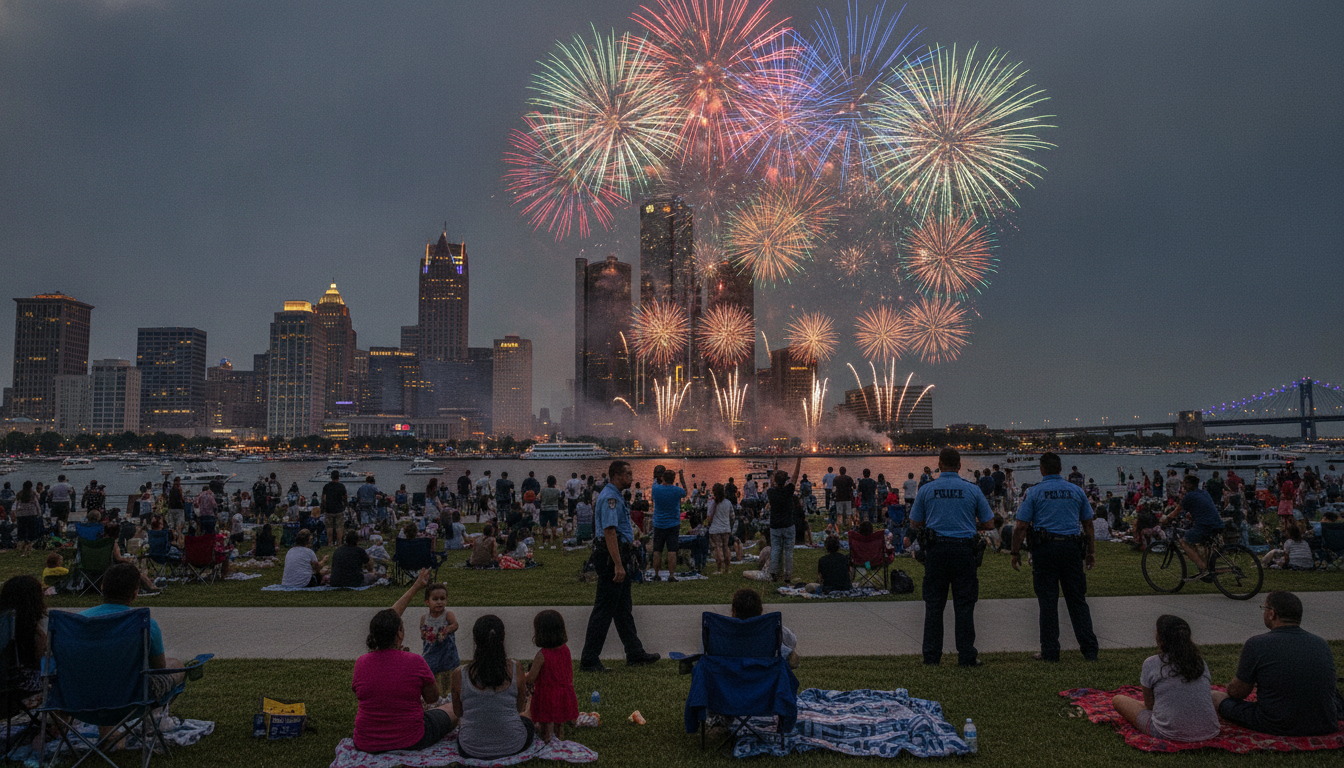
As the city of Detroit prepares for one of its most significant annual traditions, the Ford Fireworks, municipal leaders are shifting their focus toward a robust public safety strategy. The Detroit Police Department (DPD) and city officials have introduced a comprehensive curfew proposal designed to mitigate the risks associated with so-called “teen takeovers” in downtown Detroit. This move comes amid a national trend of large, unmanaged gatherings of minors that have occasionally led to disruptions and safety concerns in urban centers.
The Push for Enhanced Public Safety
The Ford Fireworks, organized by The Parade Company, typically draws hundreds of thousands of spectators to the Detroit Riverfront. While the event is a hallmark of regional pride, the sheer volume of attendees presents a complex logistical challenge for law enforcement. According to the City of Detroit’s latest safety briefings, the proposed curfew measures aim to ensure that the environment remains family-friendly and secure for all visitors.
The primary focus of the new proposal is the enforcement of a strict 8 p.m. curfew for minors under the age of 18. Unlike standard summer curfews, the Ford Fireworks enforcement would apply to a specific “protected zone,” encompassing much of the downtown core, including Hart Plaza, Spirit of Detroit Plaza, and the immediate surrounding neighborhoods. Under these rules, any minor in the area after 8 p.m. must be accompanied by a parent or legal guardian.
Chief of Police James E. White has consistently emphasized a “zero-tolerance” policy for disorderly conduct that threatens the peace of Detroit neighborhoods and business districts. In recent press statements, DPD officials noted that the goal is not to discourage youth participation, but to prevent the formation of large, unsupervised groups that have previously been linked to “teen takeovers”—organized gatherings often coordinated via social media that can overwhelm local security resources.
Impact on Detroit Residents and Families
For Detroit residents, the implementation of a stricter curfew during the Ford Fireworks represents a double-edged sword. On one hand, many families welcome the increased police presence and the structured environment. Local community groups have noted that a well-enforced curfew allows families with young children to enjoy the festivities without the fear of being caught in the middle of unruly crowds.
However, some community advocates raise questions about the potential for over-policing of youth. Residents living within the curfew zone must also navigate the logistical hurdles of the evening. To better understand the landscape of local living, readers can explore our recent report on Detroit neighborhood safety initiatives, which highlights how community-led policing is evolving across the city.
Local business owners in downtown Detroit have largely voiced support for the measures. Establishments near Woodward Avenue and Jefferson Avenue often see a surge in foot traffic during the fireworks, but they also face risks of property damage when crowds become unmanageable. “We want people downtown, but we want them here responsibly,” said one local restaurant manager. “A clear curfew helps set expectations early in the night.”
Background & Data: The Evolution of Event Security
The necessity for such measures is supported by data regarding large-scale urban events. According to the official City of Detroit Mayor’s Office, public safety remains the top priority for high-visibility events like the Ford Fireworks and the Detroit Grand Prix. Historical data from the DPD indicates that when clear boundaries and curfews are established, the number of arrests and emergency calls significantly decreases compared to years with looser enforcement.
The phenomenon of “teen takeovers” is not unique to Detroit. Cities like Chicago and Philadelphia have faced similar challenges, leading to the adoption of similar restricted zones for minors. The DPD’s strategy involves not just ground patrols but the use of the Real Time Crime Center (RTCC), which utilizes hundreds of integrated cameras to monitor crowd flow and identify potential flashpoints before they escalate.
In addition to the curfew, the city is also expected to implement traffic restrictions. Many streets leading to the riverfront will likely close early in the afternoon to prevent gridlock. For more information on navigating the city during peak summer months, see our guide on downtown Detroit transportation updates.
What Happens Next
As the date for the Ford Fireworks approaches, the City Council is expected to finalize the specific boundaries of the curfew zone. Public awareness campaigns will be launched to inform parents of their responsibilities. Under the current proposal, parents of minors found in violation of the curfew could face citations or fines, a measure intended to encourage parental supervision.
The Parade Company continues to work closely with the city to ensure the event remains a success. The fireworks display is a massive undertaking that requires coordination between the U.S. Coast Guard, Detroit Fire Department, and various federal agencies. For the 2024 season, the focus remains on maintaining the event’s reputation as one of the premier fireworks displays in North America while adapting to the modern challenges of urban crowd management.
Ultimately, the success of the Ford Fireworks curfew proposal will be measured by the safety of the attendees. By targeting the root causes of “teen takeovers” and establishing clear guidelines for youth, Detroit officials hope to preserve the spirit of the celebration while ensuring that downtown Detroit remains a safe destination for everyone.