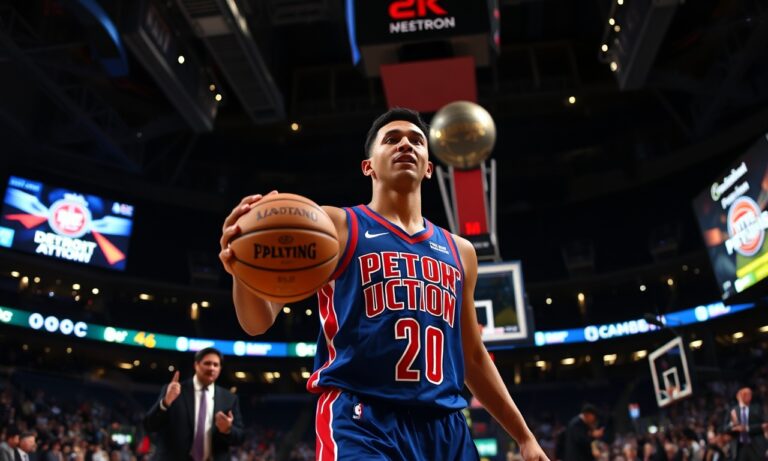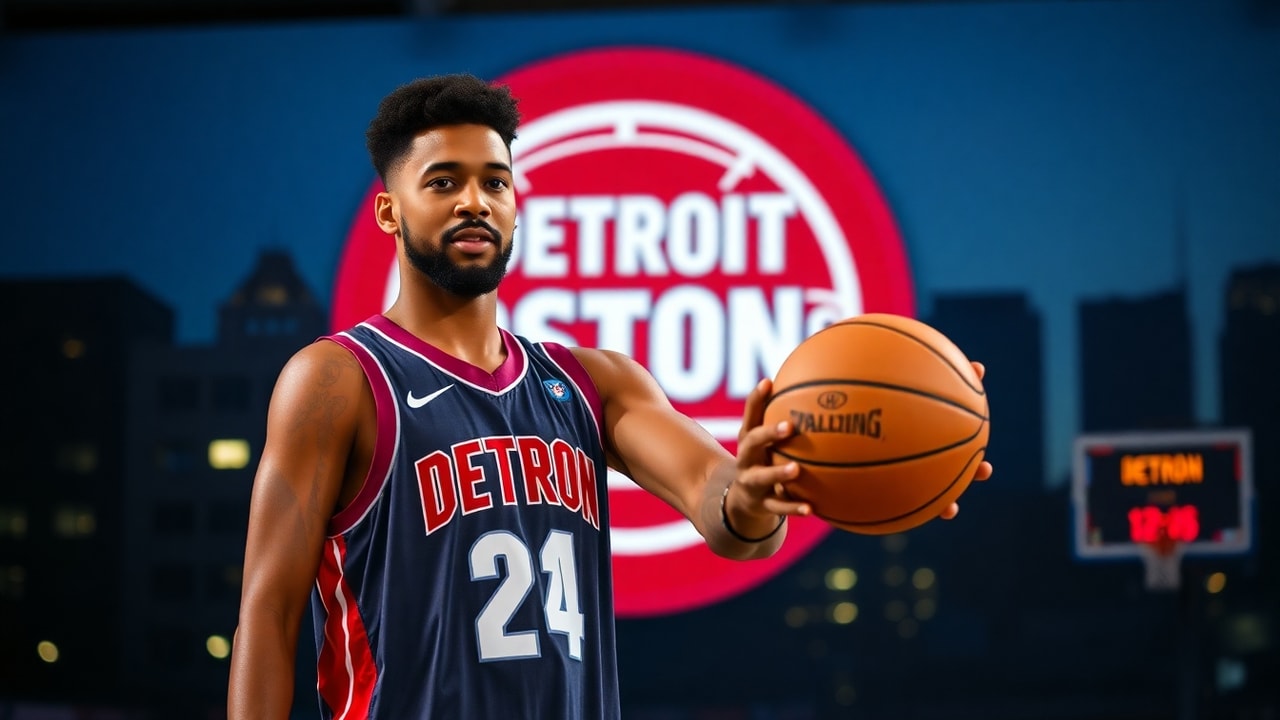
The Detroit Pistons have signed Utah State point guard Drake Allen to an Exhibit 10 deal, a move that adds competition at the guard spots ahead of the upcoming season and NBA training camp. The agreement gives Allen an opportunity to earn a roster role through summer workouts and the team’s pregame slate of evaluations.
Pistons personnel indicated the contract is designed for developmental opportunities—an Exhibit 10 structure commonly used to bring players into camp while maintaining flexibility for the club. Allen, known for his playmaking and on-court tempo control, joins a young roster that has increasingly relied on growth from the bench and the developmental pipeline.
Allen’s signing was first reported publicly as the team finalized offseason transactions and prepared for preseason preparations. While terms beyond the Exhibit 10 framework were not broadly detailed in the announcement, the Pistons’ decision places the former Aggie in direct competition for rotation time once practices begin.
What the Exhibit 10 deal means for Allen and Detroit
An Exhibit 10 deal typically functions as a one-year contract designed to encourage roster participation during training camp and the preseason. If a player meets certain performance or participation thresholds, teams may be able to convert the contract into a standard form—though the exact path depends on the club’s decisions and the player’s status when roster cuts occur.
In practical terms, the agreement gives Allen a seat at the table for the Pistons’ NBA training camp, where coaches can evaluate decision-making, ball-handling under pressure, defensive communication, and how quickly a prospect adapts to the speed and structure of the pro game.
According to NBA offseason reporting standards compiled by Sports Illustrated and other mainstream outlets, Exhibit 10 and similar camp-friendly agreements are often used by teams building depth around young talent. Those deals can offer players both a professional proving ground and a clear performance incentive: if they show up and execute, they can increase their chances of staying in the organization through the regular season.
Local impact: why Pistons fans should care
For Detroit residents, roster moves involving lesser-known names can feel abstract—until they connect to a broader team strategy. The Pistons’ investment in a guard with a college track record of running an offense underscores a consistent approach: strengthening the decision-making core of the roster and looking for players who can make team-wide play simpler for everyone else.
That approach matters in a city where basketball is a year-round conversation, and where fans increasingly track how the franchise is building continuity. When a team adds a point guard prospect, it can influence everything from spacing and pace to who handles pressure possessions late in games.
Detroit also benefits when competition increases across positions. With a development-focused camp environment, a young point guard’s growth can ripple outward—helping wings and forwards get into their spots faster, supporting the bench’s offensive rhythm, and potentially reducing turnovers in higher-leverage stretches.
For the broader Detroit sports economy, each additional roster battle can translate into greater fan interest and engagement around preseason practices and summer league-style events. While the signing itself may not immediately change ticket prices, it fits the season’s narrative arc: the Pistons are exploring how to turn promising pieces into consistent contributors.
Drake Allen’s path from Utah State to Detroit
Drake Allen comes to Detroit after time at Utah State, where he developed as a primary organizer in the team’s backcourt. Utah State’s system has often emphasized structured point guard responsibilities—directing offensive flow, making safe reads under pressure, and creating advantages through controlled pace.
While Allen’s NBA readiness will be tested by the physicality and speed of professional defenses, the point of bringing a player like him into camp is to measure that readiness against real-time coaching feedback. In Detroit, that means evaluating how Allen handles trapping pressure, defensive rotations, and the timing between ball screens and perimeter spacing.
According to Utah State University athletics communications, players are expected to meet both on-court and off-court expectations as part of their development. That type of preparation can help prospects adjust to the pro lifestyle quickly—especially for point guards tasked with understanding multiple coverages and adjustments.
Detroit Pistons context: building through competition
For the Detroit Pistons, the decision to sign Allen to an Exhibit 10 agreement aligns with a trend across the league: teams continue to use short-term, flexible deals to keep camp competitive. Instead of waiting for established veterans to fill every gap, teams frequently look to college producers who can contribute in specific areas while learning the NBA playbook.
Detroit’s roster has been in a process of reshaping lineups and assigning clearer roles. A point guard addition—particularly one entering camp with organizational strengths—can accelerate that process by offering coaches a new look at how to run offenses with different personnel.
From a scouting perspective, Allen’s fit will likely be examined across multiple dimensions: his ability to initiate offense without losing rhythm, his defensive stance and willingness to communicate early, and his capacity to make quick decisions when teammates are late to their spots.
Background & Data: why preseason signings matter
NBA teams often finalize offseason moves in phases, culminating in the period that precedes training camp. The signing window matters because it determines who receives reps during early practice blocks and how coaches structure offensive and defensive continuity work.
From a workforce and development standpoint, this is also a broader sports-industry issue. As outlined in coverage by the NCAA and major sports governance organizations, athletes transitioning from college to the pros face major differences in coaching, travel, nutrition, and game intensity. Exhibit 10 deals function as a bridge: they give players a formal opportunity to test their skills without locking the team into a long-term commitment at the outset.
For Detroit, the practical value is twofold. First, the Pistons can evaluate a prospect in a controlled setting with structured coaching. Second, increased competition can push performance across the roster as incumbent guards understand that playing time is earned.
What happens next
Allen’s next steps will center on joining Detroit’s preseason activities and participating in the team’s learning and conditioning process. If he stands out during team drills and preseason evaluation periods, he could earn a larger role—or at minimum, establish himself as a fixture in the guard rotation depth chart.
As training camp progresses, Detroit coaching staff will likely emphasize how Allen runs the offense during half-court sets, how he reacts to late help and perimeter switches, and whether he can translate his college decision-making into tighter NBA windows.
For Pistons fans, the signing is a reminder that the roster is still forming. The question now is not whether Drake Allen has the opportunity—it’s whether he can convert that opportunity into measurable performance during the camp cycle that shapes the season.
Next update: Detroit is expected to provide further details as camp roster decisions approach, including how Exhibit 10 signees fit into the preseason evaluation plan.