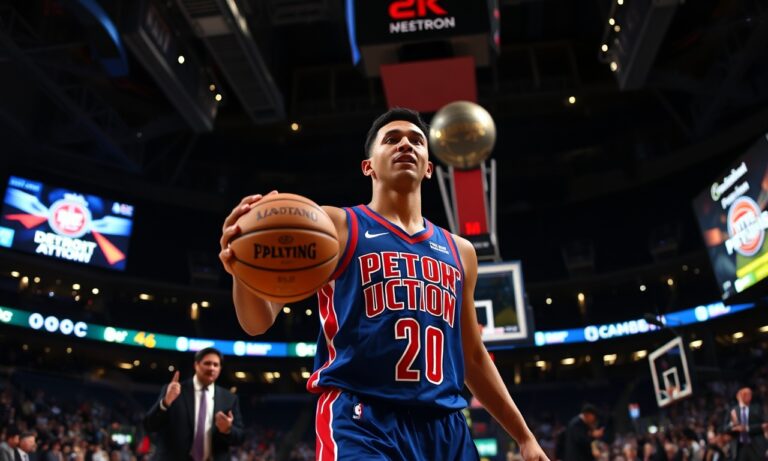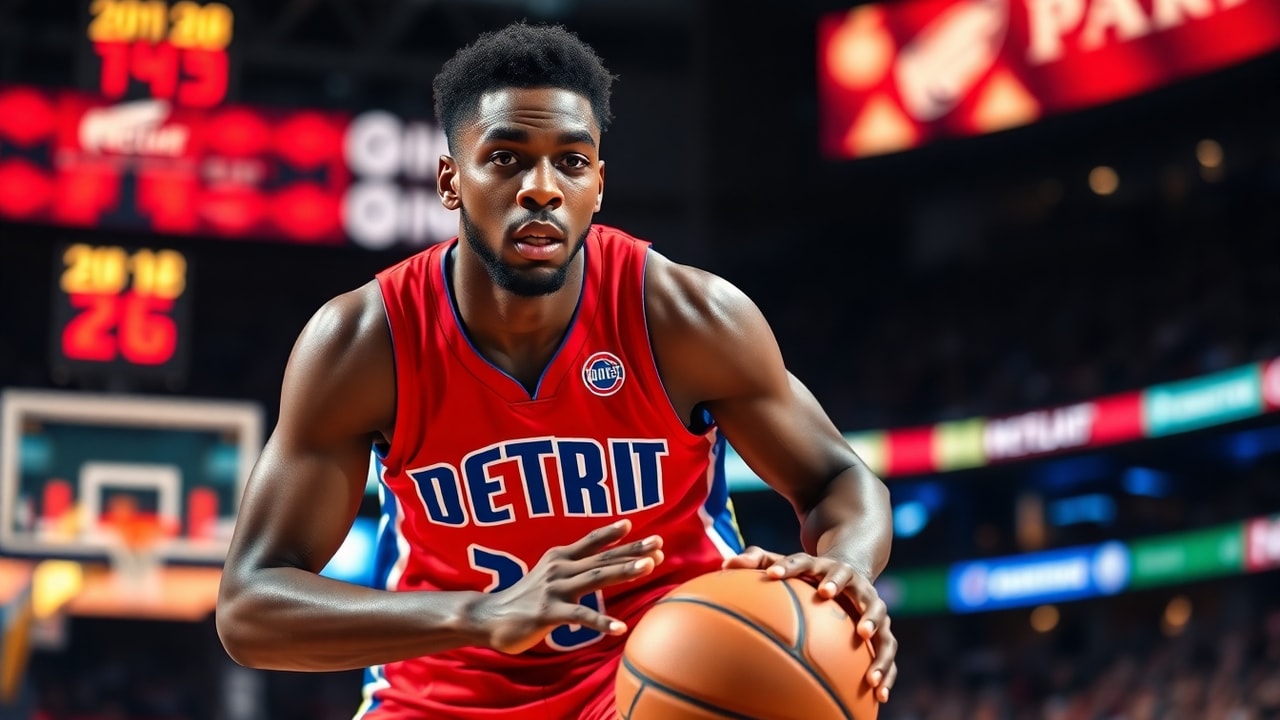
The Detroit Pistons’ newest draft pick, Ebuka Okorie, entered the NBA spotlight with the kind of two-sided evaluation that often defines a young player’s early career: obvious strengths that show up in game film and measurable traits, plus one notable area that scouts expect will require targeted development. Detroit’s rebuild has emphasized building through the draft, and this rookie scouting report suggests Okorie’s path to rotation minutes will hinge on how quickly he tightens his decision-making under pressure.
Okorie’s college and pre-draft résumé—built around shooting versatility, physical competitiveness, and off-ball activity—has already generated plenty of discussion in Detroit’s basketball community. Still, league personnel and analysts typically view rookie transitions as both an opportunity and a test. For Pistons fans, the immediate question isn’t whether Okorie has upside; it’s how that upside translates to NBA spacing, pace, and defensive assignments.
Detroit Pistons rookie scouting report: Ebuka Okorie’s 3 strengths
1) Shooting shape and willingness to play in space
One of Okorie’s most consistent advantages in pre-draft evaluation was his ability to get his feet set and get shots off with timing rather than forcing them late in the shot clock. Scouts often look for players who can maintain shooting mechanics as defenders close out, and Okorie’s film is frequently cited for a controlled release and a willingness to take the looks his team creates.
That matters in Detroit because the Pistons’ offensive identity depends on whether young wings and forwards can punish closeouts. When spacing improves, it also reduces the burden on the ball-handler, which can affect how often Detroit turns half-court possessions into live drives and kick-outs.
2) Competitive perimeter defense and effort-based positioning
Okorie’s second strength in many evaluations is his defensive motor—especially his ability to stay attached to his assignment and contest without automatically reaching. In a league where wings are asked to switch and recover in high-speed sequences, scouts want players who can handle second actions and avoid getting trapped by screens.
For Detroit, that kind of effort can be a stabilizing factor. Even when a young defender isn’t perfect on first reads, consistent positioning can prevent a possession from breaking down into high-value scoring chances.
3) Off-ball activity that helps teams generate advantages
The newest draft pick’s third notable strength is his ability to move without the ball—cutting, relocating, and finding pockets where teammates can throw him the pass. In modern NBA offenses, off-ball movement is often what separates “potential” from “usefulness” early in a season, because it helps coaches trust rotations and matchups.
In Detroit’s context, those habits could be especially valuable as the Pistons continue to develop younger lineups and experiment with combinations that rely on spacing and secondary actions. When a player consistently shows up in the correct spots, it accelerates trust.
1 key weakness: the learning curve in fast NBA reads
Okorie’s key weakness: scouts expect some inconsistency in fast-ball decision-making—particularly when play breaks down and defenders force the first option. In pre-draft analysis, evaluators typically flag this category of issue as “read speed,” meaning the gap between recognizing the correct action and executing it quickly enough against NBA athleticism.
That doesn’t mean Okorie lacks basketball IQ; rather, it suggests the rookie will need a period to adjust to the timing of NBA defenses—where help arrives sooner, where rotations are tighter, and where pass windows close faster. For a young wing or forward, the difference between a good look and a turnover can be a fraction of a second.
Detroit’s coaching staff will likely emphasize reps designed to slow the game down for a rookie while still training him to react at NBA speed. Expect development focused on recognizing when to attack closeouts, when to pass instead of forcing contact, and when to settle into a safer option.
Impact on Detroit residents: why one rookie evaluation matters locally
For most Pistons fans, a rookie scouting report is never just basketball talk—it can influence how communities engage with the team and how local economic routines connect to sports. According to the U.S. Bureau of Labor Statistics, employment in major metropolitan areas is strongly tied to local spending patterns, including discretionary categories like entertainment. When Detroit’s sports calendar remains active and fan interest stays steady, it supports surrounding business activity—restaurants, parking services, and event-day retail.
While a single rookie rarely changes a city’s economy by itself, player development can affect the day-to-day rhythm of fandom. Early-season expectations often shape ticket demand, broadcast attention, and social buzz—factors that can feed into local visibility for neighborhood businesses near venues and fan gathering spots.
Detroit also benefits from a broader trend in sports recruitment: teams investing in draft prospects often invest in youth pathways and training ecosystems. Okorie’s presence as a drafted athlete can keep the focus on scouting networks and development programs that reach beyond the Palace of Auburn Hills or downtown arenas—back to schools, AAU gyms, and local basketball initiatives.
Background & data: the Pistons’ draft approach and rookie transitions
Detroit’s front office has been balancing immediate competitiveness with long-term roster construction. That approach mirrors how many NBA teams evaluate risk during roster resets: draft capital is used to obtain players with development timelines, then coaching and player performance staff try to compress those timelines through specialized training and role clarity.
In its general guidance on workforce and sports-related employment patterns, the U.S. Census Bureau has highlighted how local service sectors can vary based on demand cycles. For a Detroit sports franchise, those cycles are often tied to team performance and consumer confidence—both of which are influenced by whether prospects show early progress.
As for NBA draft analysis, the most common method used by teams and analysts blends measurable traits (strength, size, mobility) with skill-based projections (shooting profile, defensive fit, decision-making). Okorie’s strengths fit several of those projection categories—especially shooting credibility, competitive defense, and movement away from the ball—while his weakness appears tied to the “speed of the game” adjustment that often arrives with the first NBA season.
That’s why this rookie scouting report reads like a near-term roadmap: Detroit will likely judge Okorie first on whether he can contribute without causing instability, then on whether his role expands as he learns the offense and defense at NBA tempo.
What happens next for Ebuka Okorie and the Pistons
Okorie’s next step is less about headlines and more about repetition—learning defensive assignments, understanding how Detroit wants him to space the floor, and syncing his off-ball timing with the Pistons’ primary creators. If he shows improvements in read speed and reduces forced plays in transition and half-court sequences, Detroit could find a path to meaningful rotation minutes.
From a fan perspective in Detroit, the most realistic early success markers are simple: fewer ill-timed decisions, higher-quality shot selection, and defensive possessions where he competes without getting yanked by rotations. Those are the types of growth that typically precede bigger offensive responsibilities.
For now, the evaluation picture remains balanced. Detroit Pistons, Ebuka Okorie and the newest draft pick story is one of promise with a practical development timeline—three strengths that can translate quickly, and one key weakness that will be the focus of coaching and film study as the season unfolds.