The Detroit Pistons’ latest roster shakeup—prompted by an Isaiah Stewart trade—is now pushing the franchise into a more consequential part of the Detroit Pistons offseason: deciding what to build next, and how quickly to turn playing time and lineup roles into real on-court performance. Beyond the immediate change in the frontcourt rotation, the deal creates new salary-cap and roster-shaping decisions that will carry into the regular season.
While Detroit’s coaching staff and front office are still working through the implications of the transaction, the trade meaningfully shifts the team’s identity in the paint—particularly around rebounding, physicality, and interior defense. The Pistons can respond in multiple ways, including promoting younger big men, retooling their frontcourt mix via free agency, or targeting another rotation-caliber center or power forward.
Detroit Pistons moves: Three areas most likely to change after the Isaiah Stewart trade
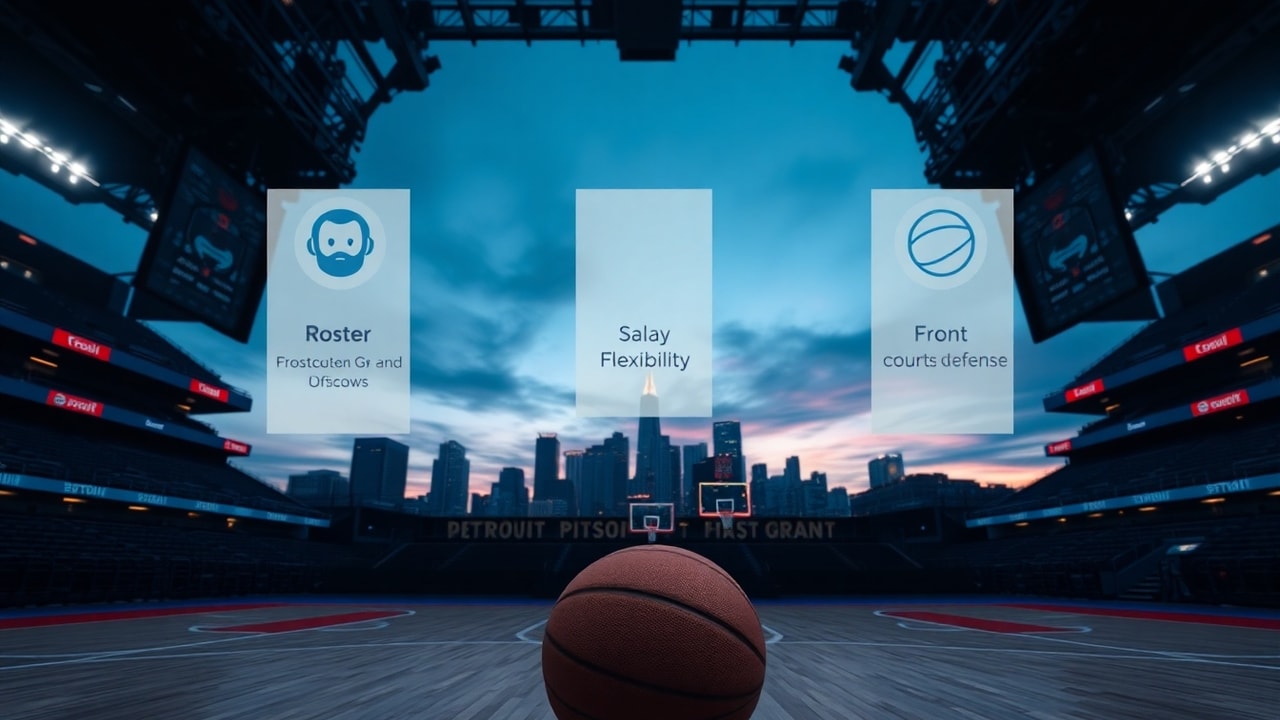
Any mid-offseason trade affects more than the player who left. It changes depth charts, practice structure, and how the organization values certain skill sets. For Detroit fans trying to understand what comes next, here are three Detroit Pistons moves that are most likely as the team rebalances after the Isaiah Stewart trade.
1) Frontcourt depth reshuffle: sharper decisions on who starts and who closes
Stewart’s role historically blended toughness with a specific defensive approach, and his departure forces Detroit to clarify the frontcourt hierarchy. That typically means either a younger big steps into expanded minutes or the Pistons sign/trade for another player who can match Stewart’s style while fitting the team’s offensive constraints.
According to NBA.com/stats, teams across the league regularly track lineup efficiency by player combinations and minutes. For Detroit, the practical takeaway is that the staff will likely evaluate new defensive matchups faster during summer basketball and early training camp, with the goal of building a consistent closing lineup rather than experimenting too long.
2) Roster optimization: targeting fit over reputation in the NBA trade impact
The immediate NBA trade impact is roster value—how the Pistons use their remaining resources to fill gaps that Stewart covered. Detroit’s front office now has to decide what traits matter most going forward: rim protection, screening for ball handlers, rebounding in traffic, or a big who can play in space.
Detroit has been emphasizing development and continuity in recent seasons. The team’s next moves may reflect that approach, but with sharper attention to roster fit. That matters for fans because “paper” depth doesn’t always translate to defensive communication or offensive spacing.
Data from the U.S. Bureau of Labor Statistics doesn’t track NBA rosters, but it does underscore how organizations plan around staffing needs and transitions—an analogy Detroit sports observers commonly make when describing how teams must align roles quickly after personnel changes. In basketball terms: Detroit has to decide which skills are non-negotiable for the next lineup iteration and then pursue players accordingly.
3) Salary-cap and contract strategy: creating flexibility for future roster changes
Even when the trade details are finalized, a transaction reshapes the franchise’s financial and roster flexibility. That’s where the Detroit Pistons offseason becomes more than a sequence of transactions—it becomes a timeline for how Detroit manages constraints, opportunities, and timing.
League-wide, teams use contract structure to preserve optionality around midseason needs and injury replacements. The Pistons’ next moves may therefore include trimming or reassigning parts of the roster so Detroit can respond quickly when trade markets open or when player development milestones are reached.
According to the U.S. Department of the Treasury, businesses facing recurring financial obligations often plan for liquidity and contingency planning. Sports front offices operate differently, but the principle is similar: roster construction decisions after an Isaiah Stewart trade can set the tone for what the team can do later, including whether it can absorb a contract in a trade or add a player through free agency without sacrificing developmental goals.
Impact on Detroit Residents: why a roster trade matters locally
For many Detroit residents, the Pistons aren’t just a sports product—they’re part of the city’s cultural rhythm. Ticket demand, neighborhood game-day traffic, and local media coverage often rise when Detroit feels like it has a defined plan, even if the plan takes time to prove itself on the floor.
At the same time, a meaningful trade can affect how fans experience the season. Less certainty can translate to more variability early—especially if younger players are asked to take on expanded responsibilities before they fully settle into new defensive assignments and offensive roles.
Detroit-area businesses that benefit from Pistons-related foot traffic—including restaurants and bars near downtown and surrounding venues—typically respond to the team’s broader visibility. When Detroit’s on-court direction becomes clearer, interest often stabilizes, and that can support consistent planning for employers working around game schedules.
Detroit’s broader sports economy also connects to local efforts to maintain vibrant downtown corridors. While municipal policy doesn’t determine NBA rotations, community planning and events calendars often align with major league scheduling. If Detroit’s roster changes lead to a sharper identity—more consistent defensive effort, clearer lineup roles, or improved competitiveness—those changes can indirectly bolster local engagement.
Background & Data: interpreting what the trade changes
An Isaiah Stewart trade affects multiple layers of team construction: player availability, lineup matchups, and the distribution of practice reps. In the modern NBA, teams also evaluate how players influence opponent shot quality and how their presence alters spacing and driving lanes.
Basketball reference points like defensive rebounding, foul profile, and rim-protection style can help contextualize what Stewart brought to Detroit. But the more important question after his departure is not just “who replaces his minutes,” it’s “what type of defense does Detroit want to play when opponents attack the paint.”
Detroit’s scouting staff will likely use several evaluation inputs beyond traditional box scores, including film-based assessment and tracking metrics used around lineup performance. While fans may not see every detail, those approaches shape decisions like whether to prioritize a center who can contest shots without overcommitting, or whether to emphasize switching and faster coverages at the defensive end.
Finally, from a community perspective, roster change timelines often mirror how organizations rebuild. Detroit’s citywide culture has long been tied to persistence and adaptation. The Pistons’ next set of Detroit Pistons moves will be watched not only for immediate results, but for whether the franchise’s identity becomes more consistent as the season approaches.
What happens next for the Detroit Pistons
The immediate next steps after an Isaiah Stewart trade will likely include confirmation of Detroit’s rotation plan for training camp and summer runs, followed by decisions in free agency and any additional trades that address the frontcourt gap. Over the next weeks, watch for three signals: increased clarity on the starting lineup, changes to how Detroit uses minutes between rookies or young players and established veterans, and contract moves that suggest how the team plans to preserve flexibility.
For fans, the key is to track whether Detroit’s Detroit Pistons offseason moves translate into a coherent lineup—one that can defend consistently and create offensive rhythm across multiple scenarios, not just in isolated stretches. If Detroit can establish that foundation early, the absence of Stewart’s specific skill set may be less disruptive than it might otherwise feel.
Whatever the Pistons decide, the direction coming out of this trade will shape how Detroit residents experience the season—how the team is discussed in local bars, how games feel on courtside screens, and whether the city’s basketball story becomes more defined as the roster takes its final form.