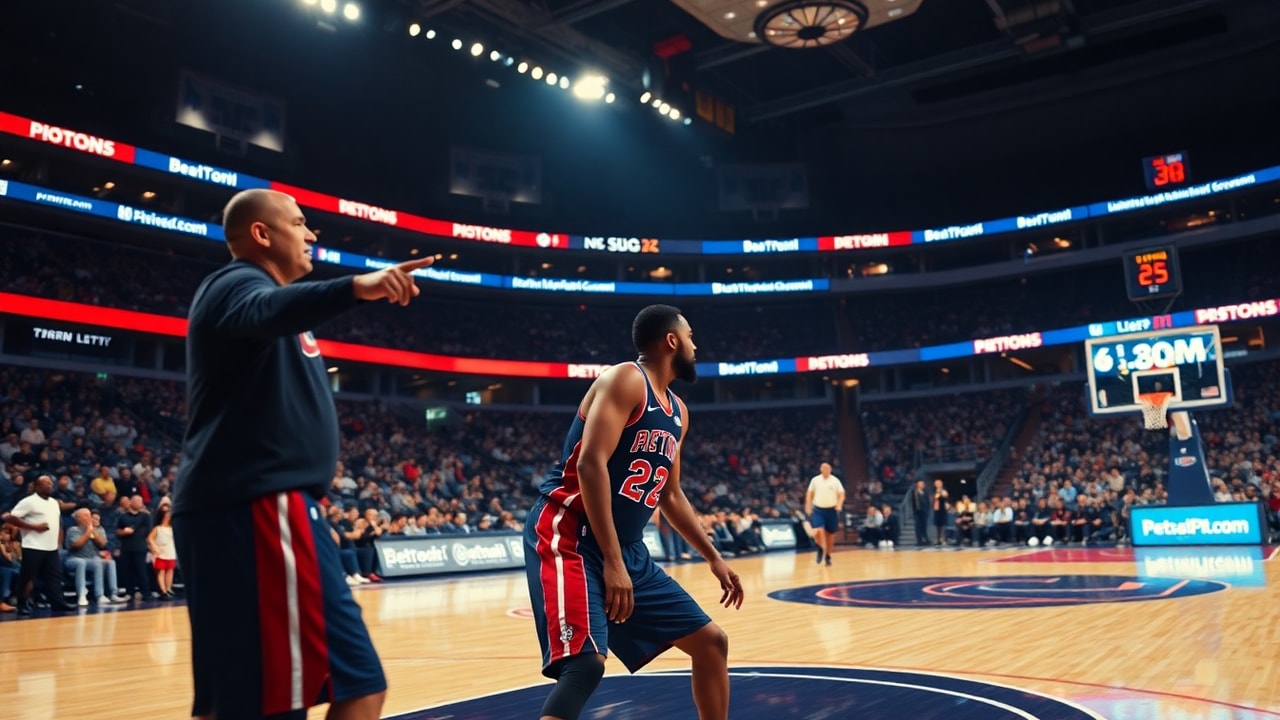
The Detroit Pistons’ offseason decisions will be scrutinized not just for roster size and cap flexibility, but for how they plan around a particular style of opponent that can swing games quickly. One name to watch in that context is Isaiah Joe, the sharpshooter whose ability to turn a patient half-court possession into a high-leverage burst of points has become a recurring blueprint for contending teams. For Detroit, avoiding an “offseason trap” tied to how they evaluate player matchup and spacing could matter as much as any single free-agent signing.
In a league where roster construction often favors shooting gravity and switch-friendly lineups, the Pistons can’t afford to treat the Isaiah Joe challenge as a one-off problem. Instead, the team will need a clear plan for how Detroit basketball builds defensive communication, scouting continuity and offensive countermeasures against the kind of off-ball movement and catch-and-shoot releases that define Joe’s impact.
Main Section: What the “Isaiah Joe trap” really means
When teams lose to shooters like Joe, the breakdown is rarely just a missed closeout. More often, it’s the sequence: a rotation that arrives late, a screen that forces an awkward contest, or help defense that collapses too far and leaves a clean look for a receiver who doesn’t need dribble penetration to score.
For the Detroit Pistons, “avoiding the Isaiah Joe trap this offseason” means addressing two things at once: how Detroit defends that specific matchup, and how Detroit values the defensive traits required to execute it over an entire regular season. Detroit’s player matchup challenges are shaped by modern spacing—especially against opponents that can punish a defense that hedges, overhelps, or gets caught chasing rotations.
According to NBA.com game and player reporting, Joe’s scoring profile emphasizes efficient threes and quick-release attempts that often arrive before defenders can reset their feet. That matters for Detroit’s planning because the Pistons’ offseason priorities likely include both personnel and system continuity: if a defensive scheme depends on certain communication habits, those habits must be trained and reinforced during the offseason rather than improvised during the season.
Detroit basketball analysts and local beat writers have also pointed out that Pistons opponents frequently gain advantage when a defense assigns too much responsibility to the nearest helper, allowing a secondary shooter to find space. Joe fits that role particularly well—he can operate as a trigger shooter, punishing offenses that “almost get there” but don’t fully contest.
Roster evaluation risk: chasing “average” instead of matchup fit
The offseason trap, in practical terms, is over-optimizing for broad skills without being specific about matchup requirements. A player can look effective in isolation—say, as a catch-and-shoot threat or a general perimeter defender—yet still fail when the Pistons need someone to absorb screens, communicate on switches, and recover to contest a quick pass-and-shot.
For Detroit, it’s also about how the team will balance youth development with immediate defensive stability. If Detroit drafts or acquires players solely based on one dimension—like three-point volume—without verifying whether those players can handle the off-ball movement patterns that create Joe’s best looks, the team risks repeating the same defensive pattern in new uniforms.
That’s why the Pistons’ offseason scouting should emphasize the whole possession: the screen, the closeout angle, the timing of help rotations, and the ability to recover when a teammate relocates. The most costly misses often come from a defender arriving a step too late, turning a “make them put it on the floor” plan into a free three.
Impact on Detroit Residents: why this matters beyond the box score
Detroit basketball is a city-wide conversation, and the Pistons’ performance affects more than sports talk. A meaningful postseason push can influence local interest in team events, youth basketball programming, and even small-business activity around games in the downtown and Midtown corridors.
Local tourism and event economics are especially sensitive to regular-season competitiveness. According to data and reporting from the U.S. Bureau of Labor Statistics (BLS), employment in leisure and hospitality is tied to demand patterns that can rise during periods when major sports teams draw larger crowds. While the BLS does not measure Pistons attendance directly, the broader connection between consumer spending and seasonal demand is well documented in the categories that include sports and entertainment.
For fans who regularly attend games, an offseason that prioritizes matchup readiness against high-end perimeter shooting can reduce the likelihood of “momentum swing” losses—those nights when a few early threes force the Pistons to abandon their defensive approach. That, in turn, affects the in-arena experience: fewer blow-by moments can mean a more stable pace, more meaningful possessions late, and a more competitive atmosphere for local supporters.
Detroit also has a tradition of building community through basketball. When a team’s style improves—especially defensively—local youth programs often see better engagement, because teaching resources can align with what coaches are actually using at the NBA level: closeout footwork, communication, and disciplined rotations.
Background & Data: Detroit’s modern defensive math
To understand why the Isaiah Joe matchup is so relevant, it helps to frame the broader league trend: perimeter shooting and spacing have become durable advantages because they force defenders into difficult tradeoffs.
From a basketball standpoint, Joe represents a class of modern wings and guards who thrive on timing. He doesn’t always need to create from the dribble; he needs the defense to be slightly late or slightly mispositioned, and then he turns the moment into points. That kind of production is difficult to eliminate with effort alone—Detroit needs structure.
Detroit’s offseason decisions should therefore connect to specific defensive mechanics. NBA coaching widely emphasizes that perimeter defense is less about individual hustle and more about synchronized timing—help arrives at the right moment, defenders switch or fight over screens consistently, and closeouts are executed without fouling or losing balance. Joe’s skill set makes timing errors expensive.
According to Basketball-Reference, Joe has posted multiple seasons with strong three-point efficiency and consistent volume, reflecting not only shooting talent but shot selection that aligns with what defenses give up. For Detroit, that means scouting should focus on what enables Joe’s makes: the distance defenders are forced to travel, the spacing created by offensive movement, and the pass lanes opened when rotations are late.
What Detroit should measure in the offseason
To avoid an offseason trap, Detroit’s internal evaluation could include:
First, how quickly defenders recover to contest after a first rotation—particularly against offenses that utilize off-ball screens to create quick pass-and-shot windows.
Second, whether Detroit can maintain assignments when lineups change due to injuries or lineup matching. A weakness that only appears in certain groups can be hidden during the season but exposed in playoffs-style matchups.
Third, how Pistons players handle closeouts without overcommitting. Against a shooter like Joe, overhelp can open an instant three.
What Happens Next: Pistons’ offseason priorities and matchup testing
As the NBA offseason approaches, Detroit’s front office will have to convert these matchup lessons into tangible actions: contract decisions, training camp emphasis, and the way the coaching staff evaluates new defensive personnel.
In practical terms, that likely means early offseason film sessions that focus on Detroit’s repeated failure points—late rotations, communication breakdowns, and the inability to recover to a shooter after a screen. It also means setting development targets for players already on the roster: footwork on closeouts, sprint-and-recover discipline, and executing switches without leaving shooters behind.
Detroit can also use structured scrimmages and matchup-specific drills to pressure-test defensive coverage. If the Pistons cannot stop the rhythm of quick-release threes in practice-like environments, the regular season won’t offer a different outcome.
Keeping the plan honest
The offseason trap is tempting because it can feel like there’s a single fix—add a shooter, add a defender, or change the scheme. But the Isaiah Joe challenge suggests something more granular: Detroit needs a repeatable system that makes it hard for opponents to generate clean looks through timing and positioning. That system must fit Detroit basketball personnel and be taught with consistency from the start.
For Pistons fans in Detroit, the goal isn’t to overreact to one player. It’s to treat Joe as a case study: a reminder that elite spacing rewards small defensive lapses. If Detroit avoids that trap now—before the draft, before the signing period, before training camp—the Pistons can enter next season with a sharper plan, fewer easy threes allowed, and a better chance to compete in the possessions that decide close games.