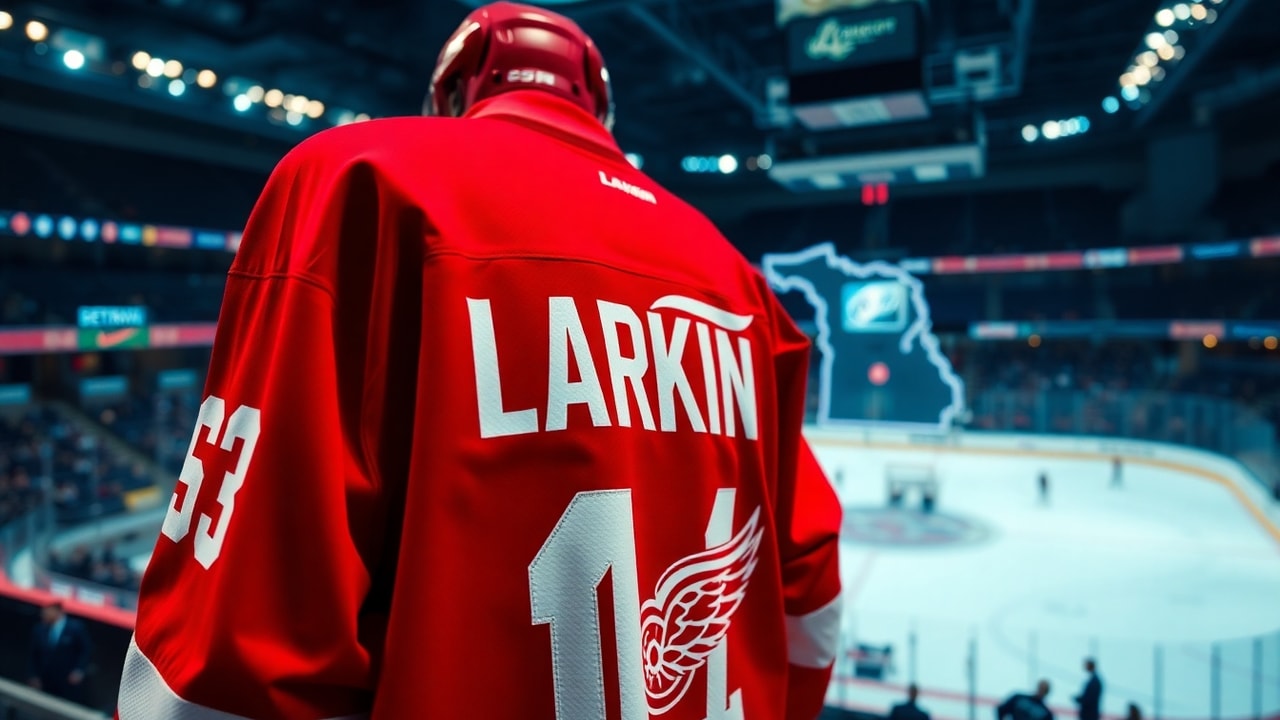
With the 2025 NHL offseason approaching, renewed trade rumors have resurfaced around the Minnesota Wild and the roster direction of their core. Central to the chatter is the possibility that Minnesota could be looking at a landscape shift—and that has Detroit fans watching the Detroit Red Wings with special focus on Dylan Larkin as contract talks and team needs begin to intersect.
Although nothing has been confirmed, the idea of a Detroit-to-Minnesota pathway for Larkin has gained attention because it reflects how both clubs are weighing competitive timelines, salary-cap realities, and the value of a top-line center/wing player who can anchor special teams and provide stability during a rebuild or “retool.” For Detroit, the question is not just whether Larkin could fit elsewhere—it’s what a serious pursuit would say about the Red Wings’ priorities going into 2025.
Why Detroit’s interest in Dylan Larkin is getting Minnesota attention
The Minnesota Wild have spent recent seasons balancing development with the need to stay relevant in a tight Central Division. When teams discuss possible acquisitions during the offseason window, the conversation often starts with “what can we realistically change?”—especially if a club believes its current roster structure is close but not quite optimized.
According to NHLPA materials on the collective bargaining framework, player contracts and roster build constraints are shaped by the salary cap rules and trade provisions in the current CBA. Those factors can influence which types of deals are even possible before any team publicly confirms interest.
In Minnesota’s case, any talk involving a player like Larkin tends to surface because he represents the “on-ice reliability” category teams covet: leadership, positional responsibility, and consistent production that can reduce the number of unknowns in a postseason push. For Detroit, attaching that profile to a Minnesota scenario points to a broader reality—front offices can use trades to recalibrate team identity without waiting multiple years for prospects to fully mature.
For Wild followers, the emerging connection between Detroit and Minnesota is less about a single trade concept and more about the signaling value. If a high-end forward becomes part of the offseason equation, it can force Minnesota to answer: does the team keep its core as-is, or does it use the offseason to adjust the roster’s “center of gravity” toward a more defined competitive window?
Contract talks, roster math, and what the rumors suggest
In hockey coverage, contract talks don’t live in isolation—they can be catalysts for trade speculation. Detroit’s market position, including how it handles core-player commitments and year-to-year flexibility, matters to any fan or executive trying to interpret what comes next. The Red Wings’ internal cap planning would shape whether a move involving Dylan Larkin could even be discussed in credible terms.
League rules around salary-cap accounting and trade timelines are well-established, but the key variables are team-by-team: how much space is available, how quickly a team can move salary, and what the return would look like in terms of both contract length and player fit. As a result, many trade rumors remain speculative until teams finalize their salary-cap posture after key offseason decisions.
According to a 2024 analysis by CapFriendly and broader NHL salary-cap reporting across major outlets, the practical challenge in modern NHL trades is often matching salaries and controlling long-term roster costs. While these reports are not official confirmation of any deal, they explain why a rumor about a star-caliber player tends to produce “secondary speculation” about what other teams might be willing to trade back—prospects, picks, and contract flexibility.
In Detroit, that means fans may be asking two questions at once: Would the Red Wings consider moving Larkin, and if they did, what would the return need to include to protect Detroit’s future? For Minnesota observers, the parallel question is whether the Wild could absorb a player of that profile while still meeting their longer-term roster goals.
Impact on Detroit Residents: beyond headlines
Detroit’s relationship with the Red Wings has always extended beyond the rink. The organization’s stability affects local sports culture—how fans spend, how local businesses staff game-day coverage, and how youth programs and community partnerships attract attention.
Major team changes can also influence the broader civic mood. When rumors swirl around a franchise player, it typically impacts season-ticket decision-making and drives demand for local hospitality tied to the schedule. From a practical standpoint, that can shift where fans go before and after games and can influence short-term business revenue for bars, restaurants, and retail near downtown and the surrounding entertainment district.
But there’s a longer-term angle, too. A significant roster move could affect Detroit’s market narrative: whether the team is signaling a new competitive phase, leaning into a faster rebuild, or reinforcing a “core plus additions” strategy. Those signals can carry over to how the Red Wings attract sponsorship interest and how they sustain community programming momentum.
Detroit area sports economists often point to the “multiplier effect” of major-league teams—how game attendance and related spending reverberate into local employment and consumer demand. While this specific scenario is still rumor, the pattern is consistent: major moves in high-profile franchises tend to show up quickly in fan behavior, then more gradually in local business planning and media attention.
Background & data: why Minnesota and Detroit are being compared
Detroit’s interest in any high-impact player naturally invites comparisons to the teams Minnesota has been competing against in the Central. The NHL’s modern roster reality is that teams often reshape through the offseason—sometimes by signing, sometimes by trading, and sometimes by adjusting the roles of existing players rather than changing talent alone.
From a logistics perspective, Minnesota’s organizational approach has been shaped by a need to develop and deploy talent while maintaining enough roster balance to remain competitive. Data from the NHL’s official statistics portal shows how production and discipline metrics—such as points per game and special teams effectiveness—tend to cluster around teams that can stabilize roles. In offseason roster conversations, that usually translates into leadership players being prioritized because they can reduce the variability that comes with replacing multiple pieces at once.
For Detroit, Larkin’s profile makes him a reference point in almost any discussion about identity. He has long been associated with a specific kind of roster usefulness—responsible play, offensive presence, and the kind of messaging that a franchise sends when it wants consistency. That is why even a rumor arc that links Detroit Red Wings to Minnesota’s offseason planning can feel like more than just rumor to Detroit fans: it implies Detroit may be considering an action that changes its competitive posture.
What happens next in the 2025 NHL offseason
Trade talk often accelerates after certain milestones—when teams confirm their salary-cap headroom, finalize contract renewals, and set internal expectations for what they need in the top six or top defensive pairings. As the 2025 NHL offseason approaches, fans should expect more reporting that clarifies which players are truly available and which teams are only testing the market.
For Detroit supporters tracking possible trade rumors, the next meaningful signals will likely include: whether Detroit publicly emphasizes retaining core leadership through any contract talks; whether the club engages in talks that suggest a broader roster reshuffle; and how quickly Minnesota’s front office appears positioned to pursue a win-now adjustment versus staying committed to development.
For Minnesota fans, the questions will mirror Detroit’s: could the Wild use an acquisition of a proven, high-usage player to accelerate their timeline? Or would that come at a cost that undermines longer-term roster depth—especially if it requires sacrificing prospects or long-term cap control?
Until any deal is officially announced, all of this remains interpretive analysis grounded in how NHL teams typically operate. Still, the emergence of the Dylan Larkin storyline in Minnesota-related speculation highlights something real: Detroit’s offseason decisions will be watched closely across the league, and Minnesota’s needs may be shaping the rumor narrative just as much as Detroit’s.