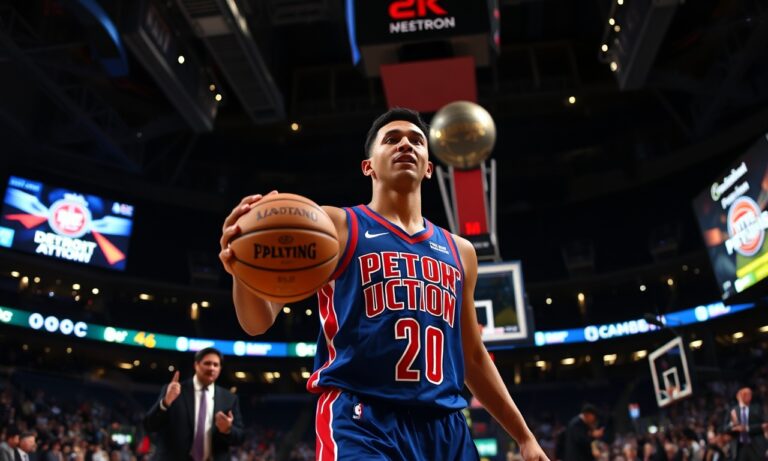
The question hovering over the Detroit Pistons this 2025 NBA offseason is simple: could Detroit actually pursue Trey Murphy III, the New Orleans Pelicans wing known for his size, shooting, and defensive versatility? With NBA trade rumors swirling around the league and the Pistons still searching for consistent floor spacing and reliable two-way depth, a potential Trey Murphy III trade is the kind of move that would signal Detroit is ready to compete beyond the lottery picture.
Still, turning that idea into reality would likely require more than a general interest. It would mean matching the Pelicans’ valuation of Murphy—whose role, contract terms, and fit with New Orleans’ timeline could shape what Detroit is able to offer—as well as addressing the Pistons’ own roster needs in a way that doesn’t hollow out their flexibility for future drafts and free agency.
Main Section
Murphy has been a particularly appealing profile for teams seeking a modern wing: he can stretch defenses with his shooting, defend multiple positions, and provide secondary creation without needing the ball constantly. For Detroit, that skill set overlaps with several of the team’s ongoing roster priorities, including adding consistent perimeter shooting from the wing and keeping lineup flexibility as games change pace.
According to Basketball-Reference, Murphy’s production has been closely tied to his ability to generate effective spacing and contribute in transition and half-court sets. That matters for Detroit because the Pistons have spent recent seasons adjusting to a faster offensive tempo while searching for the right combinations around their core.
At the same time, the Pelicans are unlikely to treat Murphy as an interchangeable piece. Publicly, New Orleans has emphasized roster construction built around athletic wings and spacing that supports the rest of its offensive ecosystem. If Detroit engages in Pelicans vs Pistons matchups this season or in upcoming matchweeks, Murphy’s role can often be used as a barometer for what the Pelicans value most in their wing rotation.
Why Detroit would need more than “draft picks and hope”
In real trade negotiations, wings like Murphy rarely come cheap. A player’s market depends on contract details, health history, role certainty, and how quickly a team believes it can compete. Detroit’s front office would need to weigh what it can send without weakening its near-term identity.
For the Detroit roster needs side, Murphy could address the kind of long-range threat that makes it easier to play bigger lineups and reduces pressure on primary ball handlers. But the Pistons also need to ensure the trade doesn’t disrupt their defensive balance or remove depth that helps them survive injuries and schedule-heavy stretches.
In practical terms, a Detroit package could include a mix of rotation players, salary-matching, and draft capital—if the Pistons have draft assets available and if they’re comfortable turning them into a more immediate, win-now type of contribution.
Impact on Detroit Residents
While a potential Trey Murphy III trade might feel like a team-management story, it has an indirect effect on Detroit residents—especially for fans and local businesses that experience the city’s sports rhythm firsthand. A more competitive Pistons product can influence everything from ticket demand and game-day spending to how often corporate groups plan events around home stands.
Local economic connections around major league sports are widely discussed. According to the U.S. Bureau of Labor Statistics, employment tied to leisure and hospitality rises and falls with demand patterns, including event-driven spikes in spending. When teams perform better, game-night attendance and regional interest often increase, which can translate into steadier business for restaurants, ride-share and taxi drivers, and retail around venues.
For fans, the local impact is more emotional but no less real. Detroiters don’t just track standings; they track whether the organization is building toward something sustainable. Murphy’s presence—if obtained and integrated correctly—could affect how quickly fans begin to view Detroit as a team that plays meaningful basketball deep into the season rather than preparing early for offseason changes.
And for younger fans, a high-upside modern wing can change the feel of the roster. It may also broaden Detroit’s ability to attract future free agents who want to join a culture that’s already investing in skill development and roster balance.
Background & Data
Trade rumors around wing players typically intensify when teams encounter mismatches between current roster construction and their championship windows. For New Orleans, the Pelicans’ approach to lineup spacing and defensive matchups can dictate whether Murphy is a cornerstone piece or a movable asset depending on the team’s internal assessment of timing.
According to NBA.com team and player information, roster decisions are influenced by salary structure and how a trade changes lineup flexibility. That’s why any Detroit discussion about Murphy must be grounded in the reality of how NBA trades work: teams need agreements that satisfy contract and roster constraints, and they also need a plan for how the traded player fits immediately.
From Detroit’s perspective, this is where Pelicans vs Pistons context can matter. Matchups between teams with contrasting play styles often reveal which roster elements become most valuable. If Detroit’s offensive game is struggling to find efficient spacing, a Murphy-like shooter can look more valuable. If Detroit’s defense is giving up too many easy looks to wings and cutters, Murphy’s defensive versatility becomes a talking point.
Still, there’s no guarantee that Detroit and New Orleans would value the same pieces. A Pelicans front office may prioritize keeping Murphy as a long-term building block, especially if it believes the team’s window is closer than the market suggests. Conversely, if New Orleans determines that salary or roster balance requires a different direction, trade talks become more realistic.
What Happens Next
The most immediate answer to “can Detroit land Trey Murphy III?” will likely come from the offseason itself—through reported discussions, contract negotiations, and team decisions made by both organizations. As 2025 NBA offseason activity accelerates, Detroit’s interest may show up in two ways: how much it’s willing to expose in trade talks and whether it continues to target players who complement its offensive structure.
For Pistons fans, the key is to watch for signals that Detroit is prepared to “pay” the price. That could include moving rotation-level pieces, committing multiple future assets, or reshaping the roster to create the space required for a high-impact wing.
Ultimately, a Trey Murphy III trade would be a statement move—one that could improve Detroit’s shooting, spacing, and defensive matchups. But it’s also the kind of transaction that only becomes realistic when team needs align and trade leverage breaks in Detroit’s favor.
If the Pistons are truly targeting the next competitive tier, the Murphy conversation could be one of the defining threads of this offseason—one that will either confirm Detroit is ready to accelerate its timeline, or underscore how difficult it is to acquire a premium wing without sacrificing long-term flexibility.