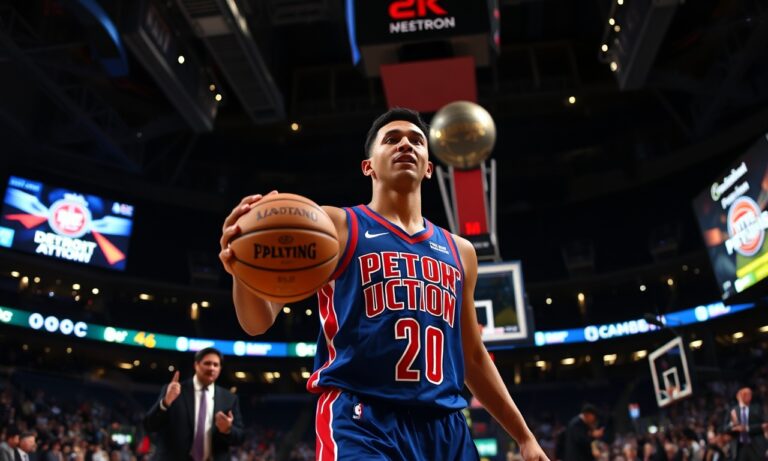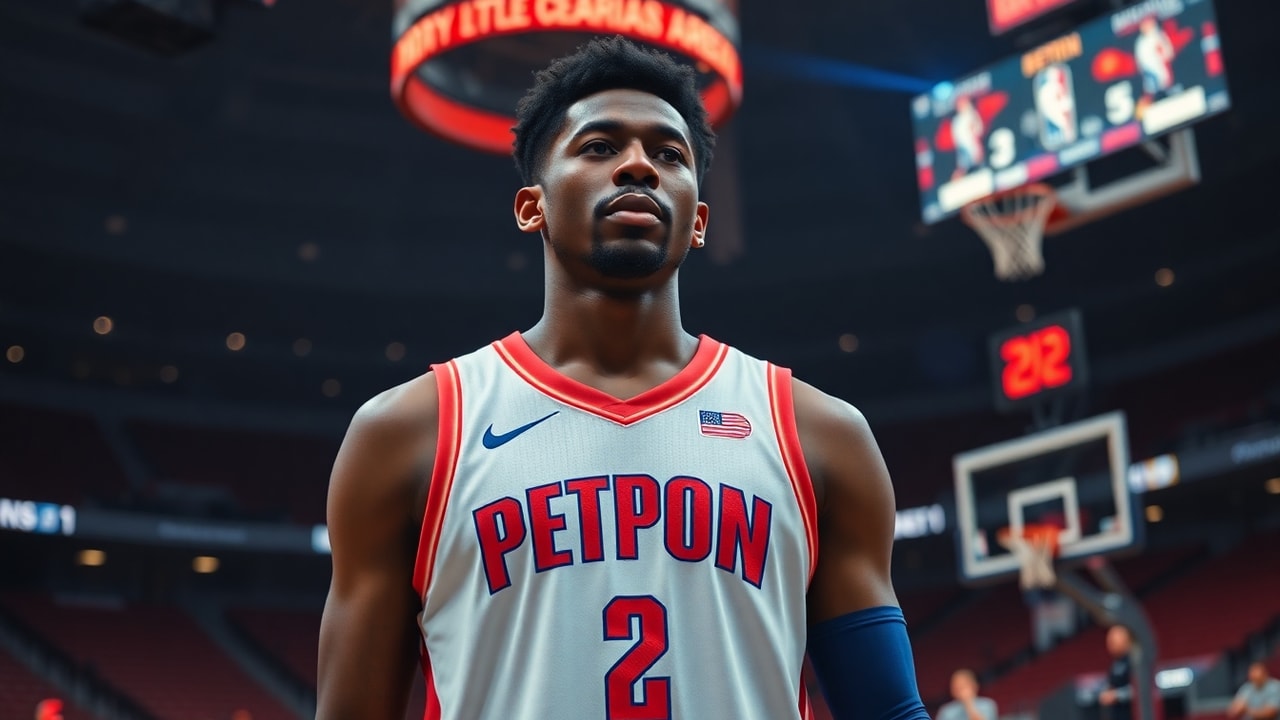
The Detroit Pistons’ offseason is often measured in roster moves, but for fans watching the center position, the timeline may hinge on one player: Jalen Duren. With preseason and regular-season preparation approaching, the Jalen Duren injury update — and how quickly he’s able to return to full workload — could determine how fast Detroit’s frontcourt identity takes shape.
Pistons insiders have long framed Duren’s development as the kind of gradual progress that becomes visible through practice rhythm: conditioning consistency, defensive positioning, and the ability to finish with confidence in transition and pick-and-roll sequences. Now, as the team’s plans firm up, the next step may arrive sooner than expected, depending on where his recovery stands day to day.
What the latest suggests about Duren’s return
There is no one-day stopwatch for a recovery plan, but the language around injuries in the NBA typically revolves around functional milestones — pain-free movement, repeatable practice reps, and medical clearance to increase intensity. That structure is consistent across the league’s medical protocols, which aim to balance short-term readiness with injury prevention.
According to a summary of NBA injury-management guidance published by the NBA Players Association, teams and players follow structured return-to-play steps designed to reduce risk after injuries. While the union’s materials don’t address Duren specifically, the overall framework helps explain why a “could come any day” storyline often becomes possible only after certain training benchmarks are met.
Detroit’s coaching staff has also emphasized that young players develop fastest when they can stay on schedule. In practice, that means monitoring how Duren handles repeated defensive slides, screen navigation, and contact during drill work — areas that affect not just his availability, but the Pistons’ overall spacing and defensive coverage.
Pistons roster news: how Duren fits the larger plan
The Pistons’ roster decisions this offseason have centered on building a rotation that can defend, rebound, and create offense without relying solely on one playmaker. Duren’s progress is central to that approach, because a center who can consistently protect the rim and finish through contact changes the ceiling of Detroit’s schemes.
When Duren is at full speed, Detroit’s defensive possessions tend to look different. Opponents have to account for verticality at the rim, and Detroit can be more selective with help rotations. That, in turn, affects how Detroit guards the perimeter — whether the scheme is designed to hedge hard on ball screens or stay home and trust the paint protection behind it.
From a lineup perspective, the Pistons can also vary the pace. A healthy Duren supports outlets and second-chance opportunities, which matters for a team that wants to turn defensive stops into early transition shots. If Duren’s return comes with a clean conditioning bill of health, Detroit could move faster toward the rotation patterns it wants to establish before the regular season.
Impact on Detroit residents: why a roster timeline matters locally
Detroit basketball isn’t just entertainment; it’s a community rhythm. Pistons games drive demand for local hospitality — from bars and restaurants in neighborhoods like Downtown and Midtown to ride-share and event-day transportation. When a marquee player is nearing a return, that can influence the volume of people planning their schedules around the season opener.
Local economic reporting has repeatedly shown that sports events support surrounding businesses, particularly in the immediate vicinity of venues. According to the U.S. Bureau of Labor Statistics, consumer spending patterns and employment changes in leisure and hospitality can shift around major entertainment schedules. That’s part of why the Pistons’ health and readiness can ripple outward beyond Little Caesars Arena.
For residents who follow the team as part of their week — whether through watch parties, youth basketball programs, or community events — an update on a young star’s status is also a marker of hope. Detroit sports audiences have learned to calibrate expectations, but the prospect of Duren taking a meaningful step can become a concrete storyline to share.
Background & data: the developmental math of an NBA big man
Young centers often develop on a specific curve: mobility, strength, and timing must converge, and the defensive details can take time to become instinctive. In the NBA, that development is not measured only by box score outputs — it’s also tracked through practice habits, footwork, and the ability to sustain effort through long sequences.
Sports science research also underscores the need for gradual return to full intensity. A return that’s rushed can create setbacks that delay the bigger goals of preseason continuity and early regular-season performance. That context matters for why a Jalen Duren injury update can feel “any day” without being guaranteed. Recovery timelines are rarely linear.
Detroit’s development staff and medical team face a balancing act: keeping Duren engaged enough to maintain momentum, while ensuring he’s physically prepared for the repeated contact of NBA games. In practical terms, that means the next step may be a combination of clearance and readiness — returning to full practice, then to game-like reps, and finally to a rotation plan that doesn’t overtax his workload.
What happens next for the Pistons and Duren
The next phase likely involves incremental confirmation points: medical evaluation, practice participation that matches the team’s intensity requirements, and coaching decisions about how quickly Duren can handle full defensive assignments. If the Pistons receive the green light for expanded reps, the organization could treat his return as a pivotal moment for the rotation.
Even as NBA offseason rumors swirl around trades and roster tweaks, the Pistons’ internal priorities will remain tied to availability and chemistry. A center returning in rhythm can reduce the need for short-term fixes and help Detroit focus on long-term offensive structure — spacing, passing reads, and transition roles.
If Duren’s recovery continues to progress, Detroit’s coaching staff will want him involved early enough to establish continuity. That could also shape the team’s willingness to experiment with lineups around him, including different pick-and-roll partners and defensive matchups.
For fans, the most meaningful updates won’t just be whether Duren is “back,” but whether he can sustain the workload. That’s the real next step — the part that tells Detroit whether its center position will anchor the Pistons’ season plans from the start.
How to follow the update
As always, official confirmations matter. Fans should look for team-issued injury reports and practice availability notes, along with credible local coverage. In Detroit, where the fanbase follows both team performance and player development closely, the best signals will come from consistent, repeatable participation rather than one-off glimpses.
Until then, the storyline remains clear: the Detroit Pistons are preparing for a season where Jalen Duren’s ability to return to full readiness could arrive quickly — and when it does, it could shift how Detroit plays on both ends of the floor.