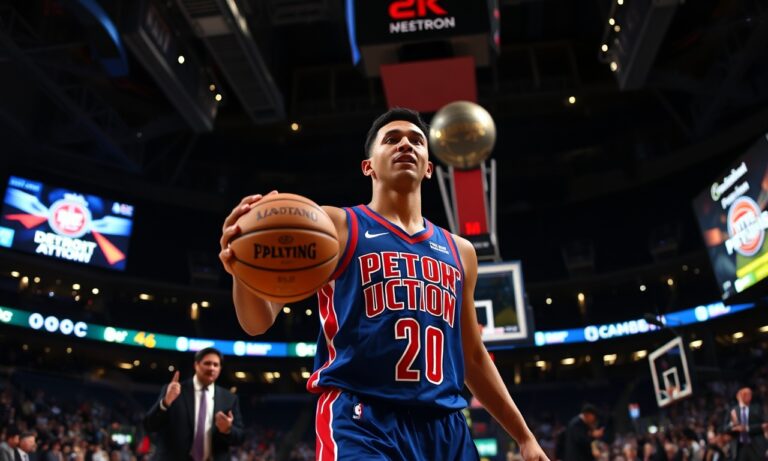
Jalen Duren’s reported player desire to leave the Detroit Pistons has quickly become the most discussed storyline around the team this summer—partly because Duren is still young enough to reshape his career trajectory, and partly because Detroit fans have watched their frontcourt options tighten and expand with each roster reset.
While details of any individual player’s private mindset can be hard to confirm, the question now for Detroit sports watchers is broader than one contract or one quote: what does a potential Jalen Duren Pistons exit desire signal about his goals, how the Pistons are evaluating their competitive timeline, and how NBA trade rumors could intersect with the organization’s long-term rebuild?
Main story: Duren’s departure interest and what it could mean
According to recent reporting from ESPN, Duren has expressed wanting a different competitive situation than the one Detroit has consistently provided in recent seasons. The Pistons’ rebuilding phase has often prioritized development, flexibility in cap management, and building a consistent identity. For a player in his position—where age, health, and role define prime-year value—the difference between potential and trajectory can matter quickly.
League history suggests that when a young player’s desire to leave emerges, it’s rarely only about money. Coaches, schematics, and opportunity are central. Duren’s skill set—rim finishing, rebounding, and defending in the paint—fits well in modern NBA systems. But a player’s perspective on “fit” can diverge from a front office’s perspective on “process.” If Duren’s priorities are playoff contention sooner, Detroit’s current team outlook—and its pace toward contention—becomes the backdrop to the story.
According to Basketball-Reference, Duren’s production and role have been trending in the direction of a featured center, which raises the question of whether his development has been matched by Detroit’s ability to build complementary talent around him.
Impact on Detroit Residents: why a Pistons storyline is a local economy story
Detroit sports coverage often focuses on what happens on the court, but the ripple effects of franchise direction show up in the local economy. When a young cornerstone is perceived as potentially leaving, it can influence ticket demand, sponsorship conversations, and even the kind of spending patterns that follow big events at Little Caesars Arena.
Local business watchers have seen how sports teams affect discretionary spending. The U.S. Census Bureau reports that consumer spending patterns fluctuate with major public events and local economic confidence. While NBA performance isn’t listed as a direct census variable, broader research on discretionary spending routinely ties big-city event calendars—like arena schedules—to how residents allocate time and money.
For Detroit fans, the immediate effect is emotional: it can feel like the rebuild is “starting over again.” For families, the impact can be practical—changes in game-day pricing, promotions, and the energy of the crowd. If Duren’s future remains uncertain, it may also affect how the Pistons market upcoming seasons and how local businesses plan for foot traffic around home games.
There’s also a community layer. The Pistons’ neighborhood engagement and youth programs are part of the city’s sports ecosystem. If trade speculation becomes persistent, organizations sometimes adjust outreach strategies to maintain continuity and morale among young participants who follow players as role models.
Background & Data: how Detroit’s rebuild timeline intersects with player leverage
Detroit’s Detroit Pistons rebuild has combined draft picks, player development, and periodic roster rebalancing. That kind of multiyear approach is common in the NBA, but it creates tension between front-office patience and player window-of-opportunity realities.
Basketball is also a data-driven league where roles evolve quickly. Teams can add shooting, playmaking, and perimeter defense around a center, but they also need consistent roster construction. The “right” complement for a rim-running center can take seasons to assemble. If a player believes that the supporting cast and competitive structure won’t arrive soon enough, the motivation to explore a different environment can intensify.
At the same time, the NBA’s modern trade market depends on timing and leverage. According to the NBA’s official media resources and widely tracked transaction reporting, teams often wait until certain milestones—coach hire cycles, midseason performance shifts, injuries, or standings momentum—before making major deals. That means NBA trade rumors can accelerate quickly once public uncertainty becomes part of the narrative.
In Detroit, those rumors are not just chatter. A young, high-upside center can be a major trade asset, and the Pistons’ willingness to move him would reflect a calculation: either build the team around him for a faster competitive turn, or convert his value into multiple pieces that address roster gaps.
What Duren’s desire to leave could say about him
From a purely strategic standpoint, a player seeking an exit often signals several things:
First: he may be emphasizing career certainty—choosing environments where his role is defined and aligned with a realistic path to postseason success.
Second: he could be reacting to how development is being operationalized. That includes coaching plans, on-court usage, and whether the team’s investment feels consistent with his growth.
Third: he may be weighing the competitive landscape in the Eastern Conference. For players whose impact peaks in their mid-to-late twenties, waiting for a rebuild to “click” can be a gamble rather than a plan.
What happens next: Detroit’s options and the likely trade-rumor timeline
For now, the most important story for Detroit readers is that this moment could force choices. If the Pistons decide that maximizing a fast turnaround is the priority, they could protect continuity and pursue trades or free-agent additions that keep Duren centered in the plan. If they conclude their competitive timeline doesn’t match Duren’s goals, the organization could explore trade offers with contenders or playoff-near teams.
In practical terms, the process usually looks like this:
- Roster evaluation: Detroit’s staff will assess whether the current group can become a playoff-caliber unit around Duren within a manageable number of seasons.
- Market checks: NBA teams frequently “feel out” what star-level assets might return in trades, especially when a player is publicly linked to departure narratives.
- Decision windows: The front office often leans on deadlines and standing changes to shape the best deals. The offseason can be active, but the market can intensify around the trade deadline as real needs become clearer.
For the Pistons, navigating Jalen Duren Pistons exit desire will require careful communication—internally with Duren and externally with fans—because trust can be as important as talent in a rebuilding franchise. Detroit’s next steps may also define recruiting power, as players and agents look at whether the organization has a consistent, credible plan.
Looking at the team outlook through a Detroit lens
For Detroit sports fans, the hardest part of this storyline is that “wait and see” is no longer enough. The Pistons’ team outlook hinges on how fast Detroit can transform raw potential into game-to-game consistency—especially on offense creation, spacing, and defensive cohesion.
Even if Duren remains, this kind of reported exit desire can become a catalyst for change. It can push management to address weaknesses sooner. And if Detroit does pursue trades, it could reshape the roster in ways that matter for years, not just months.
In a city where sports are interwoven with identity, the Pistons’ next chapter won’t just be about where a player goes. It will be about whether Detroit can turn its ambition into a lineup that feels like a destination—not a stop along the way.