Detroit’s school landscape is facing another round of hard questions about sustainability as 19 schools have been identified as operating with high costs and low enrollment. For families and neighborhood leaders, the issue goes beyond building closures or consolidations—it shapes transportation, access to programs, and how students experience school quality.
State and district officials say the goal of Detroit school reform is to align school capacity with student demand and to prioritize resources where enrollment is stronger. But the school-by-school details—where the buildings are located, what programs might be moved, and how staff assignments would change—are now driving intense local discussions.
Main Section: High costs and low enrollment in Detroit public schools
The conversation centers on the mismatch between the number of seats available and the number of students enrolled across parts of the city. According to district reporting on school performance and capacity, maintaining small enrollments can be expensive because fixed operating costs—staffing, transportation support, building maintenance, and special services—do not shrink at the same pace as student counts.
In Detroit, the impact is magnified by uneven enrollment patterns across neighborhoods. Some schools remain oversubscribed, while others operate far below capacity. When that gap persists, districts and authorizers often seek ways to reduce duplication and concentrate students in fewer locations.
“We have to look at capacity and costs together,” said a spokesperson for a Detroit education oversight unit, pointing to enrollment trends and the need for efficient spending. The spokesperson noted that any decision must also consider educational programming and student needs.
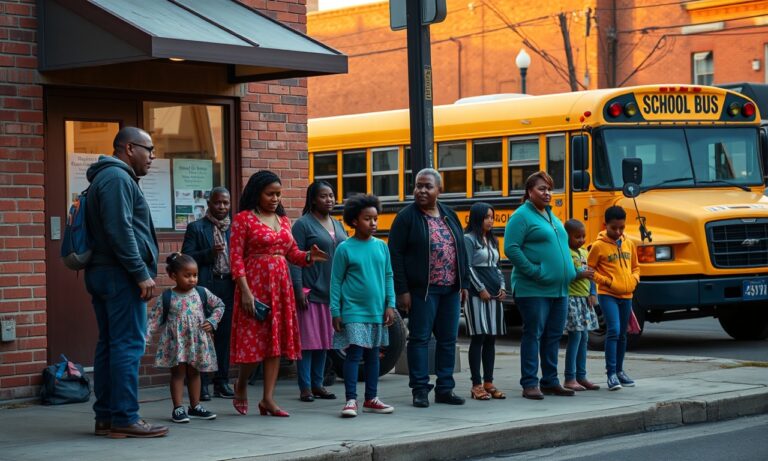
For families, the question is what “high costs and low enrollment” means for real day-to-day life. In many cases, it can mean fewer course offerings if classes are combined, changes in staffing, and longer bus routes for students reassigned to different buildings. Even when districts aim to preserve academic continuity, schedule and classroom placement can shift quickly.
Impact on Detroit Residents
Neighborhood impacts often arrive early—before any final vote or formal restructuring—because families react to rumors and headlines by re-evaluating where they enroll their children. In Detroit, where many households already weigh school options carefully, changes to school boundaries or building status can affect housing decisions and commute patterns.
Local advocates say school closures or consolidations can also weaken community anchors. Schools serve as meeting points, provide adult education and enrichment opportunities, and help sustain community identity. When a school’s future becomes uncertain, families may experience disruptions even if students ultimately remain in the same district.
According to researchers who study urban district enrollment trends, enrollment decline is not just a classroom issue—it can become a loop. Declining enrollment can lead to fewer program choices and staffing reductions, which may influence family decisions, and that can further reduce demand. Data from the U.S. Census Bureau has also shown Detroit’s population has changed over time, shaping the broader context for school-age enrollment and the size of the potential student pipeline.
For students with special education needs or those who rely on specific supports, any restructuring may increase the urgency of planning. The district’s ability to provide comparable services after a consolidation—such as staffing for individualized education plans, transportation eligibility, and accessibility accommodations—becomes central to whether families perceive changes as constructive.
“The transition matters,” said a Detroit-area education advocate who follows policy implementation for families. The advocate emphasized that communities need clear timelines, transparent enrollment projections, and attention to how services will be maintained for students who require them.
Background & Data: How enrollment decline and costs intersect
Detroit’s school reform debate is rooted in longer-term trends. Enrollment decline has occurred across many large urban districts nationally, driven by a mix of demographic shifts, household moves, and policy factors. In Detroit, those pressures have been particularly consequential because the city has fewer students than in earlier decades—yet buildings and staffing obligations remain.
School costs include both direct instructional spending and indirect fixed costs. Even if class sizes adjust, districts must still manage building upkeep, utilities, transportation, and administrative structures. When fewer students use a facility, the per-student cost rises, and oversight bodies may treat the situation as unsustainable.
While enrollment decline is often discussed in broad terms, decision-making typically happens at the building level. That is where local data—capacity, utilization rates, and academic performance indicators—guides proposals. The identification of 19 schools for high-cost, low-enrollment concerns indicates that officials are looking closely at which sites may be most difficult to sustain.
Oversight standards also include ensuring students have reasonable access to transportation and academic programming. If schools are closed or repurposed, districts often have to re-map how students are assigned to campuses, and the logistics of transporting students across Detroit’s geography can become a major constraint.
As Detroit evaluates these questions, education funding remains a critical variable. State aid, per-pupil formulas, and other revenue streams can influence how much flexibility districts truly have. If funding is tightly tied to enrollment counts, maintaining underutilized buildings can quickly become a financial challenge.
What Happens Next: Detroit school reform under pressure
Officials typically approach these issues through a mix of internal review, public engagement, and formal action under district or charter authorization processes. For families, the next steps often involve enrollment projections, facility plans, and staffing guidance—followed by public meetings where residents can ask how changes will be implemented.
In the near term, parents can expect more information sessions focused on assignment options, transportation routes, and the fate of specialized programs. Key questions include whether districts plan to merge grade levels within remaining schools, relocate programs to other buildings, or shift resources to improve performance at campuses with higher demand.
Even when the goal is efficiency, reform efforts can be judged by outcomes. Supporters of consolidation argue that concentrating students can strengthen classroom offerings and reduce costs that otherwise drain academic budgets. Critics caution that closures can undermine community stability and may not address the underlying needs of families.
For Detroit residents, practical preparedness is essential. Families considering school choices may want to track announcements carefully, ask for written information about transportation eligibility, and verify how services for individualized supports will be handled if their campus changes.
Local impact: Beyond the schoolhouse
The debate over Detroit public schools reverberates through the city’s broader social and economic fabric. Schools influence workforce readiness, community wellbeing, and neighborhood stability. When students attend schools consistently and receive the services they need, the benefits can extend far beyond graduation.
At the same time, financial pressures are real. If enrollment continues to decline in certain areas, the cost to operate small schools can crowd out other investments, including classroom supplies, tutoring, student support staffing, and building upgrades.
Detroit’s challenge is to balance fiscal responsibility with educational continuity. That balance determines whether the next chapter of Detroit school reform is experienced as a practical modernization—or as a disruption that leaves families navigating uncertainty.
Background & Data Summary
• 19 schools have been identified for high-cost, low-enrollment concerns in Detroit public education planning.
• Enrollment decline and fixed operating costs can increase per-student expenses at underutilized sites.
• Education funding formulas and building capacity constraints shape what reforms are feasible.
• Families may face changes to transportation, assignments, and program availability.
As Detroit moves forward, residents will be watching for clarity on timelines, a student-centered approach to transitions, and measurable commitments to improve learning opportunities—even as the system adjusts to changing enrollment patterns.