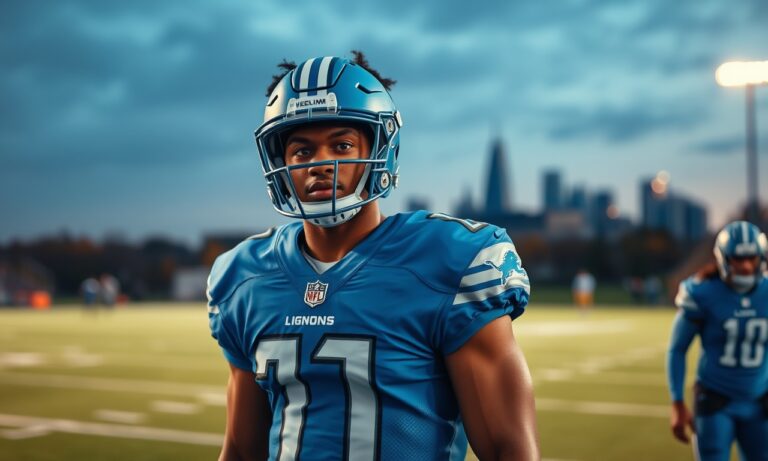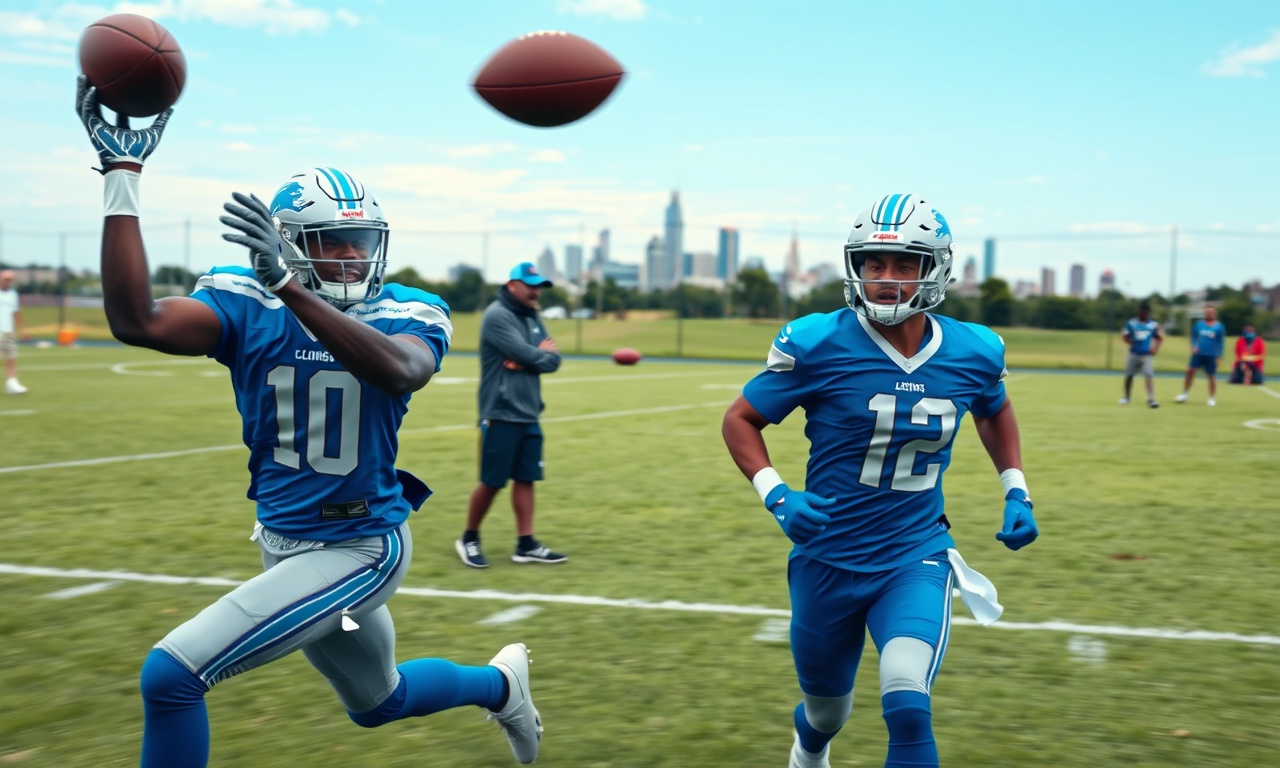
As the Detroit Lions move through training camp practices and roster decisions approach, a new round of fan debate is taking center stage: Isaac TeSlaa vs. Jahmyr Gibbs. Online and in team-focused talk around the city, Lions fans are weighing how the offense should use its backs—specifically whether Detroit should prioritize TeSlaa’s role in the running game and in-field physicality or continue leaning heavily on Gibbs’ speed, pass-catching, and playmaking ability.
The discussion reflects more than fantasy football preferences. In Detroit, it’s also a proxy for what fans want the offense to look like on Sunday: a backfield built for power and downhill efficiency, or one that turns plays with space, angles, and tempo.
Lions fans debate: TeSlaa’s fit vs. Gibbs’ impact
On social media and during meetups at local sports bars, fans are framing the Lions fans debate around three main questions: who is best for early-down consistency, who creates the most explosives, and who gives Detroit the most flexibility when the play calls shift from run to pass.
Supporters of TeSlaa argue that a strong, repeatable inside running game helps keep defenses from stacking the box, which then makes life easier for the quarterback and receivers. They point to how Detroit’s offensive line and play-calling can benefit from a back who can reliably handle contact and keep drives on schedule.
Fans who favor Gibbs, meanwhile, say the Lions’ offensive upside is tied to his versatility—both as a runner and as a receiver out of the backfield. The argument is that Gibbs changes how defenses align and how they respond, forcing coverage adjustments and creating mismatches that can surface even in short-yardage situations.
“When Gibbs is involved in the passing game, it’s hard for defenses to predict what the Lions will do next,” said a beat writer familiar with Detroit’s offensive schemes, speaking generally about how versatile backs affect defensive decisions during training camp preparation. (The writer requested anonymity because they weren’t authorized to discuss internal practice details.)
On the other side, those leaning toward TeSlaa emphasize the importance of balance. If Detroit’s run game can sustain longer drives, it can reduce the number of offensive possessions needed to score—an approach that can matter in games where field position and clock management become pivotal.
Training camp debate becomes a real position battle
Detroit’s training camp storyline is ultimately about roles, not hypotheticals. Coaches typically build depth charts around how players perform in practice settings—especially in pass protection, route recognition, and the ability to execute on timing plays.
Gibbs’ reputation as a multi-dimensional threat tends to elevate his value in a wide range of offensive packages. But TeSlaa’s supporters note that football isn’t played in highlight reels; it’s played in the unglamorous moments—third downs, red-zone reads, and short-yardage carries—where execution can decide whether drives stall or continue.
“Rosters are won in the details—protection, staying on schedule, and catching the ball when it matters,” said Ben Johnson, a former NFL assistant coach and an analyst who has covered offensive decision-making, in remarks published by NFL Football Operations and coaching education resources (as summarized in a widely circulated coaching breakdown). His comments underscored the general evaluation criteria teams use in practice and position-group work.
For Lions fans, that means the position battle isn’t just a theoretical comparison; it’s tied to what happens during drills that are visible in camp media sessions—snap counts, routes run, and how often coaches emphasize specific skills.
What the team needs—and what Detroit fans are reacting to
Detroit’s fan base has grown increasingly attentive to the way backfield usage shapes the entire offense. With the NFL’s modern emphasis on efficiency, teams are often balancing a feature runner with complementary skills from another back who can keep defenses honest.
That’s why the Detroit NFL news conversation around TeSlaa and Gibbs has taken on a broader tone. Fans aren’t only asking, “Who’s better?” They’re asking, “What’s the best structure for Detroit’s offensive identity?”
In practice, the decision can influence: how often the offense signals run early in sequences; whether defenses are forced to spread out or can crowd the box; and how frequently Detroit can attack matchups in the passing game. If Detroit can run effectively and stress defenses vertically with the same personnel, it can make play-action and play-fakes more credible.
Impact on Detroit Residents: more than football talk
Training camp debates may sound like pure sports content, but they ripple through Detroit’s local culture. The Lions are one of the city’s most shared institutions—something many residents follow in workplaces, neighborhood bars, and community gatherings—especially during offseason and preseason periods.
When fans argue about backfield roles, local sports venues often see that attention translate into conversation and attendance. Detroit has a deep tradition of game-day social life, and the early-season build-up tends to draw people into bars and watch parties even before the regular season begins.
There’s also an economic angle that follows NFL attention. According to the U.S. Census Bureau’s economic data on retail and food services, the restaurant and drinking establishment sector is sensitive to consumer spending patterns, including seasonal spikes tied to major local events. While the data doesn’t measure training camp debates directly, it helps explain why communities often notice downstream effects when sports interest increases.
And for Detroit residents who work in hospitality and event-driven services, the Lions’ presence is part of the rhythm of local demand. The more fans engage in the lead-up—through media coverage, watch parties, and community conversations—the more likely that engagement extends to local spending behaviors.
Background & data: why backfield versatility matters
The NFL has increasingly rewarded players who can contribute in multiple phases. Data- and performance-focused coverage across the league has shown that backs who can run effectively and catch passes create matchup challenges. Defensive coordinators must decide whether to prioritize stopping the run, covering routes into open space, or accounting for pass protection and late-cycle reads.
Detroit’s offense, like many modern systems, can stress defenses by rotating personnel and by changing formations without changing the fundamental play concept. Gibbs typically fits that mold as a dynamic target and runner. TeSlaa, in turn, can be evaluated on how well he complements that approach—whether he can handle inside and physical assignments while also buying time for play-action and keeping the run-game credible.
For fans trying to make sense of what they see in practice, it helps to remember that “who looks better” doesn’t always match “who the coaching staff trusts most.” Evaluation in camp often focuses on repeatable skills: pass protection assignments, ball security, situational awareness, and how consistently a player performs under the same constraints that show up in games.
What happens next for the Lions—and the debate
The TeSlaa vs. Gibbs conversation is likely to intensify as Detroit closes out camp and moves into preseason game usage. Fans will look for evidence in how coaches distribute carries, targets, and snaps, particularly in scenarios that mirror the regular season: third downs, red-zone sequences, and two-minute opportunities.
In the coming weeks, several indicators may clarify the roles. Will TeSlaa see more early-down work if Detroit emphasizes power-run efficiency? Will Gibbs remain the go-to option on third downs if pass routes and screen opportunities are emphasized? And how often will both backs appear together in packages designed to keep defenses guessing?
Whatever the outcome, the Lions fans debate is likely to remain a defining feature of Detroit’s camp atmosphere—proof that for many residents, the story isn’t only the final roster, but the process of deciding how the offense should be built.