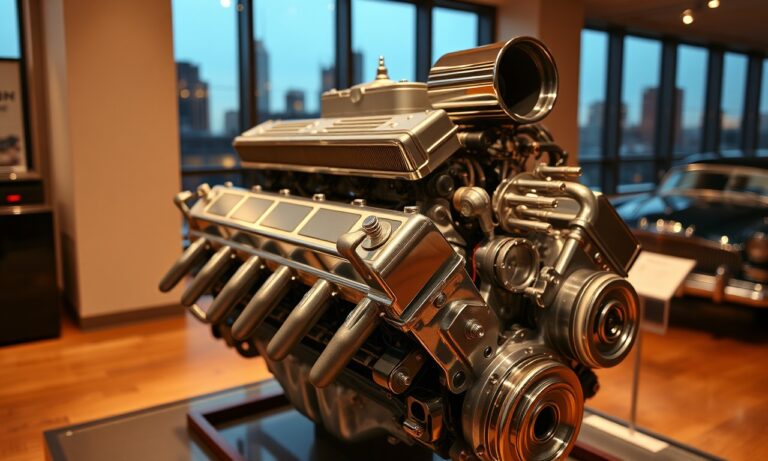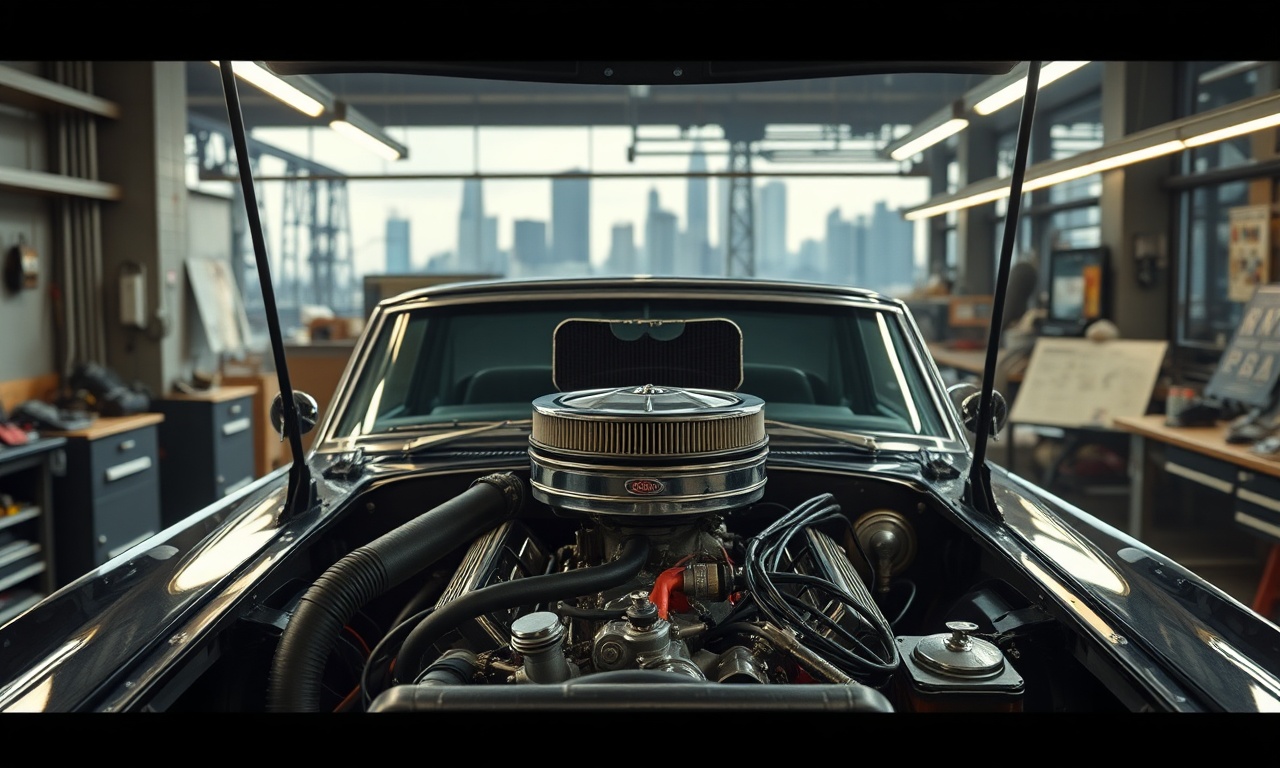
Detroit’s reputation for horsepower is usually traced to the loudest names and most famous models of the muscle car era. But a closer look at the city’s engineering record suggests an overlooked milestone: Detroit’s first widely recognized 500 horsepower V8 breakthrough wasn’t always packaged as a headline feature. Instead, it appeared in a way that many buyers and even some historians missed at the time—hidden in plain sight among production engines and performance upgrades.
As automakers and historians revisit the evolution of high-output V8s, the story has become more than trivia. It reflects how Detroit innovation was built: incremental, competitive, and sometimes easy to overlook unless you know exactly where to look in the paperwork—engine ratings, engineering changes, and the timeline of production.
Main Section
When people talk about a “first” 500-HP engine, they often imagine one definitive moment—one press release, one showroom debut. Yet the history of the first 500-HP engine is complicated by the way manufacturers rated power, the transition between “gross” and “net” horsepower standards, and how performance claims varied across trims and marketing channels.
In other words, Detroit had the capability to produce a V8 rated around or at 500 horsepower, but the achievement didn’t always arrive as a single, universal designation. The result was that the 500 horsepower V8 moment could be present in the market while still being less visible than later, more clearly branded performance legends.
“The public remembers the loudest stories, but the engineering record is what matters,” said Warren R. Bickett, curator of automotive history at a local museum archive that maintains documentation on Detroit-era powertrains. According to Bickett, “a lot of the early high-output V8 work shows up in how components evolved—cams, intake designs, cooling capacity, and calibration—before it became a universally understood headline.”
Bickett’s emphasis on component evolution matters for Detroit residents now, because the city’s industrial identity is inseparable from how those parts were designed and manufactured. The same engineering discipline that helped push V8s toward 500 horsepower also shaped the supply chain and workforce skills Detroit employers relied on for decades.
Why “hidden in plain sight” is more than a phrase
In Detroit’s automotive ecosystem, performance improvements often arrived through the normal machinery of production: updated supplier components, revision orders from the engineering department, and incremental upgrades that were documented in technical bulletins. Some of those updates achieved the practical reality of 500-horsepower performance even when the marketing framing was more cautious.
That’s one reason why this chapter of V8 history is attracting fresh attention among collectors and researchers. A 500-horsepower V8 wasn’t just about bragging rights—it was an engineering target tied to consumer demand, racing influences, and the competitive pressures of the muscle car era.
Impact on Detroit Residents
The rediscovery of Detroit’s early high-output V8 milestones has a direct local angle: it reshapes how residents understand jobs and industrial capacity during the years when auto production was the backbone of the regional economy.
During the muscle car era, powertrain engineering and manufacturing supported thousands of jobs across the metro area, from machining and casting to calibration and testing. While modern Detroit is more diversified than it was mid-century, the city still relies on advanced manufacturing and technical talent. That makes historical context more than nostalgia—it’s a reminder of what the region can build when engineering and production align.
“When we talk about automotive innovation in Detroit, we’re talking about an industrial system,” said Dr. Laila Thompson, a historian who focuses on manufacturing and technology transitions in the Midwest. “The significance of early high-output V8s is that they forced Detroit’s suppliers and plants to perform at higher tolerances and faster cycles. That’s an economic story as much as a performance story.”
For current Detroit residents, the “hidden in plain sight” theme also connects to education and workforce development. Many local programs aimed at technical training and manufacturing literacy use automotive history to help students see pathways into engineering, design, and quality control. By highlighting that the 500 horsepower V8 milestone was achievable through rigorous process—not just hype—educators can frame careers in ways that feel real and reachable.
There’s also a civic dimension. Detroit’s identity has often been discussed through hardship and transformation. Yet the region’s technical achievements are part of that transformation story too: a continuity of skilled labor, testing culture, and manufacturing know-how that remains relevant as automakers pivot to electrification and software-defined vehicles.
Background & Data
To understand why Detroit’s first 500-HP engine can appear both prominent and elusive in historical accounts, it helps to consider how horsepower measurement and record-keeping evolved. According to the Society of Automotive Engineers and related historical documentation widely cited by researchers, horsepower ratings transitioned over time and can differ substantially depending on testing conditions.
That matters because performance claims from the muscle car era sometimes reflect different test methodologies, and in some cases the same engine family could be described with varying numbers in different contexts. For historians, the path to clarification is often cross-referencing contemporary documents: engineering specs, sales literature, and technical manuals.
Local archives and automotive research organizations have also pointed out another factor: the way trim levels and optional equipment bundled performance. A buyer might experience 500-horsepower capability in practice without it being labeled as an obvious single “500-HP” milestone in every brochure line.
“The engineering doesn’t care about the marketing label,” Bickett said. “If cooling, fuel delivery, and valve timing add up, the performance arrives—sometimes before the public story catches up.”
Detroit’s advantage, historically, was the coordination between engine designers, component suppliers, and assembly plants. That coordination is at the core of automotive innovation: not just one breakthrough, but the ability to scale it into production while maintaining reliability and meeting regulatory needs.
What Happens Next
The immediate next step for Detroit’s automotive legacy is documentation. Researchers are increasingly using digitized archives and verified reference documents to tighten the chronology around the earliest 500 horsepower V8 achievements. For collectors, that often means re-evaluating engine identification details and matching vehicle history records to technical specs.
For Detroit communities and education partners, there’s an opportunity to use this story in local programming—automotive history exhibits, technical workshops, and school partnerships—so that the “hidden in plain sight” lesson becomes a bridge: from past achievements to future skills.
Meanwhile, automakers and aftermarket performance communities continue to draw inspiration from muscle-era engineering. While today’s technology is fundamentally different, the underlying approach—thermal management, airflow design, and calibration discipline—still traces back to the same Detroit problem-solving mindset.
Detroit’s V8 history is ultimately a story about how innovation travels. Sometimes it arrives as a headline. Other times, it’s waiting quietly in the production details, ready for anyone patient enough to read the record closely. And for residents looking for a grounded connection to the city’s industrial heritage, that’s a meaningful kind of discovery.