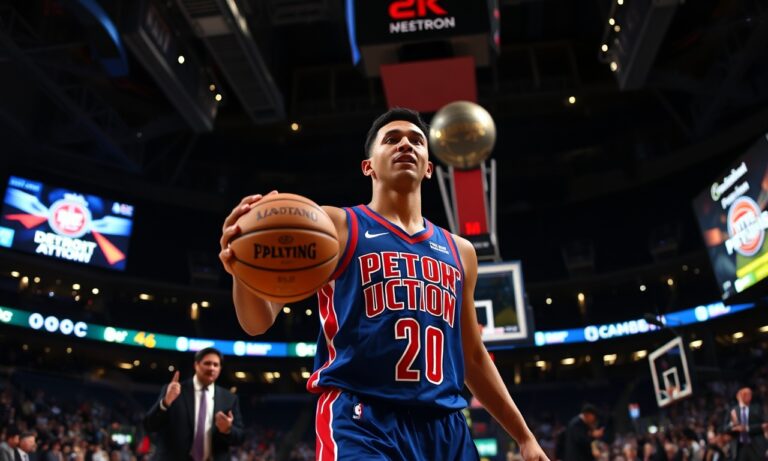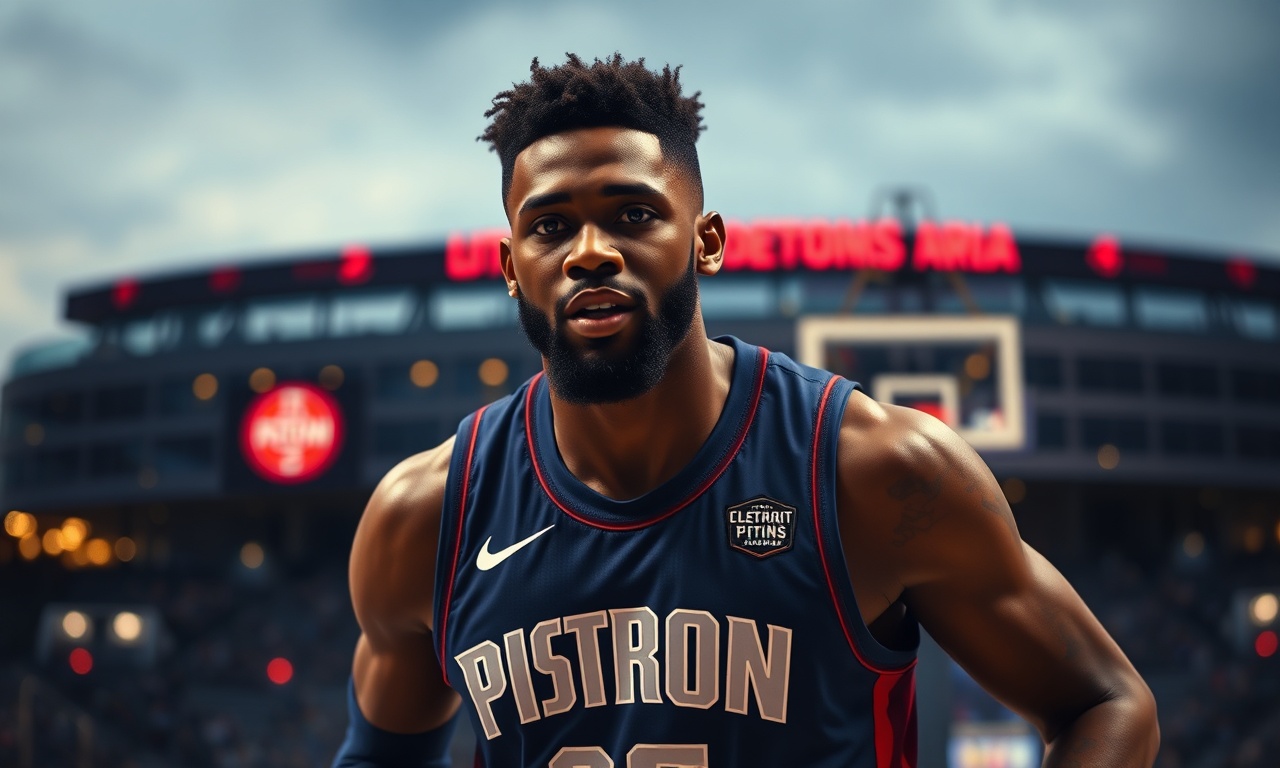
The Detroit Pistons have re-signed forward Javonte Green re-signs, a move that keeps a familiar piece of the team’s rotation in place as the franchise shapes its NBA offseason plans. Green, known for his perimeter activity and physical style, will remain in Detroit as the Pistons look to build continuity around a roster still in the process of finding its most consistent identity.
For Detroit basketball fans, the decision signals a continuation of a strategy the Pistons have emphasized in recent seasons: pairing young talent with role players who can contribute immediately on the defensive end and in transition. While roster moves during the offseason often come with uncertainty, re-signing a player who already fits the team’s habits can reduce that volatility.
Main Section
Green’s return matters in part because of how he plays. On the court, he has typically been deployed with an emphasis on energy—switching onto ball handlers, contesting lanes, and using his mobility to help teammates recover on defense. That skill set is particularly valuable for teams working through lineups and rotations, where effort and communication can be the difference between a good stretch and a defensive breakdown.
League-wide, the Pistons’ approach aligns with a broader NBA offseason trend: organizations continue to value versatile wings and forwards who can defend multiple positions without requiring a complex scheme. Green’s fit is also tied to Detroit’s current needs—particularly the ability to cover ground quickly and provide dependable minutes, even as matchups and rotations shift from night to night.
“Keeping players who understand the culture and the day-to-day expectations helps during roster transitions,” said Rod Beard, a beat writer for the Detroit sports scene, in a recent discussion about the Pistons’ offseason direction. “In-season continuity can matter as much as any single talent acquisition.”
The decision also reflects how the Pistons’ front office has attempted to balance development and competitiveness. While Detroit continues to evaluate its long-term core, the team’s roster construction depends on having dependable contributors who can keep games from turning into constant adjustments.
Impact on Detroit Residents
For residents across Detroit and the surrounding region, basketball roster news is more than sports chatter. Local sports teams operate as community institutions, and offseason decisions can influence fan engagement, ticket demand, and the overall rhythm of the Pistons’ presence in the city’s cultural life.
In a city where entertainment options vary block to block, the Pistons help anchor a familiar schedule for families, students, and longtime fans. Re-signing Green may not change the team’s entire direction in one move, but it provides a clearer picture of who will be on the court in the coming season—important for anyone planning to attend games at Little Caesars Arena.
From an economic perspective, even incremental roster stability can support business activity around game days. Local hospitality and retail workers often experience predictable surges when season expectations solidify. According to data from the U.S. Bureau of Labor Statistics, employment in leisure and hospitality industries tends to fluctuate with events and consumer demand, reinforcing the value of stable, marketable team storylines for local businesses.
Detroit’s basketball community is also diverse and multi-generational. Players like Green—role players who can become “glue” on a team—often earn the kind of recognition that helps fans feel connected beyond the star hierarchy. That connection can matter in neighborhoods where sports are one of the few shared public conversations that cut across age and background.
Background & Data
In the context of the Detroit Pistons roster, re-signing Javonte Green supports a familiar template: retain players who can perform defined roles, particularly in defense and transition. Detroit’s offseason priorities typically include building depth, maintaining enough athleticism to match different lineups, and ensuring that young players receive support rather than being placed under pressure in every minute of the game.
Green’s profile also reflects a broader NBA reality: teams are increasingly built to handle pace changes and matchup versatility. Role players who can switch, help, and rotate effectively can increase a team’s ceiling even without leading statistical categories. For Detroit basketball fans trying to understand what’s changing—and what isn’t—this type of move can feel like a clear statement: the Pistons want continuity in their defensive effort.
Detroit’s own sports economy has been studied in relation to large venue activity and event-driven spending. While team moves are only one factor, local impact depends on how consistently the franchise can maintain a competitive narrative. Analysts have also noted that stable rosters can help reduce uncertainty for fans, translating into steadier attendance patterns as the season approaches.
Green’s re-signing sits within that larger framework—an effort to keep the Pistons roster aligned with the franchise’s on-court identity while the team continues to develop.
Why a forward’s role can be pivotal
In NBA roster planning, forwards often function as the connectors between guard defense and interior protection. They can guard wings, deter drives, and provide help defense that allows the scheme to stay intact. That’s particularly important for teams seeking to improve consistency across a long 82-game schedule.
What Happens Next
The NBA offseason is still a moving target, and Detroit’s next steps will likely include additional roster decisions—whether through free agency, trades, or adjusting the depth chart as coaching staff evaluate matchups. With Javonte Green re-signs confirmed, Detroit can treat at least one rotation slot as more settled, freeing the front office to focus on other needs.
For fans, the practical next questions are straightforward: how Green’s minutes will be allocated relative to other forwards, what defensive matchups he will be tasked with, and whether the Pistons will use him to anchor specific lineup combinations. That clarity tends to build as the preseason approaches, when rotations become clearer and coaching strategies can be tested against live game speed.
Detroit basketball will also keep watching the team’s broader direction. Green’s return may not be the headline in a traditional sense, but it is a meaningful piece of roster construction—one that could help the Pistons sustain their style and execution while they pursue bigger goals.
As the Pistons move deeper into offseason planning, the team’s ability to blend continuity with upgrades will remain the key storyline. For now, Detroit has retained a forward who already understands how the franchise wants to play—an answer to at least one question as the season gets closer.