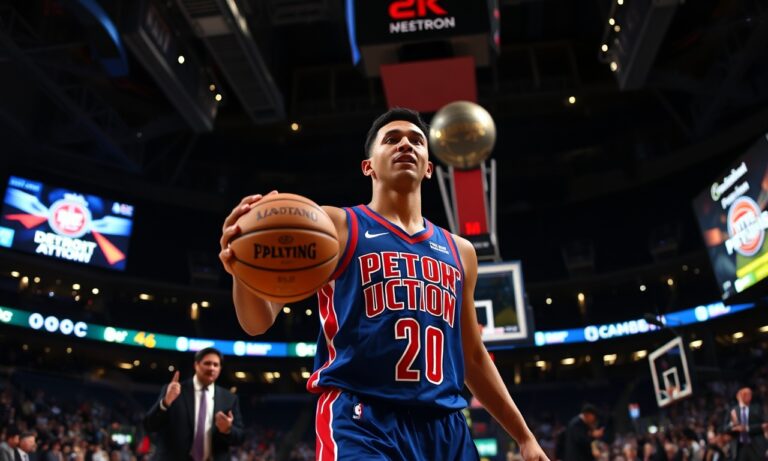
The Detroit Pistons’ pursuit of a high-priced free-agent deal worth $27 million has reportedly been abandoned, drawing renewed scrutiny over Detroit’s offseason spending and fueling debate about whether the franchise was headed toward one of the league’s biggest overpays. The development, first surfaced through NBA offseason rumors, is already being described by observers as a potential course correction after what some have characterized as offseason overpays.
While details of the Pistons’ internal negotiations have not been officially confirmed by the team, the reported cancellation highlights the financial tightrope NBA franchises face: balancing player retention and roster upgrades against salary-cap realities that can constrain flexibility for years. For Detroit basketball fans tracking Pistons news closely, the bigger question is what the decision means for the roster and the team’s short-term competitiveness.
Why the reported $27 million signing matters for Detroit
The reported stalling of a $27 million signing is significant not only because of the dollar amount, but because of what that number represents in NBA roster planning. In the NBA, a single large contract can affect how much room a team has to add complementary players, cover injuries, or make a trade before the deadline.
According to the NBA’s Collective Bargaining Agreement summary materials and league cap reporting typically used by teams and media outlets, teams manage payroll under salary-cap rules and trade restrictions that can make late offseason moves more complicated than they appear. In other words, a deal that looks like a “one-year fix” can become a long-term roster constraint, depending on guarantees, incentives, and whether the contract is structured with future flexibility in mind.
Detroit’s reported pivot away from the $27 million signing also lands in the broader context of offseason overpays trending across the league—situations in which teams pay a premium to win negotiating battles or to secure a specific positional need, only to discover later that the market value and on-court fit do not match the price tag.
Context: how “worst free agent deal” talk starts
When sports analysts and fans label a contract as an offseason overpay, the conversation usually follows a familiar pattern: a team moves quickly to lock in a target, then the signing becomes a focal point for speculation about team strategy. That speculation can intensify when a reported deal is called off, because it raises questions about internal valuation and whether the franchise was testing market leverage—or simply trying to outbid competitors.
In recent years, NBA offseason coverage has frequently pointed to large contracts as a risk area, particularly for teams in rebuilding or transitional phases that rely on cap room to build depth. Data from the U.S. Bureau of Labor Statistics is not directly tied to NBA cap sheets, but it underscores how costs and budgets ripple through institutions: league spending decisions operate within a larger economic environment, where forecasting and long-term commitment matter.
For Detroit, where sports are tightly interwoven with local identity and economic life, a misstep can affect more than just the box score. It can shape ticket demand, media attention, and perceptions of the franchise’s direction—factors that influence how fans engage with the team during a season.
Impact on Detroit Residents: more than basketball
Detroit basketball fandom is passionate, but it is also practical: residents often look at the team as part of a larger civic ecosystem. Changes in roster planning can influence game-day attendance, local sports-viewing culture, and the customer flow to nearby businesses on nights when Pistons home games are competitive.
According to Michigan’s existing research on sports tourism and local spending that has been cited by regional economic studies, marquee events tend to generate measurable dollars for hospitality and retail—especially in the downtown area where fans gather before and after games. While a single offseason contract does not directly change those multipliers, broader roster expectations can affect how many fans show up and how long they stay.
There is also a community impact angle that goes beyond game nights. The Pistons organization participates in local programming, and roster decisions can shape the visibility of players who become faces of community initiatives. If a potential signing is off the table, the franchise may adjust how it aligns public engagement with player availability and team identity.
For Detroit residents, the immediate effect of the reported $27 million signing being called off is uncertainty: fans will want clarity on the plan. The team may still pursue other free agents, explore trades, or adjust its strategy around existing players and draft capital. But in Detroit, uncertainty is often interpreted through a performance lens—whether the franchise can translate spending decisions into wins.
Background & Data: salary-cap reality and market risks
The NBA salary-cap system means that contracts are not just about annual pay—they’re about long-term commitments, cap hits, and constraints on future signings. That is why offseason rumors about a large deal can trigger instant analysis of what it would cost Detroit in flexibility.
The Detroit Pistons, like other franchises, rely on a mix of front-office evaluation, agent negotiations, and market timing. When a reported deal is called off, that suggests one of several possibilities: the parties could not agree on terms, the Pistons may have revised internal projections, or the player’s market may have shifted due to competing offers elsewhere in the league.
Importantly, fans should separate speculation from confirmation. As with many NBA offseason storylines, the strongest signals come from official transactions and contract filings. Until the team or the player’s representatives make a formal announcement, the details of what exactly broke in the negotiation remain unverified.
What happens next for Pistons fans
If the $27 million signing truly has been dropped, Detroit’s next moves will likely be measured against three priorities: maintaining cap discipline, filling positional needs, and improving roster fit rather than simply chasing headline value.
In the coming weeks, residents can expect more NBA offseason rumors as agents, beat reporters, and league insiders test the market. Detroit basketball followers should watch for:
- Alternative free-agent targets that better match Detroit’s budget and roster timeline.
- Trade speculation that could swap salary and minutes toward a specific strategy.
- Updates to depth and rotation planning that clarify whether the team is aiming for immediate competitiveness or continued development.
For now, the reported cancellation of a major contract called “one of the offseason’s worst overpays” serves as a reminder that NBA decisions carry consequences on and off the court. For Detroit, it may also be a sign that the franchise is recalibrating—choosing either a different player path or a different price point.
As Pistons news continues to evolve, the most meaningful answers will arrive with official signings, reported meetings, and ultimately the roster that takes the court. Until then, Detroit fans will be watching closely—not just for who joins the team, but for the strategy behind the decision.