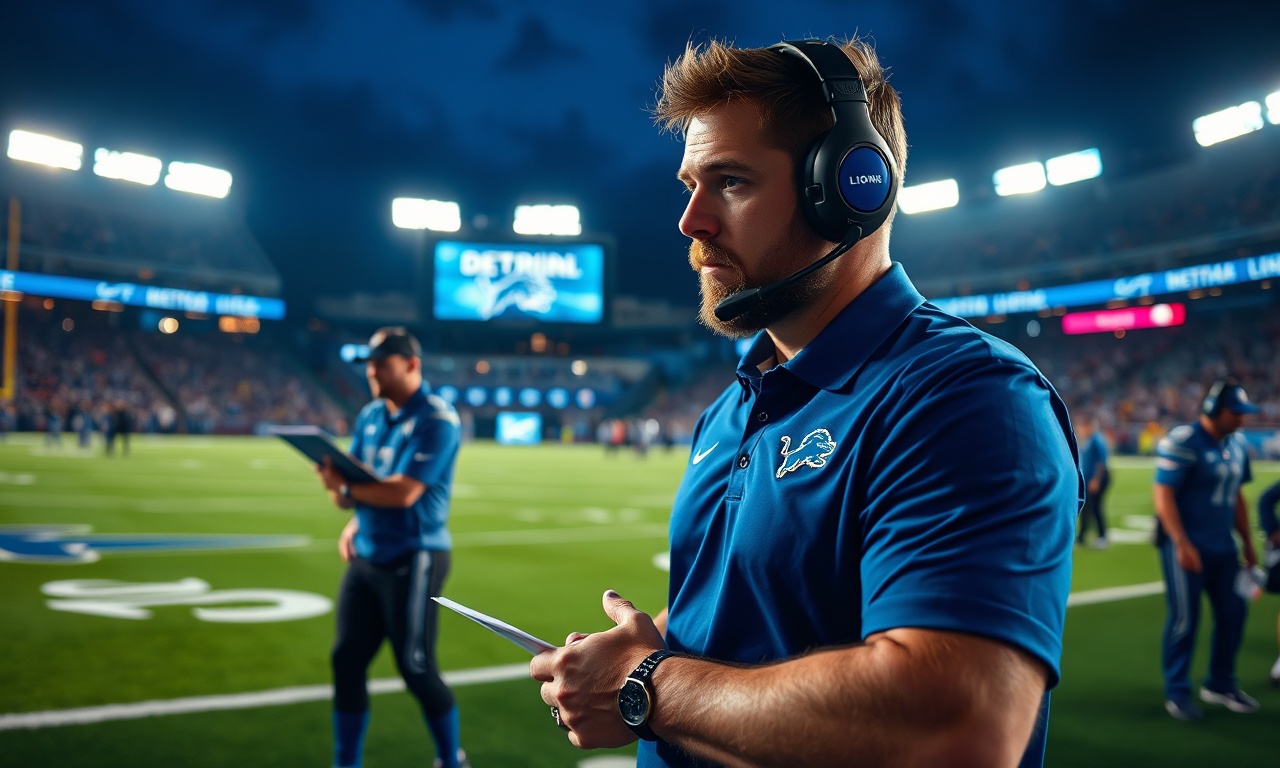
The Detroit Lions’ quarterback room is getting a fresh dose of candor from one of its most respected voices. Lions QB coach Mark Brunell discussed his approach to working with Jared Goff in an interview that emphasized fundamentals, decision-making and the way an NFL quarterback’s development is measured over time rather than by a single week’s highlights.
For Lions fans watching a season unfold, the message is familiar—but the emphasis matters. Brunell’s comments reflect how NFL quarterback coaching is built: intense repetition, clear feedback and an insistence that quarterback play is as much about process as it is about results. The interview also arrives at a moment when Detroit is evaluating its offensive identity and continuing to build consistency under center.
Brunell’s “honest” coaching theme with Goff
In the Brunell Goff interview, the Lions quarterback coach described quarterback development as a blend of trust and scrutiny. He said he tries to create a structure in which Goff can refine reads and timing while still playing within the offense’s expectations. Rather than framing quarterback work as simply correcting mistakes, Brunell spoke about building an understanding of why certain decisions happen and what adjustments are necessary when the defense changes its coverage.
Brunell’s tone aligns with what many NFL quarterbacks and coaches describe from the inside: the most critical teaching isn’t always the biggest play of the day, but the small, repeated choices that determine whether an offense moves with rhythm. For Goff, that means refining mechanics and timing while also sharpening how quickly the quarterback identifies coverage and decides where the ball should go.
“NFL quarterback” coaching—especially in a system that asks a starter to manage protections and timing routes—can look subtle from the stands. But Brunell’s comments suggested that the Lions are treating those subtleties as teachable, repeatable skills that grow week-to-week.
What Brunell said matters for Detroit’s offense
While the interview focused on coaching approach rather than specific game plans, several themes are clearly relevant for Detroit’s production. Brunell’s emphasis on decision-making relates directly to how an offense prevents negative plays, protects the quarterback and sustains drives. When a quarterback reads quickly and checks accurately, it often translates into fewer sacks, fewer turnovers and more consistent third-down conversions.
In practical terms for Lions fans, that means the quarterback position becomes a moving part that can stabilize the broader offense. Even with the skill-position talent Detroit has invested in, an NFL offense still depends on the quarterback’s ability to convert pre-snap information into post-snap action—whether that is a quick throw, a longer progression or a protection-related adjustment.
There’s also a message inside the coaching philosophy for how teams handle expectations. When coaches talk about honesty, they typically mean acknowledging both what a quarterback is doing well and what must improve. That kind of feedback can be crucial for a veteran signal-caller, particularly when the team’s identity is evolving from season to season.
Why the Lions quarterback coach’s role goes beyond Sunday
The Lions quarterback coach’s responsibilities extend through the week: film study, practice reps, situational teaching and refining the mental cues quarterbacks use in real time. According to the NFL’s Game Statistics & Information System, quarterback performance is often evaluated through multiple lenses—efficiency, accuracy, turnovers and how well teams perform in different down-and-distance situations. That broader performance view mirrors the kind of feedback Brunell’s interview suggests: coaching that targets repeatable decision-making rather than only spotlight moments.
For Detroit, these adjustments are not abstract. They influence how the offense handles momentum swings—particularly in a division where defensive adjustments can force quarterbacks to adapt quickly.
Impact on Detroit residents: beyond football talk
On the surface, an NFL quarterback coach interview may seem separate from Detroit’s daily concerns. But sports can shape community energy and local business activity. In Detroit, game days bring steady foot traffic to restaurants, bars and retailers, and when fans stay engaged through wins—or through credible explanations for what’s being worked on—local spending often follows.
Detroit-based sports economics also connects to employment and small business revenue, especially for establishments that rely on predictable attendance patterns. While each restaurant’s results vary, the overall connection between major-league sports and local commerce is widely documented. The U.S. Bureau of Economic Analysis has noted that service spending linked to sports and entertainment activity forms part of broader consumer spending categories that change with local event demand.
For residents, Brunell’s comments can also influence how fans interpret the season. Honest coaching language tends to reduce uncertainty: it signals that Detroit’s staff is focused on process and correction, not just reaction. When a team communicates that it expects growth and that it’s working on specific aspects of execution, fans often respond with clearer expectations about what improvement should look like.
Background & data: how quarterback coaching gets measured
Quarterback development is difficult to reduce to a single stat, but league reporting tools do track performance components that reflect coaching outcomes. According to Pro-Football-Reference, passing efficiency and turnover rates are among the measurable indicators teams track over time. While coaching itself cannot be directly quantified, the results of coaching decisions typically show up in how often a quarterback throws into coverage, how frequently the team avoids sacks and whether drives extend rather than stall.
The connection between coaching focus and measurable results becomes more visible when fans watch for patterns: does the offense protect the ball? Do third-down conversions improve? Does the quarterback get the ball out quickly enough to match the blitz? Those are the types of questions that show up again and again when coaches speak about reads, timing and decision-making.
For the Detroit Lions, the quarterback position remains central to the team’s identity. Brunell’s interview reinforces that the franchise is continuing to invest in quarterback development, even as the NFL’s competitive landscape demands constant progress.
What happens next for the Lions and Goff
Brunell’s candor may also serve as a roadmap for how Detroit plans to keep moving forward. If the Lions quarterback coach is highlighting process—reads, timing, and the “why” behind decisions—fans should expect that the coaching staff will continue to emphasize execution in practice and situational football in games.
In the near term, that means preparation will likely stay detail-driven: more reps built around specific defensive looks, continued work on protection calls, and ongoing emphasis on finishing plays with accurate throws. For Goff, the expectation remains that growth will show up as sharper ball placement, better decision velocity and improved reliability when the play breaks down.
As the season continues, the most telling moments may not be the biggest highlight drives, but the sequences where an offense keeps moving despite pressure. If the Lions can translate Brunell’s coaching approach into consistent execution, Detroit residents may feel the effects quickly—on game days and throughout the rhythm of a season that can hinge on one or two drives.
Brunell’s message to the quarterback room, delivered in a Brunell Goff interview, is ultimately simple: honesty about what needs work, paired with disciplined coaching, is how an NFL quarterback and an offense stay aligned. For the Lions, that alignment is a key ingredient as they chase consistency and build toward what comes next.