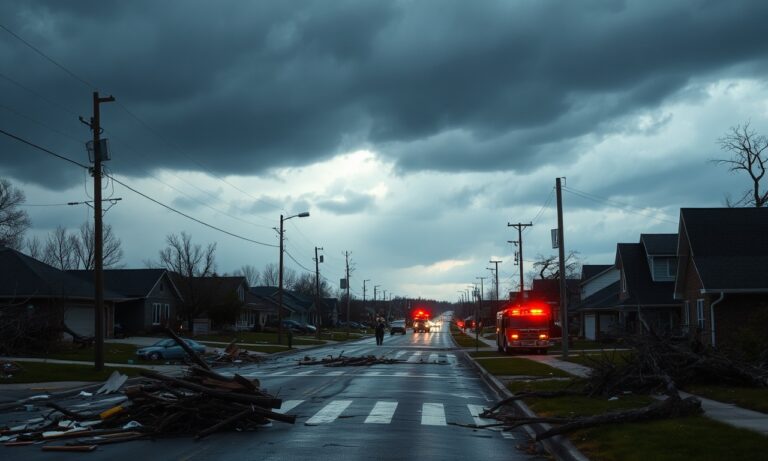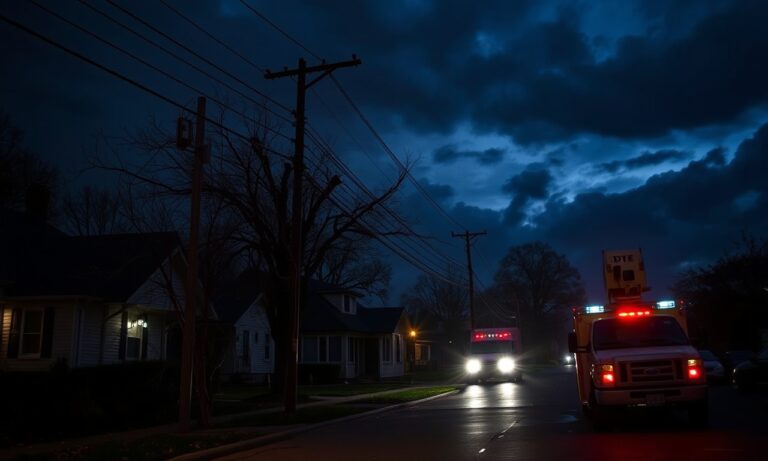
A heat wave followed by fast-moving thunderstorms left nearly 80,000 customers in the Detroit area without electricity, prompting power restoration efforts across multiple communities and raising concerns about heat safety for residents who depend on electricity to cool their homes.
As crews responded to damage caused by wind and storm-related conditions, outages were still active late into the afternoon and evening hours, according to utility updates. The disruption continued to affect traffic signals, home cooling systems, and daily routines—particularly for residents in areas that experienced stronger storm impacts.
Detroit power outages reported after storms move through
Detroit power outages were first reported as the heat wave intensified demand for cooling while storm conditions brought down lines and triggered protective equipment to shut off power in certain neighborhoods. The number of affected customers fluctuated as DTE Energy crews isolated problem areas and worked to restore service.
DTE Energy outage updates showed that outage totals were nearing the 80,000 mark during peak reporting, with some areas seeing shorter interruptions while others required more time for repairs. Utility representatives noted that restoration timing can vary based on the location and severity of damage, as well as safety conditions for line crews working near damaged infrastructure.
In separate guidance, the Michigan Emergency Management and Homeland Security organization has previously advised residents to take heat-related precautions during periods of extreme heat, including checking on neighbors and limiting time outdoors. The combination of heat and power loss heightens the risk for people who rely on electricity for medical devices or to maintain safe indoor temperatures.
Impact on Detroit Residents
For many Metro Detroit households, the immediate impact of the metro Detroit blackout was practical and urgent: fans and air conditioners stopped running, food in refrigerators became vulnerable, and some elevators and medical equipment became difficult to operate without backup power.
According to the U.S. Centers for Disease Control and Prevention, heat illness can develop quickly, and the risk increases when people cannot access cooling. Local public health messaging during summer heat emphasizes hydration, monitoring vulnerable individuals, and creating cooling plans for emergencies.
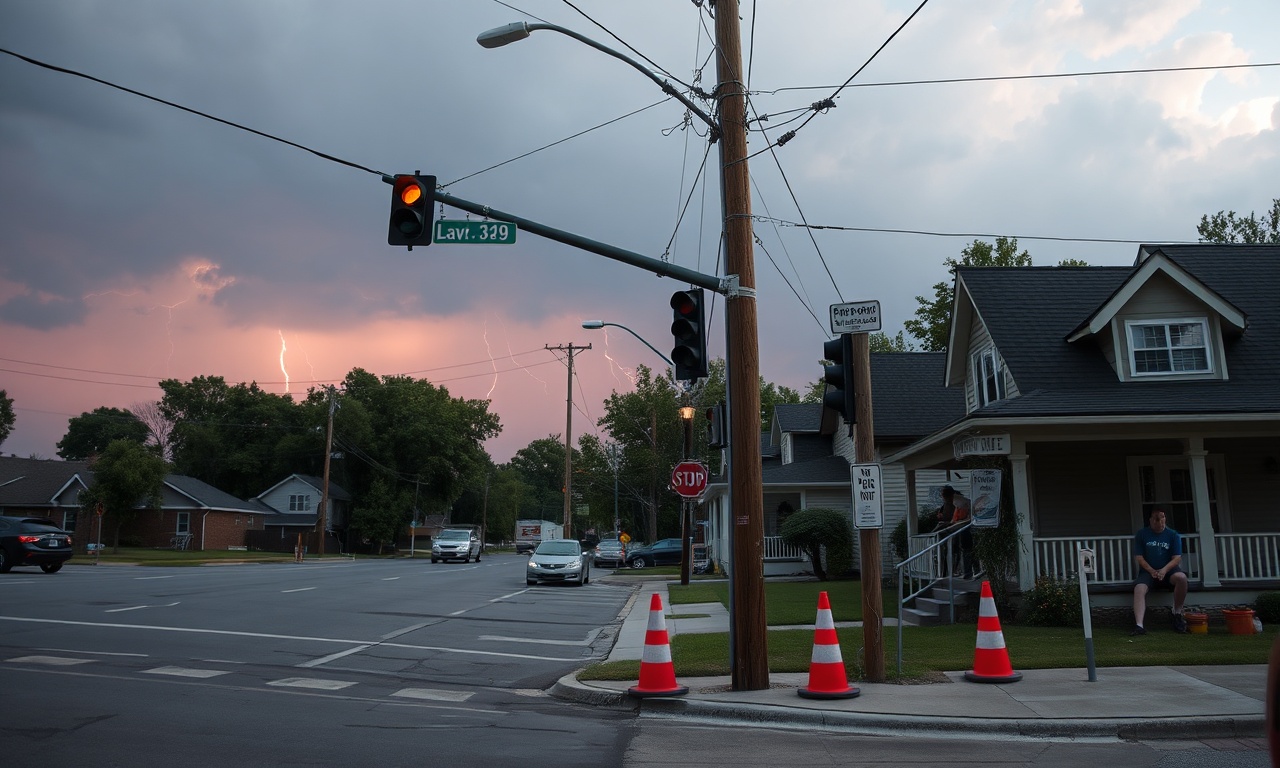
Neighborhood effects also extended beyond homes. Traffic signals that lost power can increase the risk of congestion and collisions, while businesses that rely on point-of-sale systems and refrigeration faced interruptions if backup generators were not available. In addition, outages can slow communications and lengthen repair timelines if cellular networks and broadband infrastructure are also affected in the broader area.
In Detroit and surrounding communities, residents also reported problems linked to storm cleanup—such as downed branches and debris—that can complicate power restoration. Blocked roadways and wet or unstable ground can delay bucket truck access to poles and equipment, even after the initial outage is isolated.
What DTE Energy and local officials said
DTE Energy, in its public-facing DTE Energy outage updates, indicated that crews are trained to respond in phases—first securing safety, then restoring power to critical infrastructure when possible, and finally working through remaining outage areas. Utility restoration priorities often include traffic signals, pumping stations, and other systems that support public safety.
City officials in the region also urged residents to treat downed lines as live and to avoid contact with damaged equipment. The City of Detroit has emphasized safety during severe weather events, advising residents to stay away from hazards and to follow local alerts during disruptions.
According to the National Weather Service, thunderstorms can produce rapid wind gusts and localized heavy rainfall, increasing the likelihood of downed lines and transformer damage. In a region already facing heat-stress conditions, even short disruptions can compound health risks for residents without cooling access.
Background & Data on summer storms and electricity demand
Summer heat increases electricity demand across Metro Detroit as residents run air conditioning. When severe weather follows—especially storms with strong winds—grid equipment can experience strain from both demand and physical impacts.
Data from the U.S. Energy Information Administration shows that electricity demand typically rises sharply during hot months as cooling needs grow. Meanwhile, the National Oceanic and Atmospheric Administration reports that severe weather events can bring damaging winds and lightning, which are common drivers of power interruptions in the Midwest.
In past summers, communities across Michigan have also seen patterns where outages rise during periods of extreme heat, then spike again when storms arrive. While not every weather system causes widespread damage, localized impacts can still affect thousands of customers—depending on where lines, transformers, and service drops are struck or damaged.
Local impact: cooling needs, vulnerable residents, and community response
The most immediate concern during a heat wave storms sequence is cooling. Even if the outage lasts only a few hours, heat can build quickly inside homes, especially for older adults, children, and people with chronic medical conditions.
Emergency management agencies and local nonprofits often recommend that residents create a contingency plan—such as identifying a nearby cooling center or checking in on neighbors who may need help during power loss. Detroit area partners have also supported community cooling and wellness checks during extreme heat periods in previous years, and similar coordination can become critical when outages coincide with high temperatures.
Households dependent on electrically powered medical equipment face heightened risk. Public guidance generally encourages residents to confirm alternative power options—such as backup batteries where available—and to understand what to do if cooling systems fail during a storm-driven outage.
For Detroit’s broader economy, interruptions can mean temporary closures or reduced hours for small businesses, particularly restaurants and retailers that depend on cold storage. In apartment buildings, residents may also experience disruptions to elevator service and water pressure if pumping equipment is affected, depending on where the outage occurs.
What happens next for Metro Detroit
DTE Energy crews continue assessing damage and restoring service in stages. Residents can expect updates to change as substations and service areas come online or as crews discover additional issues after initial repairs.
Officials and utilities typically ask residents to take practical steps while waiting for restoration: avoid opening refrigerator doors unnecessarily, keep electronic devices charged if power is expected to return, and use safety precautions if you see downed lines or sparking equipment. For those who require cooling, residents may be advised to seek relief at community cooling locations if offered by local partners.
Traffic signals may remain out in some areas until power is fully restored, and drivers should proceed cautiously and treat intersections without signals as stop intersections. Residents should also plan for short-term delays for transit, delivery services, and school activities when outages affect infrastructure.
Detroit weather disruption remains under close watch
As the weather system shifts, the focus turns to recovery and monitoring for any additional storms that could create new outages or slow restoration work. For now, residents across Detroit and the surrounding communities are watching metro Detroit without power counts and checking official updates as repairs continue.
For the latest information, residents are encouraged to follow official utility outage dashboards and local emergency alerts. With summer temperatures still high, the next hours may be critical for keeping households safe and informed until electricity is restored.