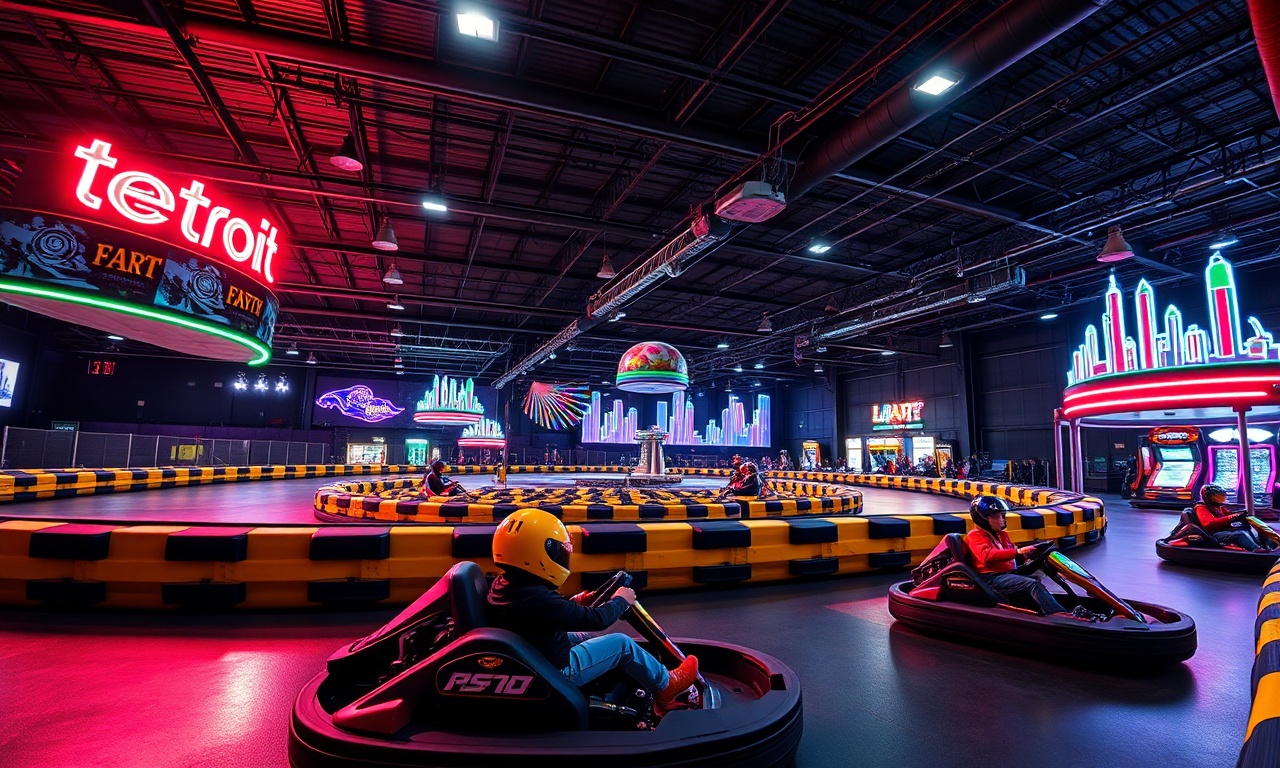
Detroit is set to get a larger family entertainment center footprint as a new mega Detroit FEC attraction plans entertainment built around motion, competition and arcade-style play, including indoor go-karting and laser tag. The development, described by its backers as an “all-ages” entertainment destination, is positioned to add new weekend and after-school activity options in the city while drawing visitors from the region.
While construction and permitting timelines can shift, local officials say projects of this kind are increasingly tied to job creation, increased foot traffic and the revitalization of commercial corridors. For families, the core promise is straightforward: a single indoor location where kids and adults can spend several hours without weather disruptions.
A bigger draw inside: go-karts, laser tag and more attractions
At the center of the plan is a multi-attraction layout typical of modern family entertainment centers, combining ticketing and redemption-style games with structured, instructor-led activities. The project’s major headline attractions include:
- Indoor go-karting, designed for all-ages participation in timed heats or supervised sessions.
- Laser tag, built for small-group play and team competition.
- Additional arcade and event spaces intended to support parties, leagues or seasonal programming.
Officials and developers have framed the concept as a way to keep energy levels high and time spent on-site longer—an important factor for operators competing for discretionary spending. The location and final attraction list can influence the mix of staffing, safety training and guest throughput, especially for peak weekends and holiday periods.
Impact on Detroit Residents
For Detroit residents, a family entertainment center of this scale can affect more than weekend plans. Local job opportunities—ranging from front-of-house operations and food service to safety and maintenance roles for karting and interactive games—are often among the first community-level benefits cited when entertainment developments break ground.
“Where we see new entertainment investments, we also expect to see increased demand for customer-facing labor and operational support,” said City of Detroit representatives in guidance related to commercial development and workforce planning. They emphasized that applicants are typically evaluated on readiness, community engagement and the operational sustainability of proposed uses.
For families, indoor attractions also reduce the friction that outdoor venues create during Detroit’s winter months. That matters to parents juggling school schedules, weather and childcare costs. A mega FEC can function as a local option for birthday parties, group outings and community events, potentially reducing reliance on trips outside the city.
Community partners have also pointed to the broader “third place” function of entertainment venues—spaces where residents can gather beyond home and work. A Detroit entertainment destination that offers structured activities may help create a consistent calendar for youth and families, especially when it aligns with school breaks and local programming.
Background & Data: Why FECs are growing
Family entertainment centers have expanded nationwide as operators blend classic arcade elements with more controlled, tech-enabled attractions. In Detroit, the appeal is tied to both consumer demand and the economic logic of dense, indoor experiences.
Data from the U.S. Census Bureau provides context for local purchasing power and household composition. According to Census Bureau estimates, household structures and age distributions affect how much spending is available for discretionary activities such as recreation and entertainment. For Detroit-area operators, that means designing spaces that serve both children and supervising adults—while maintaining ticket pricing and accessibility for a broad range of families.
Additionally, Michigan’s tourism and visitation landscape plays a role. Regional visitors often look for indoor activities that can fill time between shopping and dining, particularly during cold-weather seasons. A large-scale FEC with multiple attractions can meet that demand by offering several experiences in one location.
Detroit’s development angle: more than just games
In conversations about projects like this, Detroit stakeholders often look beyond the attractions themselves to questions of traffic patterns, public safety coordination and the viability of nearby businesses. Mega FEC attractions can add demand for parking management, landscaping and signage, and they can influence how patrons circulate to restaurants and retail nearby.
Local economic development leaders have noted that entertainment developments can support “circuit” spending—customers may eat before or after activities, browse nearby storefronts and return for repeat visits. That ripple effect is most likely when the project integrates with existing commercial corridors rather than operating as an isolated destination.
“Entertainment venues can contribute to local economic activity when they’re paired with responsible operations and community expectations,” said an official with a regional economic development organization following recent entertainment projects in the Midwest. They highlighted the importance of traffic planning, workforce recruitment and vendor partnerships—issues that become especially visible once go-karts and laser tag require specialized safety and supervision protocols.
What Happens Next
As plans advance, the next milestones for the Detroit FEC mega attraction will likely include final site plans, licensing and safety approvals for karting and laser tag operations, plus scheduling for construction and phased opening. Public input can matter at each stage, particularly where projects involve significant site work that affects parking, stormwater management or building safety.
Detroit residents can also expect more details to surface closer to opening: workforce hiring timelines, ticketing formats, party packages and school-year programming. If the operator plans to run leagues or timed events, the calendar can shape demand for local staffing and create opportunities for partnerships with youth organizations.
For now, the announcement signals a continued shift in how mega FEC attractions are being built—less like stand-alone arcades and more like multi-activity indoor parks designed to keep groups engaged for hours. For Detroit, the potential upside is a new kind of local recreation option during the months when outdoor activities are limited.
Bottom line
Detroit’s latest FEC proposal—anchored by indoor go-karting and laser tag—reflects the city’s broader push to attract year-round entertainment and create jobs tied to new commercial activity. If timelines hold and community expectations are met, the project could become a notable addition to Detroit’s family entertainment center landscape, offering residents an indoor destination built for repeat visits.