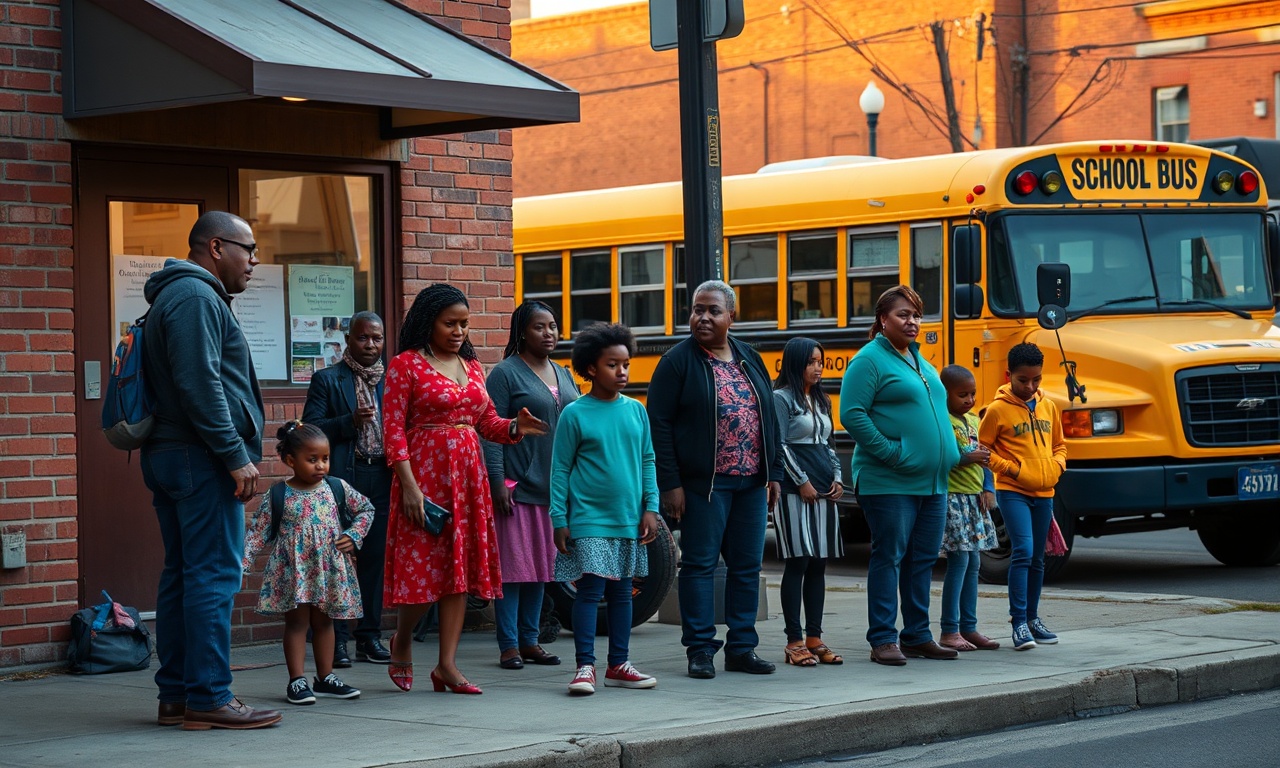
Detroit families juggling rent, food costs and child medical needs often face a single daily problem: getting kids to school on time, safely and consistently. Now, Detroit Health Hubs are targeting that barrier by pairing medical services with practical help—connecting households to housing assistance, groceries support and school transportation resources when chronic health issues or instability threaten attendance.
Launched through a citywide network model, the hubs focus on “wraparound” coordination so that a child’s care plan doesn’t end at the clinic door. When gaps in food, stable housing or transport appear, staff help families navigate benefits, community partners and referral pathways designed to keep students engaged in class.
“For many families, the challenge isn’t only health—it’s what comes after a visit: whether the household has what it needs to make the next school day possible,” a spokesperson for a Detroit-based health initiative involved in the hub network said. “Our goal is to reduce those interruptions by connecting families to supports that address the real-world barriers.”
Main Section
Detroit Health Hubs operate at the intersection of public health and day-to-day stability. The approach is built around identifying unmet needs during or immediately following medical encounters—then coordinating referrals to local services that can respond quickly. In practice, that can mean helping families access assistance programs related to housing costs, securing groceries support through community distribution partners or benefits enrollment, and arranging information on school transportation options.
While the specific menu of services can vary by hub site, the core idea is consistent: medical needs and attendance are linked. Asthma management, recurring appointments and treatment adherence can be undermined when families cannot afford medications, lack a reliable place to recover, or experience frequent moves. Food insecurity can also contribute to fatigue and chronic absenteeism, and unstable housing can disrupt school enrollment and routing.
According to the U.S. Census Bureau, households facing poverty and housing insecurity are more likely to experience barriers to consistent access to care and basic supports. In Detroit, local public health leaders have repeatedly highlighted the relationship between social needs and health outcomes.
Detroit Health Hubs aim to close that gap. At partner sites, staff members conduct needs screening and coordinate next steps with families. For school transportation, they may help parents understand available options through the school district, provide guidance on how to document eligibility when required, and coordinate with community organizations that can help with scheduling and logistics.
“If a child has a medical episode or a condition that requires follow-up, we want the family to have a plan—not a dead end,” said Dr. Marissa Allen, a physician and community health consultant who advises on care coordination models used in Michigan. “That plan includes transportation, food and stable follow-up. Without those pieces, families can miss the next appointment—and then school becomes the next thing that falls behind.”
Because the program is designed to work with existing clinic workflows, hub staff can often move faster than families navigating multiple systems alone. That speed matters for families dealing with time-sensitive issues such as utility disconnections, temporary shelter placements or short-term grocery needs while benefits are pending.
Impact on Detroit Residents
For Detroit residents, the most immediate benefit is continuity. Children who miss school for health reasons may also miss learning time, and repeated absences can affect attendance records, grades and participation. The Detroit Health Hubs model responds to those risks by linking medical and social support—particularly for families confronting housing assistance needs and limited access to nutritious food.
In neighborhoods where families may rely on a patchwork of services, the hubs help reduce the burden of searching for help. Parents often need multiple supports at once: a stable address to receive documents, groceries support to maintain nutrition while a child is recovering, and reliable transport to appointments and school. By organizing referrals in a single pathway, hub staff can help families reduce the number of appointments and paperwork steps required.
Education and attendance are also central to the community impact. When schools can anticipate health-related barriers, attendance teams and caregivers can respond earlier with supports rather than waiting until a pattern of absenteeism develops.
“We see that students can do well when families are supported,” said Angelique Peterson, a Detroit-area school social worker who works on attendance interventions. “Health issues aren’t the only factor, but they often trigger a chain reaction—missed meals, missed rides, missed appointments. Programs that connect families to resources can help break that chain.”
Background & Data
Detroit Health Hubs reflect a broader shift in U.S. public health toward addressing “social determinants of health,” a term used to describe the conditions in which people live and how those conditions influence health outcomes. Housing stability, access to healthy food and reliable transportation are among the factors repeatedly associated with chronic conditions, preventable illness and healthcare access.
In Michigan, state and local agencies have also emphasized the connection between health and housing. When families lack a stable home, they may experience disruptions to medical care schedules and medications—conditions that can quickly affect school attendance for children managing asthma, diabetes, allergies or other ongoing health needs.
Data from the United Health Foundation and federal public health reporting have long pointed to the role of food and housing insecurity in worsening health outcomes. In Detroit, community health organizations have argued that medical care alone cannot fully address barriers families face when budgets are stretched and systems are difficult to navigate.
Detroit Health Hubs take that reasoning into a practical workflow: identify a need, connect to a resource, and follow up to confirm that the family’s plan is working. The model is especially relevant for getting kids to school, because attendance is often influenced by how quickly families can solve basic problems like meals, transit details and housing-related documentation.
What Happens Next
Over the next year, the hub network is expected to expand its coordination efforts with community partners that provide food assistance, rental support and transportation guidance. Leaders involved in the program say they are also working to improve referral pathways—so families can move from a clinic conversation to a confirmed resource plan.
For families interested in the service, hub participation typically begins through a partner clinic, community health location or school-community referral. While eligibility requirements can vary by program and partner, staff members generally work to ensure families understand next steps and available supports as soon as needs are identified.
Community organizations emphasized that the hubs are not a replacement for medical care; instead, they aim to reduce preventable gaps. When housing assistance needs or groceries support challenges are addressed alongside medical needs, children are more likely to attend school consistently and complete follow-up care plans.
As Detroit continues to confront health disparities and economic strain, Detroit Health Hubs offer a focused response to a familiar problem: kids can have medical needs and housing stress at the same time, and the fallout can show up in the classroom first.
“Health and attendance are connected,” Dr. Allen said. “When Detroit builds systems that help families handle the basics—housing stability, meals, and transportation—kids can focus on learning. That’s the real outcome we’re aiming for.”