In the garages and engineering halls of Detroit’s heyday, a certain kind of machine was built to last longer than the people who designed it. The Chrysler 426 Hemi—an engine that helped define an era of speed, swagger and industrial know-how—was engineered with an intensity that still feels out of place in today’s efficiency-first world.
Often described as a Detroit-born symbol of brute force, the Chrysler 426 Hemi earned its reputation through the way it was made: thick-walled components, aggressive breathing capacity, and a combustion-chamber design that the industry came to call “Hemi.” Though the engine’s production story has been told many times, Detroit residents still recognize its influence in how local culture talks about performance, manufacturing talent and what “made in Detroit” really meant.
Today, as auto history museums, hobby shops, and local collectors continue to draw attention to classic performance hardware, the question becomes less about whether the 426 Hemi was special—and more about what its overbuilt design says about Detroit’s engineering culture, and how that legacy continues to shape public memory and local business.
Main Section: Why the 426 Hemi Became an “Overbuilt V8” in Detroit
The term “overbuilt” can sound subjective, but in engine engineering it usually translates into measurable choices: material decisions, dimensional robustness, and head and valvetrain designs that tolerate high stress for repeated runs. The Detroit V8 engine benchmark for this reputation is the Chrysler 426 Hemi, which debuted in an era when Detroit automakers were locked in fierce competition on both the street and the track.
According to the Detroit Historical Society, Detroit’s auto industry wasn’t just mass production—it was also a culture of engineering experimentation and industrial scale, with companies testing ideas through racing and high-performance applications that later influenced mainstream designs. While the Hemi was not the only technology Detroit pursued, it became one of the most enduring examples of how performance engineering became part of the city’s identity.
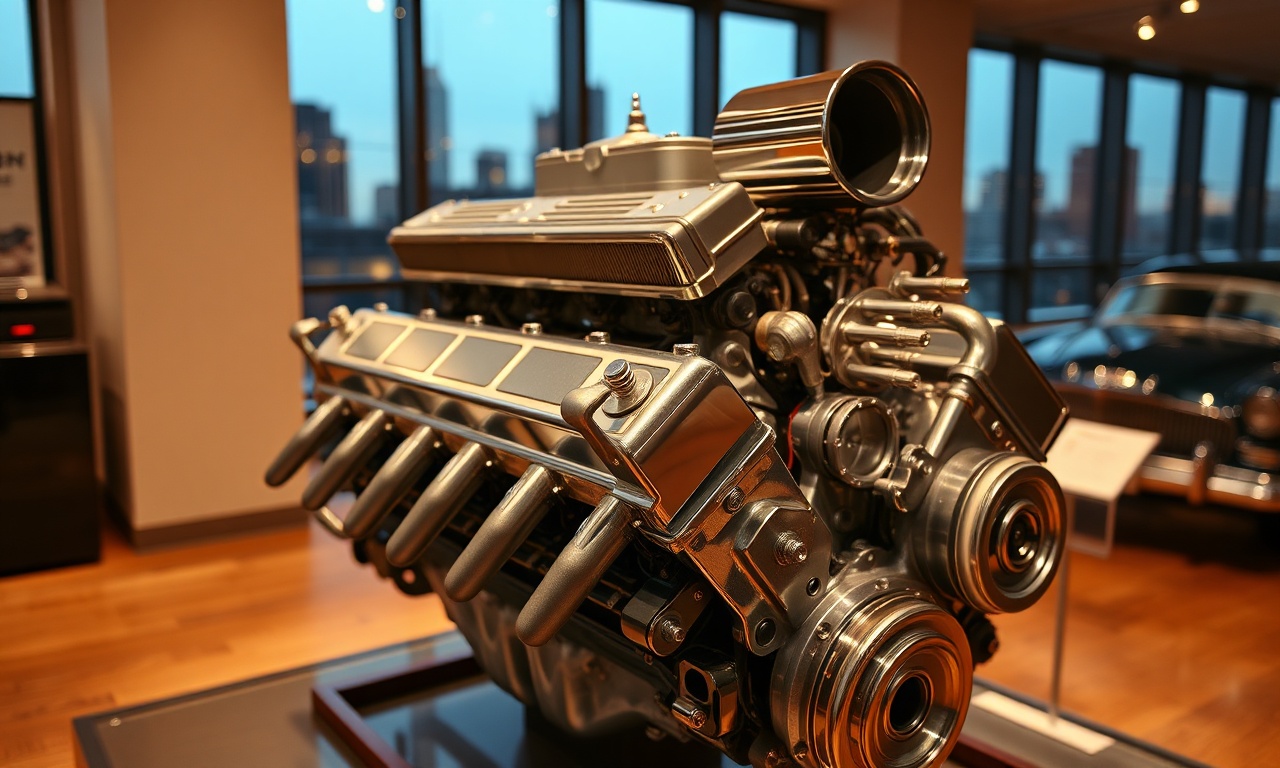
Under the hood, the 426 Hemi’s combustion-chamber layout was central to its legend. In a hemisphere-style design, the shape of the chamber supports better airflow characteristics than flatter alternatives—an important factor for power at higher engine speeds. For enthusiasts, that design is part of the appeal, but for Detroit’s engineering mindset it was also proof of concept: if a design can extract more usable performance from a given displacement, it can move from laboratory thinking to real-world output.
As demand grew, the 426 Hemi was not merely adapted—it was developed as a full system. That included decisions around the valvetrain and the way the engine’s components interacted under load. The result was an overbuilt V8 in the sense that it could withstand the kind of performance use that would typically stress a less heavily engineered powerplant.
Impact on Detroit Residents: Memory, Museums, and Local Economic Ripples
Detroit’s relationship with the Hemi V8 legend isn’t limited to nostalgia. The city’s auto history is increasingly part of local tourism and education—especially for residents looking for accessible ways to engage with manufacturing careers and mechanical trades.
Organizations that preserve automotive history often serve as meeting points for collectors, students, and small businesses. The Museum of American Speed, for example, has documented and exhibited significant pieces of American performance history, illustrating how Detroit’s engineering output intersected with broader motorsports culture. That kind of visibility matters for Detroit residents because it creates demand for restoration services, parts sourcing, and specialized mechanical work.
On a practical level, the continuing attention to classic performance engines supports a supply chain of local and regional expertise. Shops that rebuild cylinder heads, fabricate performance components, and restore vintage engine bays are part of a broader ecosystem that keeps hands-on mechanical knowledge alive. In Detroit, where skilled trades are increasingly discussed in workforce conversations, the story of the 426 Hemi offers a real-world entry point into topics like materials science, manufacturing tolerance, and engine dynamics.
There’s also a social side. For many longtime Detroit families, the 426 Hemi represents a time when the city’s factories produced machines that felt culturally significant beyond transportation. That emotional connection can influence how people talk about the city’s past—especially in neighborhoods where auto employment shaped household rhythms and community life.
Background & Data: The 426 Hemi History in Detroit’s Auto Race
To understand the 426 Hemi history, it helps to situate it within Detroit’s racing and performance pressure. High-performance engines weren’t just “extras”—they were part of how automakers built credibility with customers and press. Chrysler’s push for the 426 Hemi reflected both a technical ambition and a marketing reality: racing performance translated into street desirability.
According to archival materials summarized by Smithsonian Magazine in its coverage of American automotive history, the naming and identity of Hemi engines became culturally significant because of the performance potential and the way the engines moved from track narratives to consumer imagination. The Smithsonian’s reporting aligns with what collectors and historians have long described: the Hemi wasn’t simply an engine—it was a story Detroit helped produce.
At the same time, Detroit’s manufacturing environment in the mid-20th century shaped what “built to endure” meant. While not every component decision was about durability alone, the industrial context favored robustness. Detroit automakers operated on tight production timelines and had to balance performance with reliability and repeatable assembly. Over time, that pushed many engineering choices toward predictable performance under real conditions—an expectation that helps explain the enduring fascination with the 426 Hemi’s sturdiness.
Today’s emphasis on the Detroit V8 engine legacy can also be read through modern transportation policy and public conversation about vehicle emissions. When Detroit residents contrast older performance engines with current regulatory realities, the 426 Hemi becomes a reference point: a reminder of how engineering priorities have shifted, and how quickly consumer expectations can change once efficiency and compliance take center stage.
What Happens Next: Preserving the Hemi Without Turning It Into Just a Myth
As Detroit continues to grow its cultural and educational ties to its industrial past, the next chapter for the Chrysler 426 Hemi is likely to be about context—accurate history, measured storytelling, and practical learning.
First, museums and historical organizations can deepen public access to engine documentation—blueprints, service manuals, and restoration records—so that the Chrysler 426 Hemi is understood not only as a collectible but as an engineering achievement. Second, local job training programs can use the Hemi story as a gateway into technical education: machining fundamentals, engine teardown procedures, and materials basics.
Secondhand commerce around classic performance engines will continue as well, but Detroit residents may increasingly ask for transparency and provenance—especially as values rise and demand brings more replicas or misrepresented builds. That means buyers will rely more heavily on inspection practices, documented part sourcing, and independent technical verification.
Finally, the city’s cultural conversation may keep shifting toward “Detroit-made” performance as a broader category, not a single engine. Yet the 426 Hemi is well positioned to remain central because it clearly represents the overbuilt engineering mindset—part design, part manufacturing culture, and part Detroit storytelling.
In other words, the legacy isn’t only about speed. It’s about how Detroit engineers learned to translate pressure—on the track and in the factory—into machines that still command attention decades later.