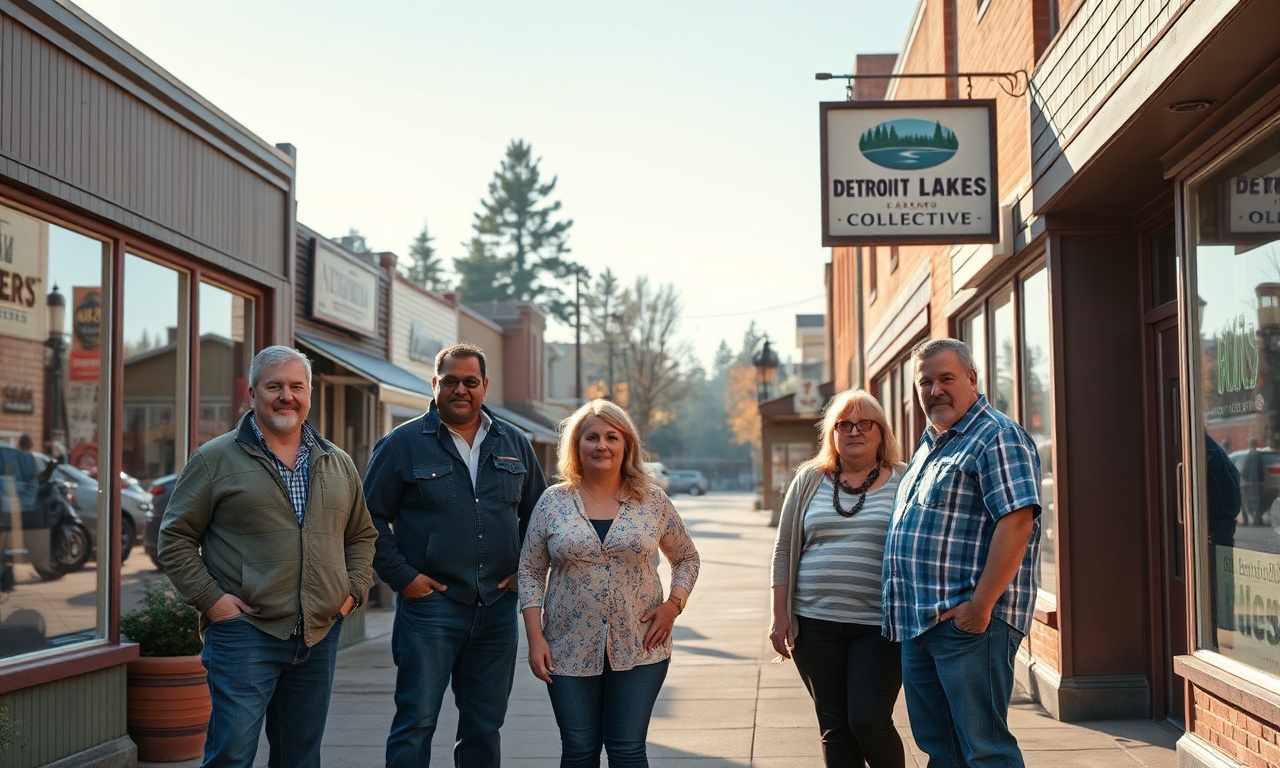
DETROIT LAKES, Minn. — Detroit Lakes has launched a new Detroit Lakes business collective aimed at strengthening local business support, connecting entrepreneurs to resources, and coordinating community partnerships to help the regional economy grow.
The initiative, announced this week by local leaders and community organizations, brings together business owners, nonprofit groups, and public partners to share strategies, coordinate outreach, and identify barriers that can slow growth for small enterprises across Detroit Lakes and surrounding communities.
A new network built for regional entrepreneurship
According to organizers, the collective is designed to be more than a one-time event or marketing campaign. Instead, it functions as an ongoing forum where members can collaborate on common challenges—ranging from workforce and permitting navigation to customer access and business retention.
“Community economic development works best when local businesses have a seat at the table,” a representative with the group said at the announcement, noting that the collective is structured to help members translate needs into actionable partnerships.
Local partners will also be able to coordinate efforts across sectors, including tourism-adjacent businesses, service providers, and new ventures. Detroit Lakes has long relied on visitors and seasonal demand, but organizers say the goal is to stabilize growth by building a broader base of year-round commerce and support systems for entrepreneurs.
How the collective plans to support businesses
Organizers said the new business initiative will focus on practical support rather than broad messaging. Plans include:
- Resource and referral pathways that connect businesses with financing options, technical assistance, and local or regional programming.
- Convenings and workshops on topics such as business planning, storefront operations, hiring, and navigating local regulations.
- Collective problem-solving where members can flag recurring issues—like workforce availability or supply chain constraints—and coordinate responses with partner organizations.
- Community partnership building among downtown stakeholders, nonprofits, educational partners, and economic development groups.
While details of specific programming will be finalized over the coming months, organizers emphasized that the initiative will remain locally driven, with member input shaping priorities.
Impact on Detroit Lakes and surrounding communities
For many Detroit Lakes businesses, the practical question is whether new initiatives translate into measurable help—new customers, better retention, easier hiring, and more confidence for owners considering expansion.
Data from the U.S. Census Bureau underscores the importance of small businesses to local job creation. In many communities across Minnesota, businesses with fewer employees account for a substantial share of employment and economic activity. In that context, community economic development efforts frequently hinge on keeping local firms stable while also lowering barriers for new entrants.
“We’re trying to reduce friction for people who want to start or grow businesses,” said a local partner involved in the initiative, describing the collective’s intention to make connections that help entrepreneurs move from ideas to operations.
The collective could also provide more consistent communication between business owners and public agencies, improving how information flows on topics like licensing timelines, infrastructure needs, and event coordination. That matters for a community where seasonal spikes can affect staffing and supply ordering, while off-peak periods can determine whether businesses can maintain steady payroll and inventory.
Organizers also said they anticipate the initiative will strengthen regional ties. By linking Detroit Lakes entrepreneurs with broader resources, the group aims to encourage regional entrepreneurship—including collaborations that reach beyond city boundaries to neighboring towns and counties.
Detroit Lakes MN news: why this initiative arrives now
Detroit Lakes has faced the same structural pressures affecting many communities in Minnesota: shifting consumer patterns, workforce challenges, and the costs associated with opening or maintaining businesses. At the same time, downtown and commercial corridors depend on steady foot traffic and consistent services to remain competitive.
In recent years, local leaders have increasingly emphasized coordination—bringing together business owners, civic leaders, and nonprofits to align economic development goals. The new collective reflects that direction, but with a clearer operational focus on supporting local firms.
According to the U.S. Small Business Administration, small businesses often rely on mentorship, access to capital, and technical assistance to navigate the start-up and growth process. SBA guidance frequently highlights that education, counseling, and trusted networks can make a difference in survival and expansion, particularly for new companies.
Local partners say the collective will emphasize those same building blocks, using a community-based structure to keep support accessible and locally relevant.
Background & data on community economic development
Community economic development strategies across the region commonly share a set of goals: attract and retain businesses, prepare a workforce aligned with local needs, and improve the environment for investment. Those goals are also reflected in many state and regional economic planning frameworks, which emphasize collaboration among local governments, economic development organizations, and private-sector stakeholders.
In practical terms, business collectives can serve as “translation layers,” helping align what business owners experience day to day—like permitting complexity, marketing gaps, or hiring constraints—with what agencies and partners can influence. By organizing those needs into a shared agenda, partners can prioritize responses and identify opportunities for funding or program alignment.
For Detroit Lakes, the timing also matters. As local businesses adapt to changing market conditions, a structured network can reduce duplication of effort and prevent business outreach from becoming fragmented among separate groups.
What happens next
Organizers said the collective will begin with listening sessions and stakeholder meetings to confirm the highest-priority issues members want addressed. Outreach will also be extended to prospective members, including independent retailers, service businesses, and entrepreneurs preparing to launch.
In coming months, organizers plan to publish details on participation, upcoming workshops, and ways businesses can connect with partner programs. They also said the collective will track outcomes, using member feedback to measure whether initiatives lead to tangible improvements such as new referrals, training completions, and strengthened customer access.
As the effort gets underway, residents can expect more visible coordination around business-related events and opportunities—particularly those that bring together local owners and community partners.
“This is about building relationships that last beyond a single season,” said another partner involved in the planning, describing the collective’s long-term approach to Detroit Lakes business collective work that supports both existing businesses and the next generation of entrepreneurs.
Local impact to watch
For the community, the key indicators to watch will include whether local owners report easier access to resources, whether training and referral programs expand participation, and whether the collective helps strengthen retention and growth across Detroit Lakes’ commercial areas.
If the initiative succeeds, it could serve as a model for how small communities in Minnesota leverage structured partnerships to support entrepreneurs and strengthen community economic development outcomes.