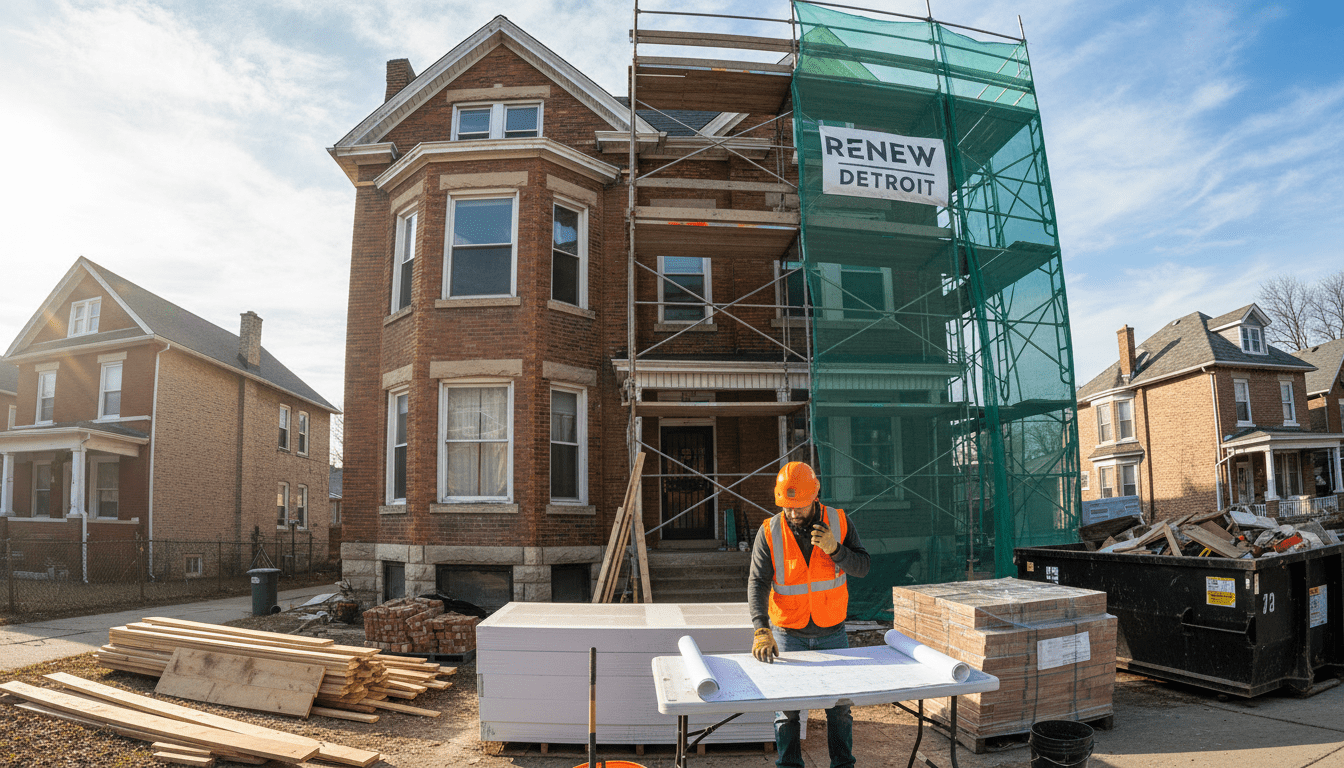
For years, the narrative surrounding Detroit real estate has been dominated by the allure of affordable entry prices. With thousands of properties available through the Detroit Land Bank Authority and private auctions, the initial cost of acquiring a deed has often been lower than in any other major metropolitan area in the United States. However, a shifting economic landscape marked by inflation and labor shortages has brought a stark reality into focus: Detroit renovation costs are climbing at a rate that is complicating the path to homeownership for many residents.
While the purchase price of a home may still grab headlines, the financial heavy lifting begins after the closing documents are signed. From soaring lumber prices to a shortage of skilled electricians and plumbers in Southeast Michigan, the budget required to bring a distressed property up to code has expanded significantly. This trend is affecting everyone from first-time Land Bank buyers to long-time residents simply trying to maintain their family homes.
The widening gap between value and cost
The primary hurdle facing the Detroit housing market today is the “appraisal gap”—the difference between the cost to renovate a home and its market value upon completion. While property values in neighborhoods like Bagley, the University District, and Corktown have seen healthy appreciation, many other areas face a disconnect where the cost of necessary repairs exceeds the home’s final appraised value.
According to data regarding national construction trends, residential building material costs have risen sharply since 2020. In Detroit, this is compounded by the condition of the housing stock. Many available homes require not just cosmetic updates, but full systemic overhauls including roof replacements, updated electrical panels, and lead abatement.
“The cost of materials—drywall, copper piping, lumber—has stabilized somewhat compared to the peak of the pandemic, but they have settled at a much higher baseline,” says a representative from a local construction management firm operating in Wayne County. “When you combine that with the high demand for skilled tradespeople in Detroit, the price per square foot for a standard rehab has jumped significantly over the last three years.”
For buyers participating in the Detroit Land Bank Authority’s compliance program, these rising costs add pressure to strict timelines. Buyers are generally required to bring properties up to code within six to nine months. When budgets balloon unexpectedly due to rising Detroit renovation costs, some buyers find themselves unable to complete the work, risking the reversion of the property back to the Land Bank.
Impact on Detroit residents and homeowners
The issue extends beyond those buying vacant structures. Long-time Detroiters are feeling the squeeze when attempting to perform routine maintenance or emergency repairs. A roof leak that might have cost $8,000 to fix five years ago can now run upwards of $12,000 to $15,000 depending on the materials and contractor availability.
This inflationary pressure hits low-to-moderate-income households the hardest. Seniors living on fixed incomes in historic neighborhoods often struggle to compete for contractors who are prioritizing large-scale investor flips or suburban developments where profit margins can be higher. Consequently, deferred maintenance becomes a chronic issue, potentially threatening the structural integrity of the city’s occupied housing stock.
Furthermore, as reported in recent Detroit housing market analyses, the shortage of licensed contractors in the city creates a bottleneck. Residents often face long wait times for service, and the laws of supply and demand drive labor rates higher. This environment unfortunately opens the door for unlicensed workers or scams, where residents trying to save money on rehabilitation costs may fall victim to substandard work.
Construction labor and material data
The surge in renovation expenses is not arbitrary; it is backed by hard data affecting the Midwest region. According to indices from the Associated General Contractors of America, construction input prices have consistently outpaced consumer inflation over the last several years. Key materials such as concrete, brick, and insulation have seen double-digit percentage price increases.
Locally, the City of Detroit has acknowledged the density of the problem. The demand for skilled labor—HVAC technicians, master plumbers, and licensed electricians—far outstrips the local supply. Efforts to train a new generation of skilled tradespeople are underway, but the gap remains a pressing factor in the total cost of any renovation project.
In response to these challenges, several programs have been bolstered to assist residents. The City of Detroit’s Home Repair programs, including the 0% Interest Home Repair Loan Program, provide crucial lifelines. These initiatives are designed to help bridge the financial gap, allowing homeowners to address health and safety hazards like mold, lead, or failing furnaces without falling into predatory debt.
The role of appraisal gap financing
Addressing high Detroit renovation costs also requires creative financing solutions. Traditional mortgages are often difficult to secure for properties that need extensive work because the collateral (the house) isn’t worth the loan amount until the work is finished. This is where products like the FHA 203(k) loan or local initiatives specifically designed for Detroit’s unique market come into play.
Local Community Development Financial Institutions (CDFIs) and organizations like the Detroit Home Mortgage program have historically worked to solve this equation. By providing second mortgages or grants that cover the gap between the construction cost and the appraisal value, these programs aim to make renovation feasible for owner-occupants, not just cash-rich investors.
However, as costs rise, the “gap” widens, requiring these programs to stretch their resources further. A grant that covered a full window replacement in 2019 might only cover half of that same project today. This necessitates a continuous re-evaluation of funding limits and grant allocations by city officials and philanthropic partners.
Navigating the permitting process
Another factor influencing the total cost of renovation is the regulatory landscape. Ensuring a project is legal and safe requires pulling the correct permits and passing inspections. While necessary for safety, the administrative time and fees contribute to the bottom line.
For those new to the process, understanding the Detroit building permit requirements is essential to avoiding costly stop-work orders or fines. The Buildings, Safety Engineering, and Environmental Department (BSEED) has worked to streamline some processes, but the technical requirements for bringing older homes up to modern energy and safety codes can be capital-intensive.
What happens next for Detroit housing?
Looking ahead, the trajectory of renovation costs will likely depend on broader macroeconomic trends, including interest rates and global supply chain stability. However, local solutions are also expanding. There is a concerted effort among city leaders to boost the workforce development pipeline, training more Detroiters in the skilled trades to increase the local labor supply and theoretically stabilize labor costs over time.
For potential buyers and current homeowners, the advice from industry experts is consistent: plan for contingencies. Budgeting an additional 20% to 25% for overages is no longer a conservative safety net but a necessary baseline. While the barrier to entry remains low in terms of purchase price, the true cost of reviving a piece of Detroit’s history requires careful financial planning and a realistic understanding of the current construction market.