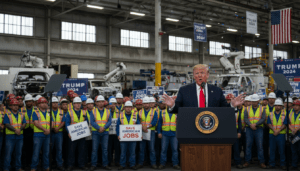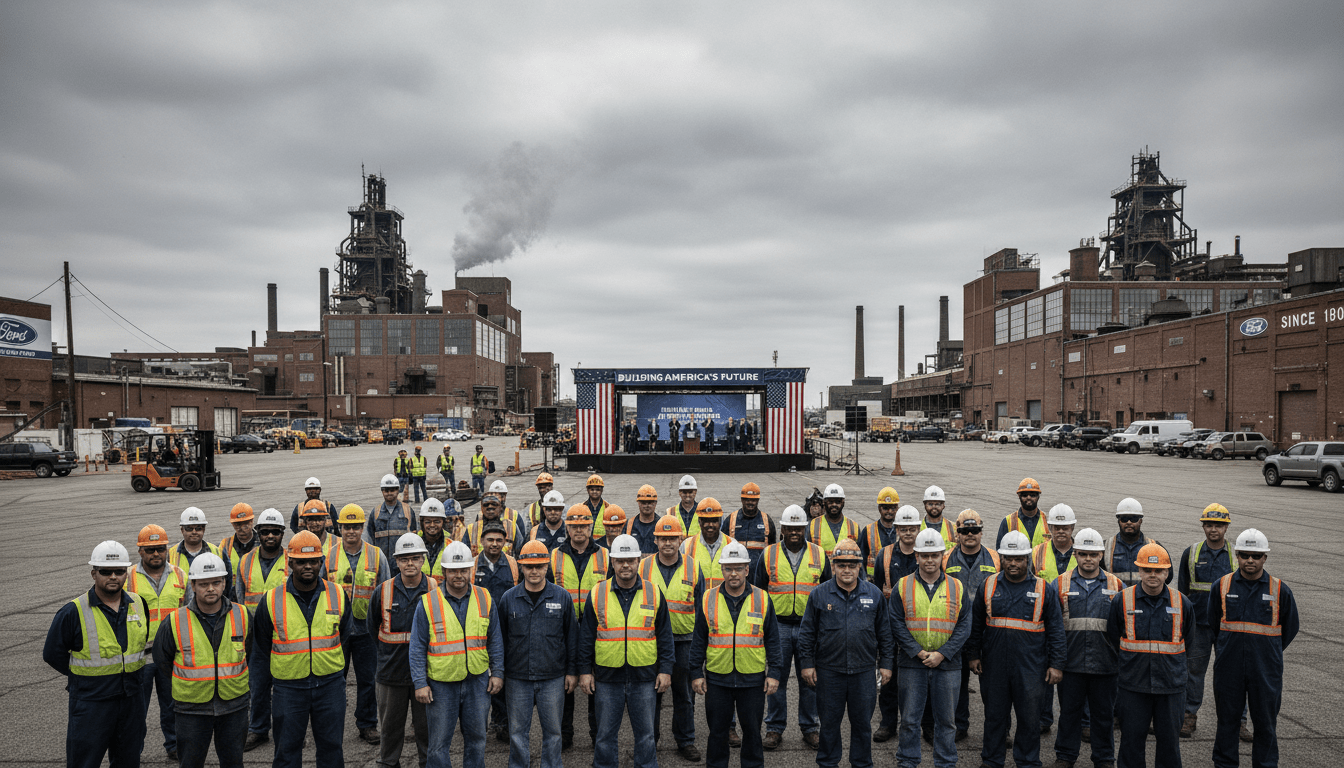
DEARBORN — The intersection of politics and production heated up this week as former President Donald Trump’s campaign swing through Metro Detroit encountered vocal opposition from automotive professionals, specifically from the historic Ford Rouge Complex in Dearborn. While the visit was intended to court the blue-collar vote crucial to winning the “Blue Wall,” the reception highlighted a deepening divide between the Republican candidate’s platform and the current realities of organized labor in the Motor City.
During a stop near the automotive heartland of Dearborn, meant to highlight manufacturing decline, Trump faced what many are calling a direct confrontation of policy and rhetoric. Members of the United Auto Workers (UAW), including employees from the nearby Ford Dearborn Truck Plant, challenged the former president’s narrative regarding the electric vehicle (EV) transition and labor rights. The incident underscores the complexities of the 2024 election cycle in Michigan, where the auto industry remains the economic pulse.
Clash Over EV Mandates and Job Security
The core of the friction stems from the former president’s repeated warnings that the shift to electric vehicles will decimate Michigan jobs. During his speech, Trump characterized the Biden administration’s push for green energy as a “transition to hell” for the American auto worker. However, this message was met with sharp skepticism from local Ford workers in Dearborn, many of whom are currently building the F-150 Lightning, the electric version of America’s best-selling truck.
Union representatives present at the periphery of the event argued that the rhetoric ignores the job growth currently happening within the EV sector in Michigan. “The narrative that EVs are killing jobs doesn’t match what we are seeing on the line every day,” stated a representative for UAW Local 600, which represents workers at the Rouge Complex. “We are fighting for a just transition, not an end to the transition. The confrontation here isn’t just about a candidate; it’s about the future of our plant.”
This sentiment echoes recent statements from UAW President Shawn Fain, who has been openly critical of Trump’s visits to non-union shops during the 2023 strikes. Fain has repeatedly emphasized that the union’s battle is against corporate greed rather than the technology of the vehicles themselves. For a deeper dive into how local infrastructure is adapting to these changes, read our coverage on Detroit transportation and infrastructure updates.
Impact on Detroit Residents and Economy
For residents of Detroit and Dearborn, the stakes of these political confrontations are incredibly high. The automotive sector is not just a source of employment; it is the backbone of the local tax base which funds schools, roads, and Detroit neighborhood revitalization projects.
The pushback from Ford workers in Dearborn highlights a critical nuance: workers are concerned about job security, but they are also wary of politicians using their livelihoods as a political wedge without offering concrete solutions. According to data from the U.S. Bureau of Labor Statistics, Michigan’s motor vehicle manufacturing employment has seen fluctuations, but recent contracts secured by the UAW have promised significant investment in local plants.
“When politicians come to town and tell us our industry is dying, it hurts local businesses, it hurts real estate values, and it lowers morale,” explained a local business owner in downtown Dearborn, whose restaurant caters to shift workers. “We need support for the transition, not rhetoric that scares away investment.”
Data and Context: The State of the Industry
The tension witnessed during the visit is backed by hard numbers. The automotive landscape is shifting, and anxiety is a natural byproduct. However, reports from the Detroit Regional Chamber indicate that Michigan has secured over $16 billion in EV and battery manufacturing investments since 2019. The Ford workers in Dearborn are at the epicenter of this investment.
Critics of the rapid EV transition, aligning with Trump’s views, point to slower-than-expected consumer adoption rates as a risk factor. Yet, Ford management and union leaders have maintained that the Dearborn plant must remain flexible, producing both internal combustion and electric vehicles to meet market demand. This flexibility was a key talking point for workers challenging the doom-and-gloom narrative presented during the visit.
What Happens Next?
As the election draws closer, Michigan will continue to be a battleground. The interaction between Ford workers in Dearborn and the Trump campaign signals that the labor vote cannot be taken for granted by either party. The UAW’s endorsement and the rank-and-file sentiment remain pivotal.
For the workers at the Rouge Complex, the priority remains clear: securing contracts, ensuring job safety, and maintaining Detroit’s status as the automotive capital of the world, regardless of who sits in the Oval Office. As the industry evolves, the voices from the factory floor are becoming louder and more willing to confront political figures directly.