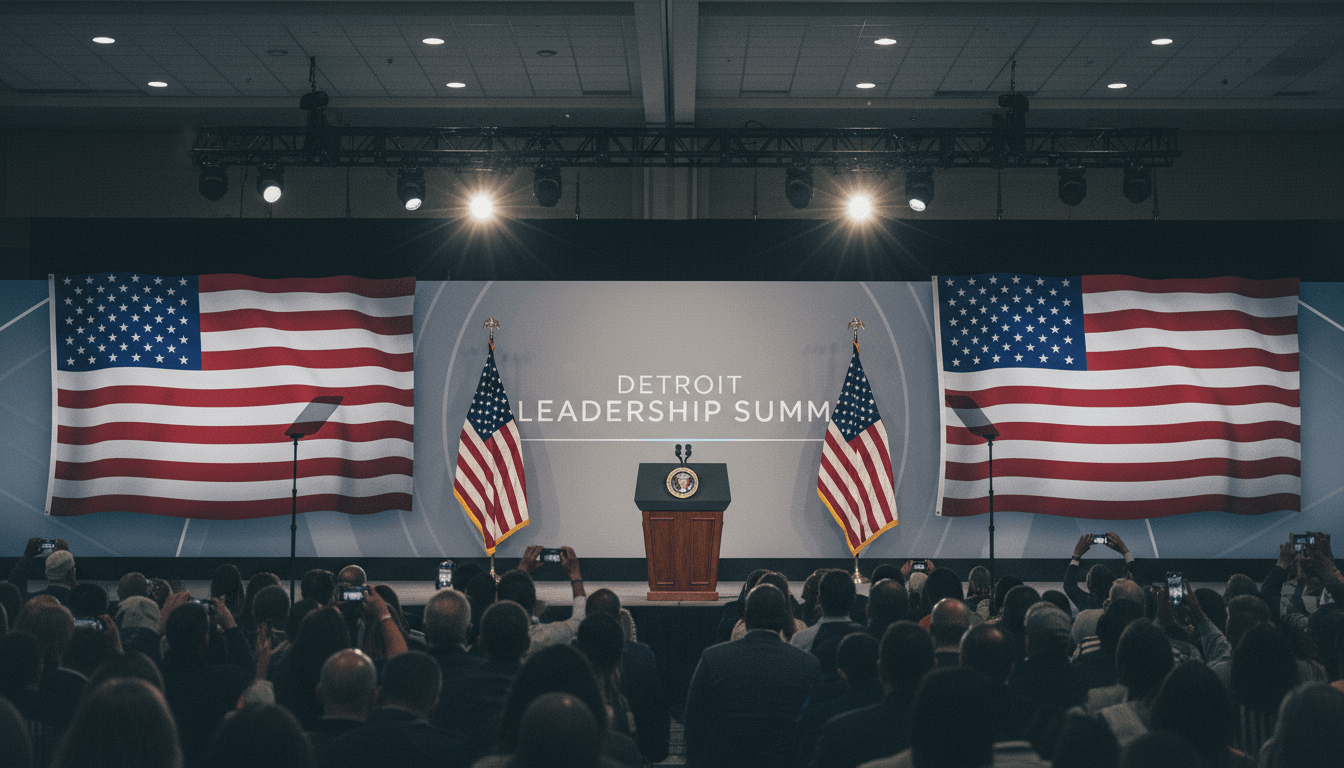
Former President Donald Trump returned to the Motor City this week, delivering a speech centered heavily on the automotive industry, trade tariffs, and the future of American manufacturing. The visit, held at a packed venue in downtown Detroit, underscores the critical role Michigan plays as a battleground state in the upcoming general election.
Speaking to a crowd composed largely of auto workers and local business owners, Trump sought to differentiate his economic platform from the current administration, specifically targeting the transition to electric vehicles (EVs). His rhetoric struck a chord with attendees concerned about job security amidst the industry’s rapid technological shift.
“We are going to bring the auto industry back to Michigan bigger and better than ever before,” Trump declared, promising aggressive tariffs on foreign-made vehicles to protect domestic jobs. The event highlighted the intensifying competition for the blue-collar vote in Wayne County and surrounding areas.
The Auto Industry at the Center of the Debate
During the Trump visit to Detroit, the central theme was the preservation of the internal combustion engine and criticism of federal incentives for electric vehicle production. Trump argued that current mandates are pushing the industry toward a cliff that could result in job losses for Detroit’s legacy automakers.
According to transcripts from the event, Trump proposed a 100% tariff on cars manufactured in Mexico by Chinese companies, a move he claims is necessary to prevent the American market from being flooded with cheaper alternatives. This protectionist stance appeals to a segment of the United Auto Workers (UAW) membership, even as union leadership has historically aligned with Democratic candidates.
“If I am elected, we will put a tariff on every car that comes across the line,” Trump stated. “They are not going to sell those cars in the United States.”
Local reactions were mixed. While some attendees cheered the hardline stance on trade, industry analysts warn that steep tariffs could raise prices for consumers and disrupt complex global supply chains. For deeper context on local manufacturing, read our coverage on the shifting landscape of the Detroit Auto Show.
Impact on Detroit Residents and Workers
For the average Detroit resident, particularly those employed in the manufacturing sector, the stakes of these policy proposals are high. The transition to EVs has created uncertainty regarding the long-term viability of engine and transmission plants in southeast Michigan.
James Miller, a retired assembly line worker from Warren who attended the rally, expressed cautious optimism. “We just want to know that our pensions are safe and that the young guys coming up will have the same opportunities we did,” Miller said. “When they talk about banning gas cars, it scares people around here.”
Conversely, proponents of the green energy transition argue that Detroit must adapt to remain the automotive capital of the world. Investments in battery plants and EV assembly lines are already reshaping the local economy. The debate highlights a significant divide in how Detroiters view the path forward: as a defense of heritage manufacturing or an embrace of new technology.
This visit also touched on broader economic issues affecting locals, including inflation and housing costs. To understand how these macroeconomic trends are hitting local neighborhoods, see our report on Detroit real estate and housing affordability.
Background & Data: Michigan’s Swing State Status
Michigan remains a pivotal piece of the electoral puzzle. In 2016, Trump won the state by a razor-thin margin of just over 10,000 votes, largely fueled by support in Macomb County and rural areas. In 2020, President Biden reclaimed the state for the Democrats by a margin of roughly 154,000 votes.
Data from the U.S. Bureau of Labor Statistics indicates that while unemployment in the Detroit-Warren-Dearborn area has stabilized, the composition of the workforce is changing. Manufacturing jobs, while still vital, are competing with growing sectors like healthcare and technology. However, the cultural and economic weight of the “Big Three” automakers remains the primary driver of political discourse in the region.
Political strategists note that the Trump visit to Detroit is likely just the beginning of a heavy campaign presence from both parties. Winning Michigan requires a coalition of urban turnout in Detroit and strong support from the industrial suburbs—a delicate balance that hinges on economic promises.
Future Outlook: What Happens Next?
As the election cycle heats up, Detroit can expect more visits from high-profile candidates. The clash over the future of the automotive industry will likely serve as a proxy for the broader national debate on climate change policy versus economic protectionism.
Local business leaders are watching closely to see how these policy promises might translate into legislative reality. The Detroit Regional Chamber and other local organizations have emphasized the need for stability and workforce development, regardless of who sits in the Oval Office.
For now, the rhetoric remains focused on the factory floor. Whether the promise of tariffs and a rollback of EV mandates will be enough to sway the critical block of independent voters in Michigan remains to be seen. DetroitCityNews.com will continue to monitor these developments and provide factual, on-the-ground reporting as the campaigns progress.