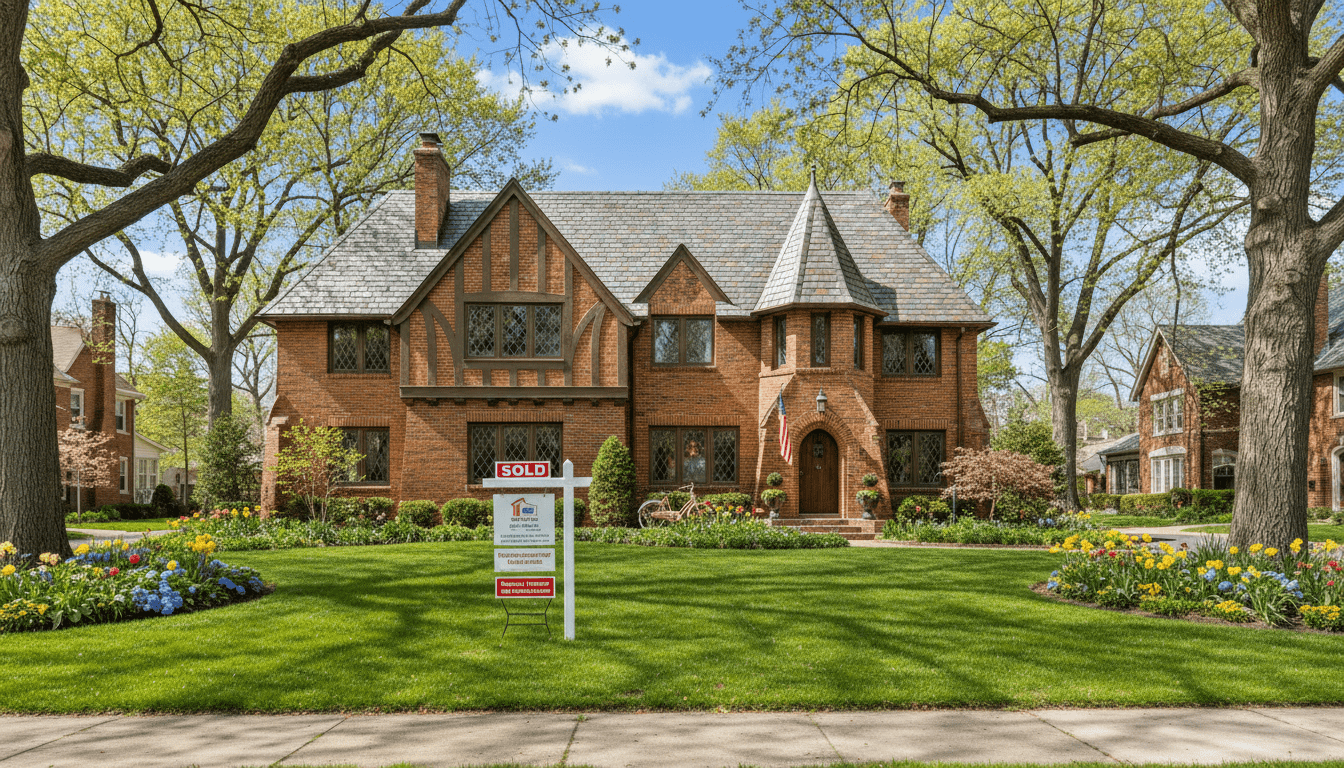
As the mid-point of the decade approaches, real estate analysts and urban planners are closely monitoring the trajectory of the Detroit housing market. Following a period of rapid appreciation in the city’s core and subsequent stabilization in outlying neighborhoods, 2026 is projected to be a pivotal year for residential real estate in Detroit. With the inventory from the Detroit Land Bank Authority shrinking and interest rates expected to normalize, the dynamics for buyers, sellers, and renters are shifting.
While the explosive growth seen in areas like Brush Park and Corktown has defined the last five years, the next phase of Detroit’s housing evolution appears to be focused on middle-neighborhood stability and the long-term impacts of property tax reform. According to data from local housing advocacy groups and broader economic forecasts, 2026 will likely see a market defined by steady equity growth rather than volatile speculation.
The Shift Beyond the 7.2 Square Miles
For years, the primary narrative of Detroit real estate focused on the “7.2”—the greater downtown area. However, projections for 2026 indicate a decisive spread of investment into neighborhoods that were previously stagnant. Areas such as Bagley, East English Village, and the University District have already seen significant price increases, but the momentum is expected to move further into neighborhoods like Fitzgerald, Morningside, and Warrendale.
According to the Southeast Michigan Council of Governments (SEMCOG), regional planning data suggests that as housing affordability becomes a critical issue in the suburbs, demand will continue to flow back into the city where square footage offers better value. By 2026, the disparity between “investable” zones and “neglected” zones is expected to blur, driven by higher costs of new construction and a finite supply of historic housing stock.
“We are seeing a transition from investor-heavy cash purchases to more traditional mortgage-based homeownership in neighborhoods that haven’t seen that activity in decades,” noted a representative from Detroit Future City in a recent report on single-family housing. This trend suggests that by 2026, the ratio of owner-occupants to renters may begin to tick upward in key transition zones.
Inventory Constraints and the Land Bank Factor
A major factor influencing Detroit housing market predictions for 2026 is the evolving role of the Detroit Land Bank Authority (DLBA). For the past decade, the DLBA has been the largest land owner in the city, supplying a steady stream of fixer-uppers via auction. However, as the DLBA continues to sell off its best stock and demolish unsalvageable structures, the supply of ultra-cheap inventory is drying up.
By 2026, the “$1,000 house” will be effectively extinct, a relic of the post-bankruptcy era. The tightening of inventory is expected to put upward pressure on home prices. With fewer distressed properties dragging down comparable sales (comps), appraisals are likely to come in higher, solving one of the most persistent issues in Detroit lending: the appraisal gap.
This shift will likely encourage more private development. As neighborhood development projects gain traction, private sellers will replace public auctions as the primary source of inventory. This normalization is a healthy sign for the market, though it inevitably raises the entry price for first-time buyers.
Interest Rates and Affordability in 2026
National economic trends will play a significant role in the local market. Most financial forecasts suggest that while interest rates may not return to the historic lows of 2020, they are expected to stabilize by 2026. This stability is crucial for Detroit buyers who rely on programs like the Detroit Down Payment Assistance Program.
If mortgage rates settle into a moderate range, buying power for Detroit residents could increase. However, this increased buying power often fuels competition. Real estate experts predict that 2026 will remain a seller’s market in well-maintained neighborhoods, while fixer-uppers will linger on the market longer as the cost of renovation materials and labor remains high.
Impact on Detroit Residents
For long-time Detroiters, the outlook for 2026 brings mixed emotions. On one hand, rising property values mean increased equity. Generational wealth, which was eroded during the foreclosure crisis, is slowly being rebuilt as home values in Black-majority neighborhoods see consistent appreciation.
“The appreciation we are seeing is finally closing the gap between what a home costs to fix and what it is worth,” said a local broker specializing in the west side. “By 2026, we expect fewer homeowners to be underwater on their mortgages compared to 2016.”
On the other hand, rising values bring concerns regarding displacement and taxation. While the city has implemented protections like the HOPE exemption for property taxes, the pressure on renters is expected to increase. As landlords face higher valuation assessments, rents are likely to rise, potentially squeezing out lower-income residents who have not yet transitioned to homeownership.
Residents should also monitor the ongoing discussions regarding the Land Value Tax plan. If fully implemented by 2026, this tax structure would reduce taxes on improvements (buildings) and increase taxes on land. This would theoretically lower tax bills for most homeowners while penalizing vacant lot speculators, potentially triggering a construction boom that could increase housing supply.
Background & Data Trends
Data supports the notion of a recovering market. According to recent municipal reports, the median home sale price in Detroit has risen consistently year-over-year. While still lower than the national average, the percentage growth has outpaced many surrounding suburbs.
Furthermore, vacancy rates in habitable structures have dropped. The City of Detroit’s demolition program, fueled by Proposal N funds, is scheduled to wrap up its major phases near the mid-decade mark. By 2026, the visual blight that depressed property values in the past will be significantly reduced, further bolstering the Detroit housing market appeal.
For more details on how tax assessments are changing, readers can view our report on property tax assessments and appeals.
What Happens Next?
Looking ahead to 2026, the Detroit market is poised for maturity. The wild swings of the past decade are likely to be replaced by predictable, moderate growth. For buyers, the window to purchase “unpolished gems” is closing. For sellers, patience has paid off.
The key variable remains the broader economic health of the region, specifically the automotive industry’s transition to EV manufacturing and the diversification of Detroit’s job market. If employment numbers remain strong, housing demand in 2026 will likely meet or exceed current supply, solidifying Detroit’s status as a recovering housing market success story.