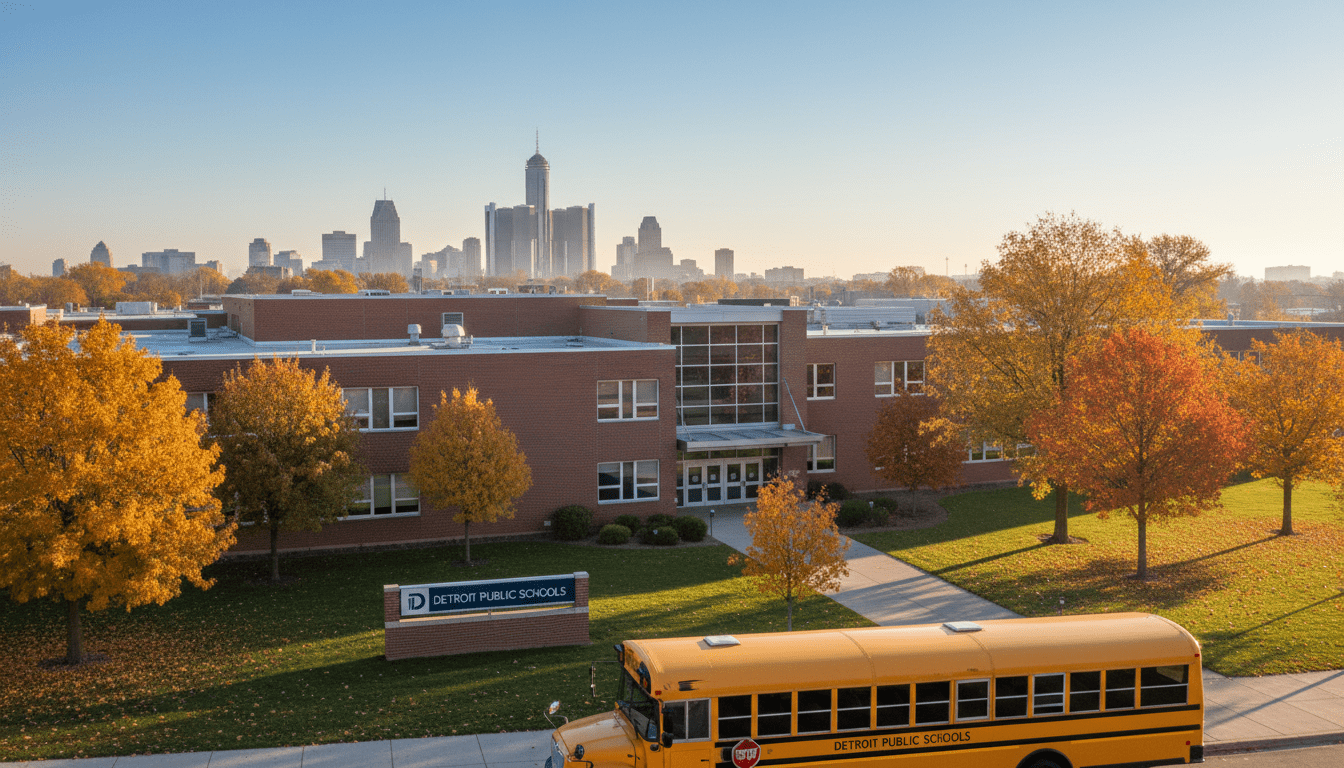
As the Detroit Public Schools Community District (DPSCD) moves beyond the era of pandemic-era stimulus, district administrators and local families are bracing for a shifting financial landscape. While the district has stabilized significantly since its return to local control, the expiration of federal COVID-19 relief funds is forcing a new rigorous analysis of long-term fiscal health, mirroring budget tightening trends seen in major urban districts across the country for the 2026–27 planning horizon.
For the past three years, DPSCD operated with a significant financial cushion provided by the Elementary and Secondary School Emergency Relief (ESSER) fund. The district received approximately $1.2 billion in one-time federal aid, which was utilized to improve facilities, expand summer school programming, and increase mental health support for students. However, with the deadline to allocate those funds passing late last year, the district is now pivoting to a sustainable budget model that relies strictly on recurring state revenue and per-pupil funding.
The Post-Pandemic Fiscal Cliff
According to financial reports presented to the Detroit School Board, the district has been preparing for this “fiscal cliff” by strategically separating recurring costs from one-time expenditures. However, the transition presents challenges. Superintendent Dr. Nikolai Vitti has consistently communicated that while the district is not in a deficit crisis comparable to the pre-2016 era, the budget must be “right-sized” to align with current enrollment realities.
Data from the district indicates that while enrollment has stabilized compared to the sharp declines of the early 2000s, it has not rebounded to the levels required to sustain the expanded staffing levels supported by federal dollars. This means that moving into the 2025–26 and 2026–27 school years, the district faces difficult decisions regarding staffing levels, contracted services, and the breadth of supplemental programming.
“We are entering a phase where every dollar spent must have a direct correlation to student achievement and must be sustainable through our general fund,” Dr. Vitti noted in recent board communications regarding the district’s long-term financial planning.
Impact on Detroit Residents and Families
For Detroit parents and students, the budgetary shifts may result in visible changes at the classroom level. The most immediate concern for many families is the potential reduction of interventionists and support staff who were hired using temporary federal funds. These roles provided critical support in literacy and mathematics to combat learning loss during the pandemic.
Local community organizations and parents have expressed concern that a reduction in support staff could slow the academic momentum the district has gained recently. “Our children benefited greatly from the extra hands on deck,” said a representative from a local parent advisory group in Northwest Detroit. “We understand the money was temporary, but the need is permanent. We need to know how the district plans to keep class sizes manageable without those extra funds.”
Furthermore, the district is reviewing its vendor contracts. During the height of the pandemic, DPSCD engaged numerous external partners for tutoring, nursing, and cleaning services. Many of these contracts are being scaled back or brought in-house to save costs, which could impact the local business ecosystem that interacts with the school system.
Background & Data: Understanding the Numbers
To understand the scope of the Detroit Public Schools budget challenge, it is essential to look at the revenue structure. Michigan’s school aid budget provided a record increase in per-pupil funding for the 2024 fiscal year, raising the foundation allowance to $9,608 per student. While this increase is historic, inflation and rising operational costs—including utility rates and healthcare premiums for staff—have absorbed much of that new revenue.
According to Detroit Public Schools Community District financial disclosures, the district maintains a rainy-day fund, a stark contrast to the emergency management era when the district was effectively bankrupt. However, maintaining that fund requires discipline. The projected budget gaps for future years, specifically looking toward 2026–27, are structural. If enrollment does not increase significantly, the district cannot support the current infrastructure of facility footprints and personnel counts.
Infrastructure and Development
A unique component of the Detroit budget landscape is the distinct separation of capital improvements from general operating funds. The district is currently executing a $700 million facility master plan funded by a separate millage, not the general fund. This means that while classroom budgets are tightening, residents will still see construction and renovations across the city. This juxtaposition—new buildings but tighter operating budgets—is a complex narrative for the administration to manage.
Continued investment in school infrastructure is seen as a key driver for Detroit neighborhoods revitalization, as quality school buildings often anchor property values and community stability.
What Happens Next?
Looking ahead to the 2026–27 planning cycle, the district is expected to focus heavily on attendance and retention. Since funding is tied directly to the student count, the district’s “Every School Day Counts” campaign is not just an academic initiative but a financial necessity. Chronic absenteeism, while improving, remains a hurdle that directly impacts the bottom line.
The Detroit School Board is also expected to lobby Lansing for adjustments to the weighted funding formula, arguing that educating students in high-poverty environments requires a higher foundation allowance than the state currently provides. The outcome of upcoming state budget negotiations will be pivotal for the district’s financial outlook.
For now, Detroit educators and families should anticipate a period of consolidation. The hiring blitzes of 2021 and 2022 are over. The focus now shifts to retention, efficiency, and maximizing the resources available within the standard state aid framework.