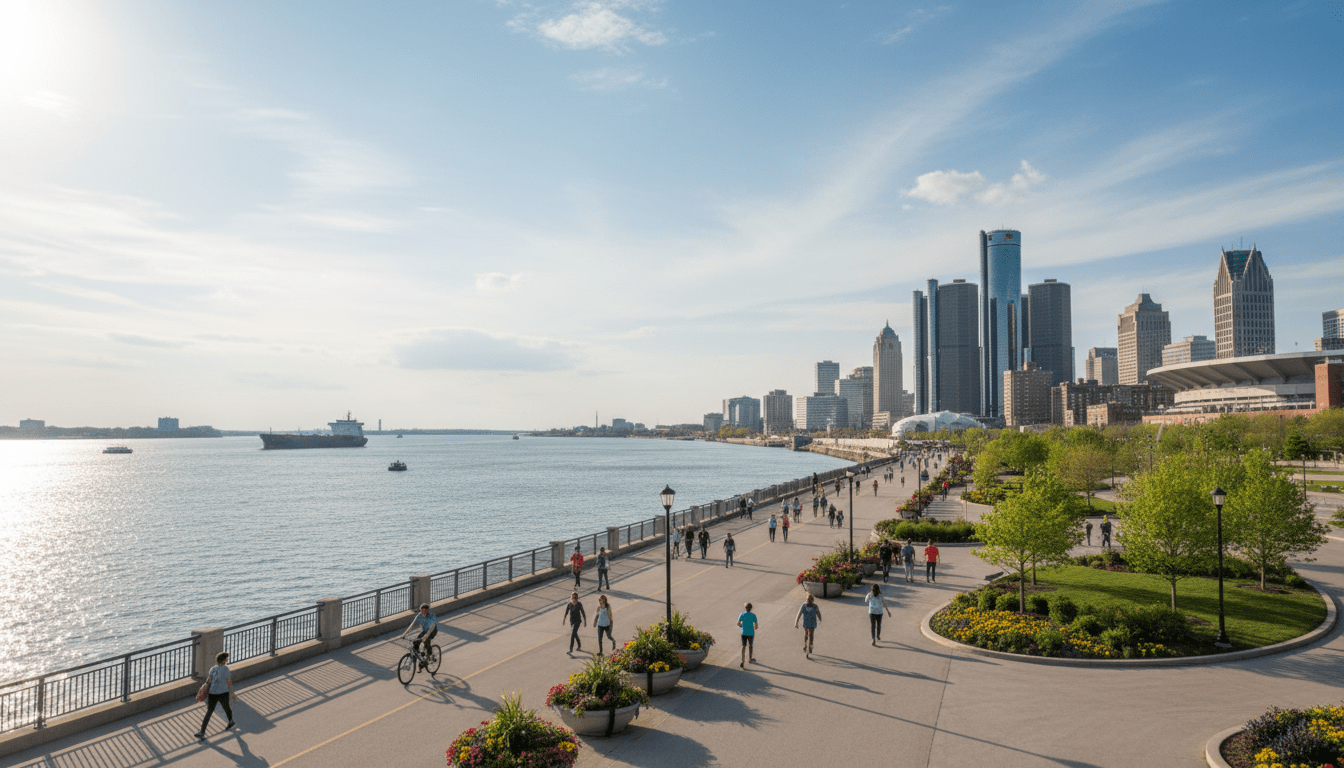
The transformation of the Detroit riverfront, a project decades in the making, enters a pivotal new phase this spring. What was once a collection of industrial sites and private parking lots is now a nationally recognized destination, and the upcoming season promises to unveil new infrastructure that further connects the city’s neighborhoods to its historic shoreline.
A Milestone for the Detroit Riverfront
According to the Detroit Riverfront Conservancy, several key projects are reaching completion, marking a significant step toward the goal of a fully connected 5.5-mile riverwalk. This spring, the focus shifts to the West Riverfront, where the massive Ralph C. Wilson, Jr. Centennial Park continues its metamorphosis. While the full park is a multi-year endeavor, early-season access points and connecting pathways are set to open, providing residents with unprecedented access to the water.
The Detroit riverfront has been voted the best in the United States by USA Today for three consecutive years, and the upcoming additions are designed to maintain that momentum. Mark Wallace, President and CEO of the Detroit Riverfront Conservancy, has frequently noted that the mission is to create a “world-class space for all Detroiters.” The strategy involves not just aesthetic improvements, but functional urban design that bridges the gap between the downtown core and residential areas.
Impact on Detroit Residents and Local Development
For long-time residents, the expansion of the Detroit riverfront is more than just a beautification project; it is a catalyst for neighborhood development. The introduction of the Southwest Greenway, which connects the riverfront to the Corktown and Mexicantown neighborhoods, has already begun to shift pedestrian traffic patterns. Business owners in these areas report a steady increase in foot traffic as the “new attraction” of the connected greenways makes the city more walkable.
Data from the City of Detroit Mayor’s Office suggests that every dollar invested in the riverfront generates over ten dollars in private investment. This economic ripple effect is visible in the surge of residential permits and small business openings along the Jefferson Avenue corridor. Local residents benefit from enhanced recreational opportunities, including free fitness classes, fishing piers, and improved security patrols that make the waterfront a safe haven for families.
Background and Economic Data
The journey toward a revitalized Detroit riverfront began in 2003 with the formation of the Detroit Riverfront Conservancy. Since then, over $1 billion in public and private investment has been funneled into the project. A report from the Michigan Economic Development Corporation (MEDC) highlights that the riverfront attracts more than 3.5 million visitors annually, making it one of the most significant drivers of Detroit tourism.
Construction of the upcoming Unified Riverfront also includes the completion of the Uniroyal Promenade, a crucial link that will finally connect the East Riverwalk to Belle Isle Park. This 0.6-mile segment has been one of the most challenging due to the extensive environmental remediation required on the former industrial site. Its opening this spring will allow cyclists and runners to travel from the Joe Louis Arena site all the way to the MacArthur Bridge without leaving the protected path.
The Role of Infrastructure and Sustainability
Beyond tourism, the city development strategy focuses on sustainability. The new segments of the Detroit riverfront incorporate bioswales and native Michigan plantings designed to manage stormwater runoff—a critical issue for the city’s aging infrastructure. By utilizing natural filtration systems, the project reduces the burden on Detroit’s combined sewer system during heavy rainfall events.
Future Outlook: What Happens Next?
As the spring season kicks off, the city is also looking toward the completion of the Joe Louis Greenway, a 27.5-mile loop that will eventually connect the riverfront to several outlying neighborhoods and the cities of Hamtramck and Highland Park. This broader vision of connectivity ensures that the benefits of the waterfront are accessible to those who do not live directly on the river.
Visitors this spring can expect a calendar full of events, including the return of the Riverfront Run and seasonal festivals at Valade Park. For more information on the project timelines and upcoming events, residents are encouraged to visit the official Detroit Riverfront Conservancy website. As the city continues its economic growth, the riverfront remains the crown jewel of Detroit’s urban resurgence, proving that thoughtful public spaces can transform the identity of a metropolis.