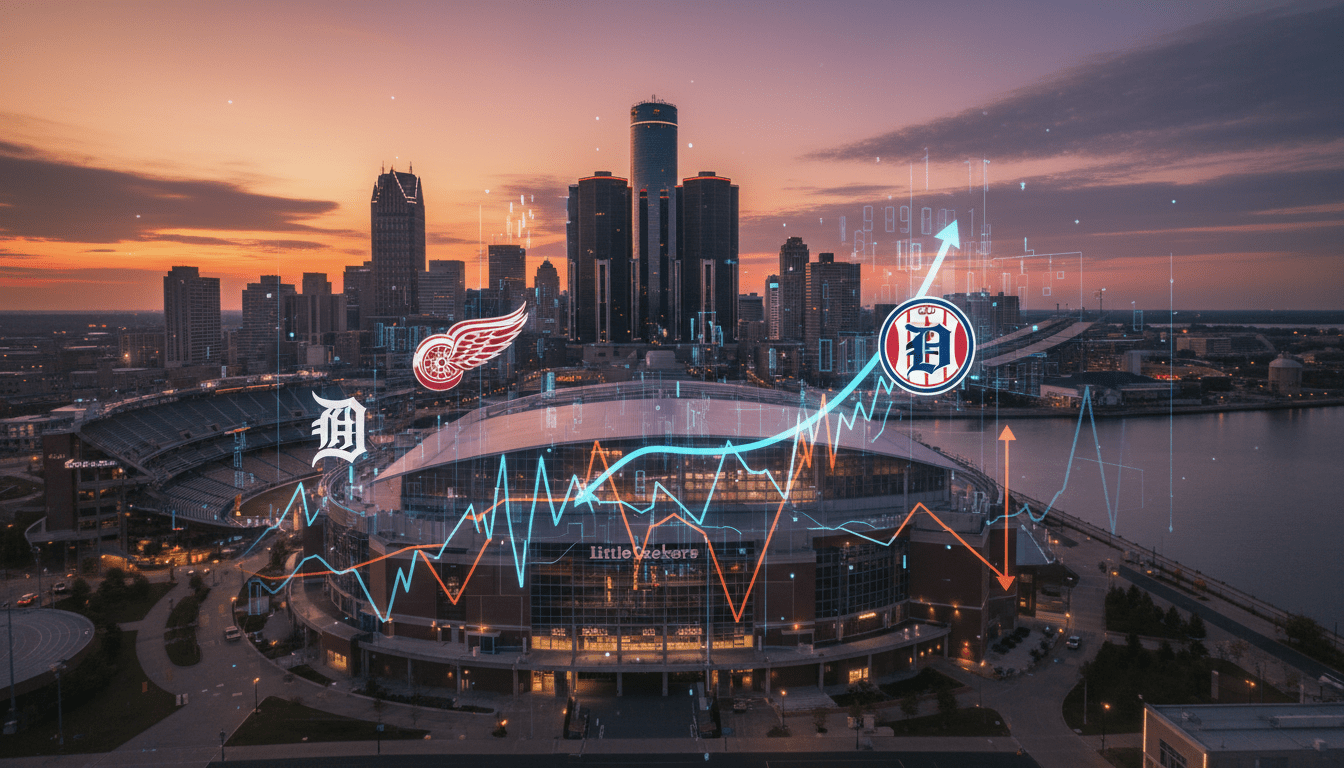
The professional sports landscape in Detroit is currently defined by a stark contrast in trajectory. While the city has long been known as the “City of Champions,” the recent performance of its major franchises reveals a widening gap between those successfully navigating rebuilds and those mired in historical struggles. Data regarding Detroit sports trends suggests that the Detroit Red Wings are currently the standard-bearers for progress among the city’s winter and spring professional teams, significantly outpacing the Detroit Pistons and showing more immediate promise than the Detroit Tigers.
The Red Wings’ Resurgence and the ‘Yzer-plan’
According to reporting from the Detroit Free Press, the Detroit Red Wings have entered a phase of the “Yzer-plan”—the rebuilding strategy led by General Manager Steve Yzerman—that is finally yielding tangible results. For the first time in several seasons, the Red Wings are consistently in the hunt for a wildcard playoff spot in the Eastern Conference. This shift is not merely anecdotal; analytical data shows a marked improvement in goal differential and power-play efficiency compared to the 2022-2023 season.
The integration of veteran talent like Patrick Kane and Alex DeBrincat alongside a developing core including Moritz Seider and Lucas Raymond has stabilized the roster. Unlike previous years where the team struggled with consistency, the 2023-2024 campaign has seen the Red Wings maintain a competitive edge even during difficult stretches. This upward trend in Detroit sports trends has revitalized the atmosphere at Little Caesars Arena, which had previously seen a dip in late-season engagement.
The Pistons’ Historical Struggles
In sharp contrast to the Red Wings’ steady climb, the Detroit Pistons have faced one of the most challenging periods in the history of the NBA. Data from Basketball Reference highlights a season marked by a record-breaking losing streak that captured national attention for all the wrong reasons. Despite possessing high-draft picks like Cade Cunningham and Jaden Ivey, the Pistons have struggled to translate individual talent into collective victories.
The disparity between the two tenants of Little Caesars Arena is palpable. While the Red Wings have optimized their roster through a mix of free agency and internal development, the Pistons’ rebuild has appeared stagnant. Industry analysts note that the Pistons’ lack of veteran leadership and defensive identity has prevented them from keeping pace with the Red Wings’ turnaround. This divergence has become a primary focus of Detroit sports trends discussions, as fans increasingly prioritize Red Wings tickets over those for the struggling basketball franchise.
The Tigers and the Strategic Rebuild
Meanwhile, at Comerica Park, the Detroit Tigers are navigating their own complex path. According to data from MLB.com and local sports analytics firms, the Tigers have shifted toward a youth-centric model under the leadership of Scott Harris. While the team has not yet reached the competitive heights of the Red Wings, they have avoided the total collapse seen in the Pistons’ camp. The focus on “controlling the strike zone” and developing young arms like Tarik Skubal has provided a glimmer of hope for the upcoming season.
However, when looking at Detroit sports trends collectively, the Tigers remain in a “wait-and-see” category. Their success is heavily dependent on the health of their pitching staff and the offensive maturation of young players like Riley Greene. Compared to the Red Wings, who are actively competing for post-season relevance now, the Tigers are viewed as being a year or two behind in their competitive cycle.
Impact on Detroit Residents and the Local Economy
The performance of these teams has a direct and measurable impact on the city of Detroit. According to Crain’s Detroit Business, the success of the Red Wings has a significant “multiplier effect” on the District Detroit area. When the Red Wings are winning, foot traffic at local bars, restaurants, and parking structures increases by an estimated 15-20% on game nights compared to nights when the teams are underperforming.
For local residents, the Red Wings’ success provides more than just entertainment; it contributes to the economic vitality of the downtown core. Business owners in the vicinity of the arena have reported that playoff-contention games generate revenue levels comparable to the peak years of the previous decade. Conversely, the Pistons’ struggles have led to a softer secondary ticket market, which can reduce the incidental spending that typically follows a high-profile sporting event.
Furthermore, the psychological impact on the community cannot be understated. Detroit has historically been a city that rallies around its sports teams during economic shifts. The Red Wings’ return to relevance serves as a source of civic pride, offsetting some of the frustrations surrounding the other franchises. You can read more about the economic impact of Detroit sports on our local business page.
Background & Analytical Context
To understand why the Red Wings are outperforming their peers, one must look at the specific Detroit sports trends in management and scouting. The Red Wings have successfully utilized their draft capital to build a deep defensive corps, a strategy that often takes longer but yields more sustainable results in the NHL. In contrast, the NBA’s lottery system has not been as kind to the Pistons, who, despite poor records, have frequently missed out on the top-tier transformative talents needed to shift a franchise’s trajectory quickly.
External data from the U.S. Census Bureau and local economic reports also suggest that Detroit’s demographic is shifting toward a younger, professional crowd that values the fast-paced, high-stakes environment of playoff hockey. This shift in the fan base is reflected in television ratings and social media engagement metrics, where the Red Wings are currently dominating the local market share for winter sports.
What Happens Next
Looking forward, the trajectory of Detroit sports trends suggests a continued divergence unless significant organizational changes occur within the Pistons and Tigers. For the Red Wings, the focus remains on clinching a playoff berth and gaining valuable post-season experience for their young core. A successful playoff run could further solidify their position as the city’s premier sports attraction.
For the Pistons, the offseason will likely involve a rigorous evaluation of the front office and coaching staff to address the lack of progress. The Tigers, on the other hand, will be closely watched during their spring campaign to see if their analytical approach to player development can mirror the success found across the street at Little Caesars Arena. Residents can stay updated on these developments by visiting the Detroit Free Press sports section for daily coverage or checking our latest report on District Detroit development.
As Detroit continues its broader urban recovery, the success of its sports teams remains a key indicator of the city’s overall momentum. For now, the Red Wings are leading the charge, proving that a disciplined, long-term vision can eventually return a franchise to its former glory.