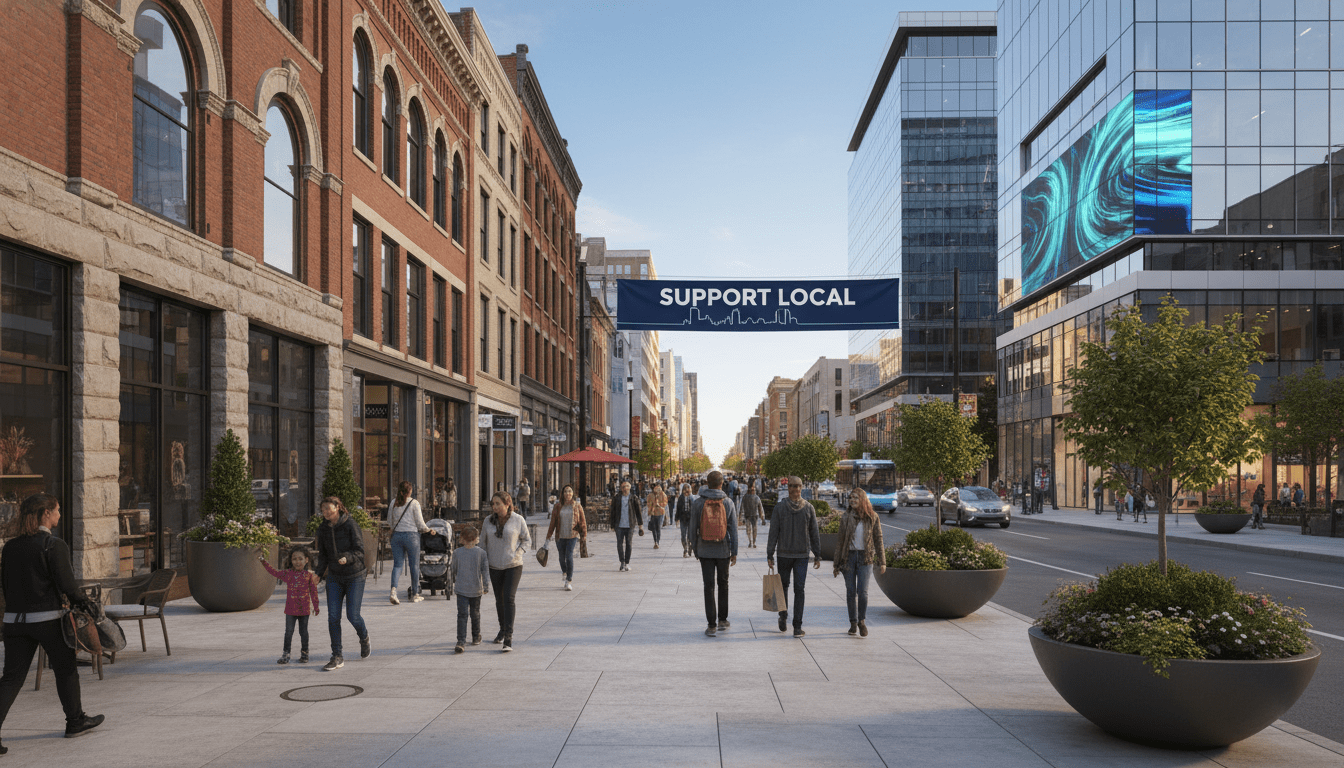
The landscape of commerce in Detroit is undergoing its most significant transformation in decades as the city approaches 2026. What was once a retail environment defined by concentrated hubs in the Downtown core and Midtown is rapidly evolving into a decentralized, tech-integrated, and neighborhood-centric ecosystem. Driven by public-private partnerships and a shift in consumer behavior, these developments are reshaping how residents interact with their local economy.
The Rise of Neighborhood-Centric Commerce
According to recent reports from the Detroit Economic Growth Corporation (DEGC), there has been a 15% increase in small business license applications within residential corridors over the last 24 months. This shift marks a departure from the heavy focus on Woodward Avenue toward areas like the Livernois Avenue of Fashion, the Villages, and Grand River. As Detroit moves toward 2026, the ’15-minute neighborhood’ model is becoming a reality, where retail necessities are increasingly available within walking or biking distance of residential clusters.
The city’s neighborhood revitalization initiatives have laid the groundwork for this expansion. City officials indicate that the Strategic Neighborhood Fund (SNF) has successfully leveraged over $100 million to improve streetscapes, making it more viable for boutique retailers and essential service providers to set up shop outside the central business district.
10 Key Changes Redefining Detroit Retail by 2026
As we look toward the 2026 horizon, ten specific Detroit retail trends are emerging as the dominant forces in the local economy:
1. Adaptive Reuse of Historic Structures
Developers are increasingly prioritizing the preservation of Detroit’s architectural heritage. Instead of new builds, 2026 will see a peak in historic warehouses and storefronts converted into multi-use retail spaces, blending industrial grit with modern luxury.
2. The Integration of ‘Phygital’ Shopping
Local retailers are adopting ‘phygital’ strategies—merging physical stores with digital convenience. This includes high-tech showrooms where customers can touch products but order them for home delivery via mobile apps, reducing the need for massive on-site inventory.
3. Micro-Fulfillment Centers in Urban Hubs
To compete with national e-commerce giants, Detroit-based businesses are utilizing micro-fulfillment centers. These small, automated warehouses located within city limits allow for same-day delivery across the metro area, a trend expected to solidify by mid-2026.
4. Sustainable and Circular Retail
Data from the Michigan Economic Development Corporation suggests a growing consumer demand for sustainability. This has led to an influx of ‘refill stations’ for household goods and curated vintage markets that focus on circular consumption rather than fast fashion.
5. Pop-Up to Permanent Pipelines
The success of the ‘Hatch Detroit’ model has institutionalized the pop-up shop. By 2026, many of the city’s vacant storefronts will be used as ‘test kitchens’ for retail, allowing entrepreneurs to build a following before committing to long-term leases.
6. Essential Services as Anchor Tenants
Gone are the days when a department store was necessary to anchor a development. New projects in Corktown and the North End are using grocery stores, urgent care centers, and childcare facilities as the primary draw for foot traffic.
7. Transit-Oriented Development (TOD)
Retail clusters are forming more densely around transit stops. As improvements to the DDOT and SMART bus systems continue, and the expansion of the Joe Louis Greenway progresses, retailers are positioning themselves specifically to capture non-motorized commuters.
8. Experience-Driven Commerce
Retailers are shifting away from purely transactional models. Shopping in 2026 Detroit often involves workshops, community events, or in-store dining. A bookstore is no longer just a place to buy books; it is a community hub with a localized event calendar.
9. The Growth of the ‘Work-from-Detroit’ Consumer
With hybrid work remaining a staple for many Detroiters, neighborhood coffee shops and retail districts are seeing increased mid-day traffic. This has led to the expansion of ‘co-working retail,’ where shops offer dedicated spaces for remote workers to congregate.
10. Luxury Market Maturation
As the city’s median income in specific districts continues to rise, luxury brands that were once hesitant are now establishing permanent footprints. The 2026 retail landscape will see a more balanced mix of high-end international labels and homegrown Detroit luxury brands.
Impact on Detroit Residents
For the average Detroit resident, these Detroit retail trends mean more than just new places to shop. The decentralization of retail is a critical factor in job creation. Local business owners emphasize that neighborhood shops are more likely to hire residents from the immediate area, fostering a more resilient local economy. However, this growth also brings challenges regarding affordability. As retail corridors become more desirable, commercial rents rise, potentially squeezing out the very entrepreneurs who pioneered the neighborhoods.
Community activists and city planners are monitoring these trends closely to ensure that small business support programs keep pace with the changing market. The goal is to ensure that the retail boom of 2026 is inclusive of long-term residents and legacy business owners who remained in the city during more difficult economic periods.
Background & Data: The Economic Engine
The shift in Detroit retail trends is backed by hard data. According to the U.S. Census Bureau’s Annual Business Survey, minority-owned businesses in Detroit have seen a steady growth rate, outpacing many other Midwestern cities. Furthermore, a 2024 economic outlook from the University of Michigan suggests that Detroit’s diversified economy is providing a stable foundation for retail investment. The city’s focus on tech and green energy jobs is attracting a demographic that prioritizes the types of modern, sustainable retail experiences now coming to fruition.
What Happens Next
Looking ahead, the success of these retail transformations will depend on continued infrastructure investment and the ability of local businesses to adapt to technological shifts. The city’s Planning and Development Department is expected to release a comprehensive 2030 vision plan later next year, which will likely double down on the ‘retail as community space’ philosophy seen in current trends. As Detroit prepares for the global spotlight of 2026, the retail sector stands ready to showcase a city that is not only back in business but leading the way in urban commercial innovation.