The Detroit Public Schools Community District (DPSCD) is currently evaluating a transformative shift in its logistical operations that could redirect millions of dollars from transportation contracts directly into the classroom and after-school enrichment. As the city grapples with rising costs and a persistent need for expanded youth services, the proposal to provide free, universal bus fare for students via the Detroit Department of Transportation (DDOT) is gaining traction among education advocates and city officials.
Currently, Detroit schools student transport represents one of the largest non-instructional line items in the district’s annual budget. According to recent financial reports from the Detroit Public Schools Community District, the cost of maintaining a fleet of traditional yellow buses and private vendor contracts has surged due to fuel prices and a national shortage of commercial drivers. By transitioning a significant portion of the high school and middle school population to the city’s existing public transit infrastructure, officials estimate that tens of millions of dollars could be liberated for other critical needs.
The High Cost of Detroit Schools Student Transport
For the 2024-2025 academic year, DPSCD has budgeted approximately $45 million for transportation services. This massive expenditure covers the movement of roughly 20,000 students across a city that spans 139 square miles. The logistical challenge is compounded by Detroit’s unique school choice environment, where many students attend schools outside their immediate neighborhoods, necessitating longer and more complex bus routes.
Internal data suggests that a substantial percentage of this funding is consumed by private transportation firms that provide supplemental busing. If the city and the district can reach a memorandum of understanding to allow students to ride DDOT buses for free using their student IDs, the district could potentially reduce its reliance on these high-cost private contracts. This shift would not only streamline the budget but also integrate students more deeply into the city’s urban fabric.
Impact on Detroit Residents and Families
The implications for local families are profound. For many Detroit households, transportation remains one of the primary barriers to consistent school attendance. Data from the University of Michigan’s Poverty Solutions initiative has frequently highlighted that transportation instability is a leading cause of chronic absenteeism in the city, which has seen rates exceed 60% in recent years. By providing a reliable, free alternative through the DDOT system, the city could offer students a more flexible way to reach both their primary campuses and various extracurricular sites.
Beyond the classroom, this policy would empower students to participate in the local economy and culture. A student with a free transit pass is more likely to pursue a part-time job, visit a public library, or attend a community center program. This mobility is essential for youth development in a city that is increasingly focused on neighborhood development and connectivity. Parents, too, would see a reduction in the personal costs associated with driving their children to various activities when yellow bus service is unavailable or delayed.
Reallocating Funds to After-School Programs
The primary goal of this fiscal pivot is the expansion of education funding for after-school programs. Education experts argue that the hours between 3:00 PM and 6:00 PM are critical for student safety and academic growth. Currently, many Detroit schools struggle to fund comprehensive after-school initiatives, including competitive sports, robotics clubs, and arts programming. By shifting even 20% of the current transportation budget toward these areas, the district could inject nearly $9 million annually into youth engagement.
According to the Afterschool Alliance, students who participate in high-quality after-school programs show improved attendance, better behavior, and higher graduation rates. In Detroit, where the graduation rate has seen steady but slow improvement, the addition of these programs could be a game-changer. These funds could also support the hiring of dedicated staff and the purchasing of modern equipment, ensuring that Detroit students have access to the same opportunities as their suburban counterparts.
Background & Data: The Transit Link
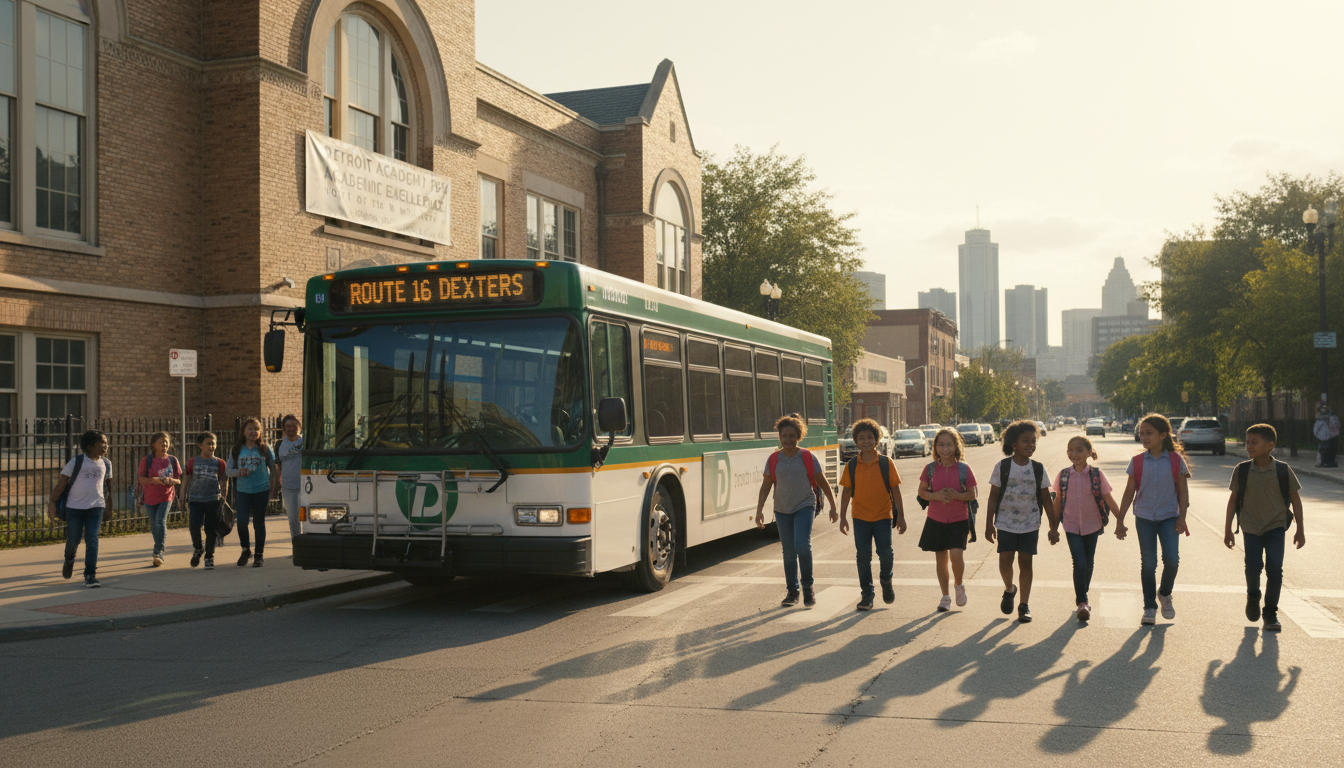
The push for integrated transit is not a new concept in urban education. Cities like Chicago and Minneapolis have successfully implemented programs where student IDs double as transit passes. In Detroit, the groundwork is already being laid through the Regional Transit Authority (RTA) and the Detroit Department of Transportation. Recent investments in the DDOT fleet, including new clean-diesel buses and improved scheduling software, make the system more capable of handling increased student volume than it was a decade ago.
Furthermore, this initiative aligns with broader city goals to increase public transit ridership. By familiarizing the younger generation with the bus system, the city is fostering a future cohort of transit users. This symbiotic relationship between the schools and the city’s infrastructure is a cornerstone of modern local infrastructure planning. However, the transition is not without hurdles. Safety remains a top concern for parents, necessitating a robust plan for “transit ambassadors” and increased security at major transfer hubs like the Rosa Parks Transit Center.
What Happens Next
The proposal is expected to be a major topic of discussion in the upcoming City Council and Board of Education joint sessions. For the plan to succeed, several logistical hurdles must be cleared, including the synchronization of bus routes with school bell times and the assurance of student safety during peak transit hours. Officials are looking at a potential pilot program involving five high schools to test the feasibility of the fare-free model before a city-wide rollout.
If successful, Detroit could serve as a national model for how a legacy city can leverage its existing transit assets to solve complex education funding challenges. For the residents of Detroit, the promise of free transit isn’t just about a ride to school; it is about reclaiming millions of dollars to invest in the potential of the city’s youth, ensuring that every student has a place to go and a way to grow after the final bell rings.