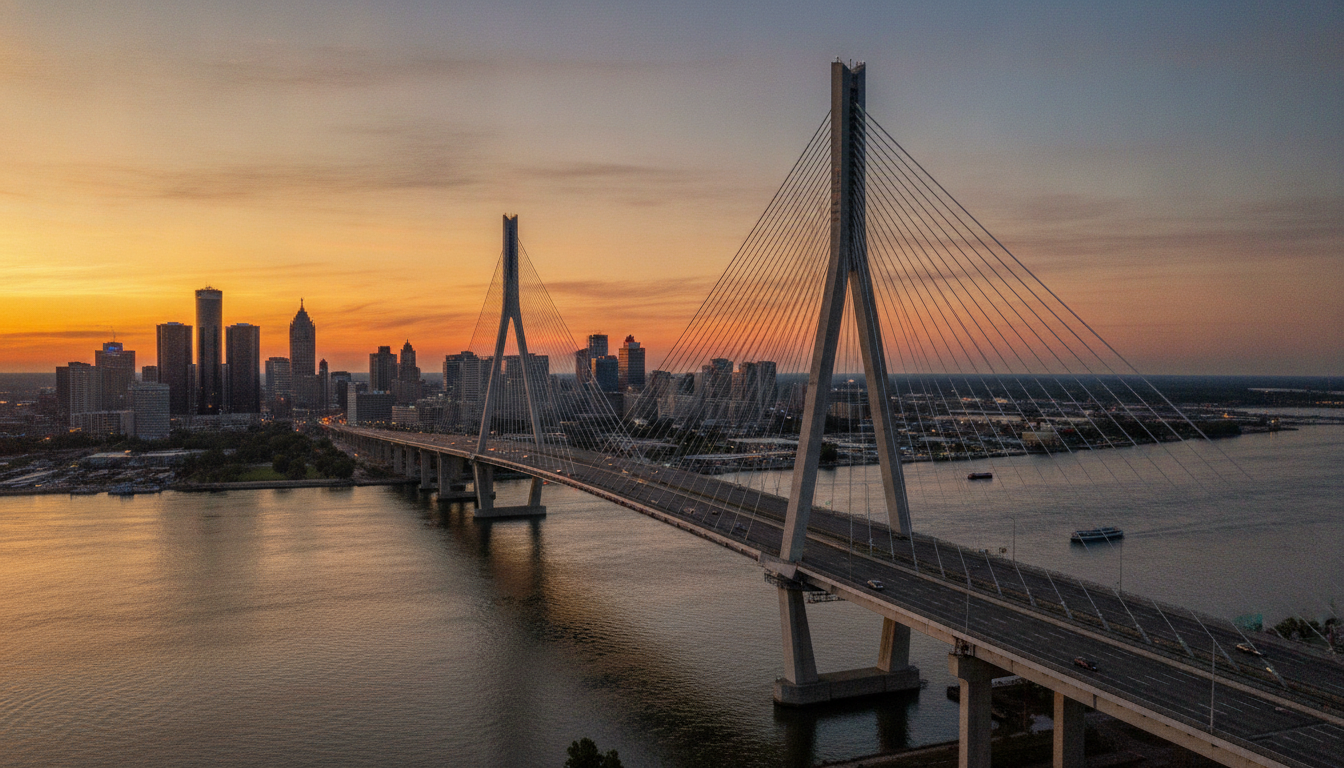
The landscape of the Detroit River has been fundamentally altered as the Gordie Howe International Bridge moves into its final stages of completion. Once operational, the structure will serve as a critical artery for North American commerce, linking Detroit, Michigan, to Windsor, Ontario. Construction crews are currently transitioning from heavy structural work to the intricate installation of electrical systems, tolling technologies, and advanced security infrastructure necessary for international border operations.
A Critical Milestone for Detroit Trade
The project, overseen by the Windsor-Detroit Bridge Authority (WDBA) and built by the Bridging North America (BNA) consortium, represents one of the largest infrastructure undertakings in recent North American history. According to the WDBA, the bridge deck connection was finalized in mid-2024, creating a continuous link between the two nations for the first time in the project’s timeline. Now, the focus has shifted toward making the crossing functional for the thousands of commercial vehicles expected daily.
Data from the U.S. Bureau of Transportation Statistics highlights the stakes involved. Currently, approximately 25% of all trade between the United States and Canada crosses at the Detroit-Windsor corridor, primarily via the aging Ambassador Bridge. The Gordie Howe Bridge is designed to alleviate congestion, provide a redundant route for hazardous materials that are currently restricted on other crossings, and modernize the logistics chain for the automotive and manufacturing sectors. For more on the city’s evolving physical landscape, visit our section on Detroit infrastructure projects.
Technological Integration and Port of Entry Readiness
The U.S. Port of Entry (POE) in Detroit is one of the largest border facilities in North America, spanning approximately 167 acres. It features dedicated lanes for commercial vehicles, NEXUS travelers, and passenger cars. Integration of Customs and Border Protection (CBP) systems is currently underway, with a focus on non-intrusive inspection (NII) technology designed to scan cargo efficiently without slowing the flow of traffic.
Reports from the Michigan Department of Transportation (MDOT) indicate that the bridge will feature automated tolling systems, eliminating the need for manual cash transactions and further reducing idling times. This transition toward digital logistics is expected to significantly lower carbon emissions in the immediate vicinity of the bridge, a primary concern for local environmental advocates and residents of the Delray neighborhood.
Impact on Detroit Residents and Local Neighborhoods
For residents of Southwest Detroit, particularly in the Delray area, the bridge represents more than just a transportation corridor. The project includes a $160 million (CAD) Community Benefits Plan, which has already begun funding local initiatives. According to officials from the City of Detroit, these funds are being directed toward home repair programs, job training for local residents, and the development of green spaces to buffer the neighborhood from industrial activity.
One of the most anticipated features for locals is the inclusion of a multi-use path. For the first time, pedestrians and cyclists will be able to cross between Detroit and Windsor on a dedicated, toll-free lane. This addition is expected to boost cross-border tourism and provide recreational opportunities for Detroiters who have long sought better access to the riverfront. The growth of these local amenities aligns with broader trends in Michigan logistics growth and urban revitalization.
Economic Outlook and Long-Term Logistics
Economists suggest that the Gordie Howe Bridge will solidify Detroit’s status as a premier global logistics hub. By providing a direct connection from I-75 in Michigan to Highway 401 in Ontario, the bridge removes the need for commercial trucks to navigate municipal streets in Windsor, a major bottleneck in the current system. This streamlined access is predicted to reduce transport costs for manufacturers throughout the Midwest.
The official website for the Gordie Howe International Bridge notes that while structural milestones have been met, the rigorous testing of safety systems and border security protocols will continue throughout the remainder of 2024 and into 2025. This testing phase ensures that the transition of trade operations from the Ambassador Bridge and the Detroit-Windsor Tunnel occurs without disruption to the supply chain.
What Happens Next: The Road to 2025
As construction enters its final lap, residents and business owners can expect to see increased activity related to road signage, architectural lighting installation, and landscaping. The bridge towers, which stand 722 feet tall, are now being outfitted with aesthetic lighting that will make the structure a permanent fixture of the Detroit skyline at night. Training for border agents and tolling staff is scheduled to begin in early 2025, with the first vehicles expected to cross the bridge by September 2025.
City officials and trade representatives continue to monitor the project closely, viewing it as a generational investment. The Gordie Howe Bridge is not merely a replacement for existing routes but an expansion of Detroit’s capacity to handle the evolving needs of 21st-century international trade. As the region prepares for the opening, the focus remains on ensuring that both the economic benefits and the community protections promised at the project’s inception are fully realized.