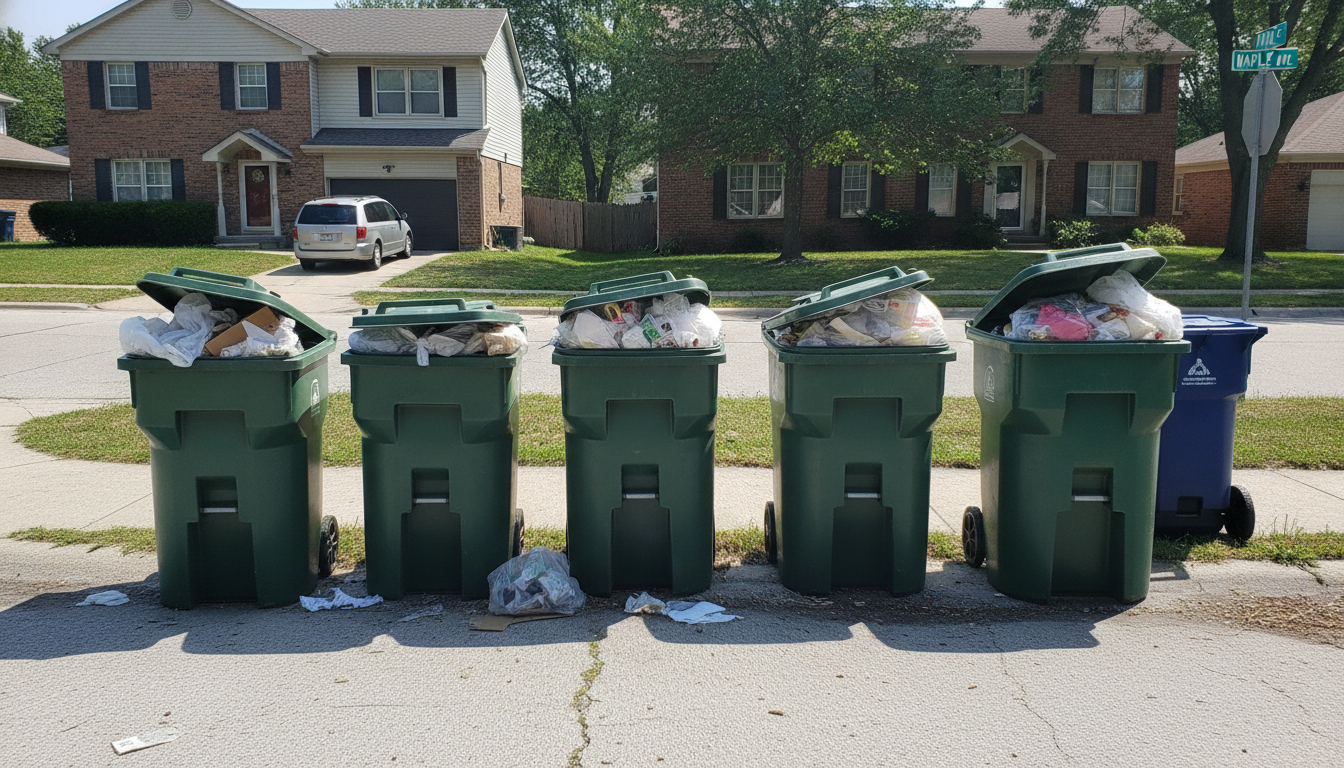
Across several communities in Metro Detroit, the sweltering summer heat has exacerbated a growing public health and logistical concern: thousands of residential trash bins remain uncollected on curbsides. The transition in waste management services, which saw Priority Waste take over operations from GFL Environmental in early July, has been marred by significant service disruptions, leaving local officials and residents searching for answers.
The issue spans across multiple counties, including Wayne, Oakland, and Macomb, where neighborhoods have reported missed pickups for two weeks or more. While the company has cited fleet maintenance issues and the complexity of the transition as primary factors, the explanation provides little comfort to those dealing with the stench and sanitation risks of decomposing waste in residential driveways.
The Transition Conflict and Fleet Integrity
According to official statements from Priority Waste, the company acquired approximately 75 municipal contracts from GFL Environmental, a move intended to streamline local services. However, the handover revealed a critical infrastructure deficit. Priority Waste leadership reported that a substantial portion of the fleet inherited from the previous provider was in a state of disrepair, with hundreds of trucks deemed unsafe or mechanically unfit for daily routes.
In a report by the Detroit Free Press, it was noted that the sudden influx of maintenance requirements overwhelmed the initial transition schedule. Priority Waste has since deployed its own fleet and technology-tracking systems, but the sheer volume of the backlog has created a bottleneck that the company is still struggling to clear. Local officials in Macomb Township and Rochester Hills have been particularly vocal, demanding immediate remediation and transparency regarding the timeline for service restoration.
Impact on Metro Detroit Residents
For residents, the delay is more than a minor inconvenience; it is a quality-of-life issue that affects the safety and aesthetics of their neighborhoods. In densely populated areas of Detroit and its surrounding suburbs, uncollected waste attracts vermin and creates hazardous conditions for pedestrians and pets. The 90-degree temperatures characteristic of Michigan’s mid-summer climate have accelerated the decomposition process, leading to pervasive odors that prevent families from utilizing outdoor spaces.
“The smell is the first thing you notice when you open the door,” said one resident in a local community forum. “It’s been ten days, and every day we are told ‘tomorrow,’ but tomorrow never comes. We are paying for a service that isn’t being delivered.” This sentiment is echoed across digital platforms like Nextdoor and Facebook, where community members have begun organizing to pressure city councils for rebates or contract terminations.
For more on how local infrastructure impacts neighborhood quality, see our previous coverage on Detroit neighborhood infrastructure improvements.
Municipal Responses and Accountability
Municipal leaders are caught between the provider’s logistical hurdles and their constituents’ demands. Several township supervisors have issued formal warnings to Priority Waste, citing breach of contract clauses. According to the City of Detroit’s Department of Public Works, while the city itself utilizes multiple contractors, the ripple effect of regional delays often impacts the broader logistics chain, including the availability of landfill technicians and transfer station hours.
Some communities have considered fines. In Macomb Township, officials have discussed the possibility of assessing daily penalties for every route that remains incomplete after a 24-hour grace period. This financial pressure is intended to force the contractor to prioritize local routes, though Priority Waste maintains that they are working 24/7 to resolve the backlog. The company has recently announced the hiring of additional temporary drivers and the acquisition of new garbage trucks to bolster their operational capacity.
Background and Data: The Scale of Metro Detroit Waste Management
The waste management sector in Metro Detroit is a multi-million dollar industry that serves millions of households. Data from the U.S. Census Bureau and regional planning agencies indicate that the Metro Detroit area produces thousands of tons of residential waste weekly. When a single provider controls a significant market share, any operational failure has a disproportionate impact on the entire region’s sanitation ecosystem.
Historically, trash pickup in the region has been stable, but the recent consolidation of companies has led to fewer competitors, leaving municipalities with limited options when a provider fails to meet expectations. This lack of redundancy in the local service market is a topic of concern for urban planners who advocate for more resilient Detroit transportation and service infrastructure.
What Happens Next
Priority Waste has set a goal to have all backlogged routes caught up within the next two weeks. The company is currently implementing a new GPS-based tracking system that allows residents to see the real-time location of trucks, though the rollout of this technology has also faced minor technical glitches. Residents are encouraged to leave their bins at the curb until they are emptied, as the company is utilizing “recovery crews” that operate outside of standard collection windows, including weekends.
In the long term, this crisis may trigger a re-evaluation of how Metro Detroit municipalities structure their waste management contracts. There is growing support for shorter-term agreements with stricter performance benchmarks and heavier financial penalties for service interruptions. For now, residents remain on high alert, waiting for the sound of a garbage truck to signal a return to normalcy in their neighborhoods.