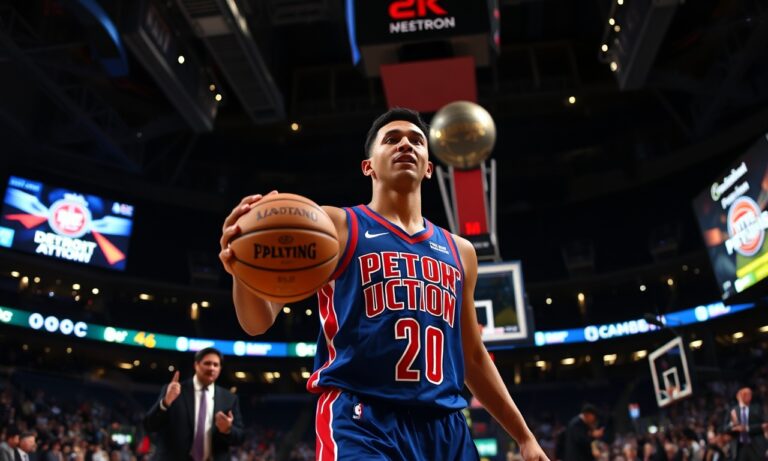
The Detroit Pistons’ latest roster adjustment—centered on guard Isaiah Joe—has brought a familiar question from fans and analysts: how much the team owes in the wake of the trade. Beyond the box score intrigue, the answer sits in contract structure, trade salary mechanics, and the timing of payments across the NBA season.
For Detroit residents following NBA offseason moves with an eye on financial commitment, the issue isn’t just whether Joe can help on the court. It’s also how the transaction reshapes the Pistons’ salary obligations and flexibility as they plan for 2025–26.
Detroit Pistons, Isaiah Joe trade details: what “owed” usually means
When people ask how much do they owe after a player trade, they’re typically referring to one (or more) of these items:
- Remaining salary on the traded player’s contract for the current season.
- Any incoming guarantees or partial-year commitments tied to the player’s contract at the time of the trade.
- Financial effects on the Pistons’ salary structure, such as how the transaction impacts cap/tax positioning under the NBA’s collective bargaining agreement.
In practice, the public record for a trade often clarifies what team is responsible for paying the player during the remainder of that season. It may also indicate how much Detroit took on as part of the exchange—either in total dollar terms or by referencing the structure of the deal.
But the exact “owed” figure can be easy to misinterpret if readers focus on headlines rather than the contract framework. The NBA uses multi-year salary schedules and guarantees that run through league pay systems, meaning the amount “owed” today is not always the same as the full long-term number fans see on static contract summaries.
What the Pistons contract situation suggests about Isaiah Joe
To understand the Pistons’ player contract obligations tied to Isaiah Joe, it helps to look at how the NBA treats traded salaries and how teams track those commitments. For readers trying to translate the trade into a dollar figure, the most reliable starting points tend to be league-standard reporting and official transaction logs, which compile the remaining cap/salary details at the time of the move.
According to NBA transaction reporting compiled by Basketball-Reference, salary and contract data reflect the season-by-season amounts associated with player agreements and subsequent team changes. That same sort of contract accounting is how reporters typically confirm what portion of a traded salary a new team is responsible for.
Meanwhile, the NBA’s own collective bargaining rules and salary-cap framework—described publicly by the league and summarized by leading basketball business outlets—explain why “how much owed” is often reported in cap terms rather than simple payroll language. As NBA communications and widely published legal summaries note, trades interact with cap calculations, exceptions, and timing rules that govern roster building.
Put simply: the Pistons’ obligation to Joe is tied to the contract dollars Detroit assumed as part of the trade. The remaining season salary is typically the figure fans mean when they say “owed,” but the deeper story involves whether that salary is guaranteed, how it’s scheduled, and what it means for future roster moves.
Impact on Detroit residents: why NBA money matters locally
Though the direct paycheck of an NBA player doesn’t flow into Detroit’s neighborhood budgets, the way the team allocates and finances roster talent can still have local impact—especially for residents watching how Detroit’s sports ecosystem operates.
Sports franchises are major anchors for local tourism and spending around game nights, and Detroit’s wider entertainment economy depends on teams sustaining competitive seasons that keep fans coming to venues. When teams make moves that improve on-court performance—or manage costs to preserve flexibility—those decisions can influence ticket demand, media attention, and local event activity.
As a reminder of the broader economic landscape, data from the U.S. Bureau of Labor Statistics shows that employment tied to leisure and hospitality can fluctuate with consumer spending patterns. A stable, well-performing sports product can support the rhythm of those spending cycles, especially on busy event weeks.
For Detroit residents, the most immediate “local impact” may be intangible: how quickly the rebuild feels tangible on the floor. But there’s also a practical layer. NBA roster decisions drive the team’s brand and visibility across Southeast Michigan, including offseason programming, youth basketball activities, and community partnerships that often align with team performance and organizational stability.
Background & data: interpreting trade obligations correctly
The confusion around how much owed often stems from the way sports fans read contract numbers. A player’s public contract listing might show total value over multiple seasons, while a midseason trade changes which team is paying the player going forward.
To interpret the Pistons’ obligation accurately, readers should focus on:
- The season-to-date and remaining portion of the player’s salary at the time of the trade.
- Guarantee status for the remaining money (if information is publicly available through standard contract reporting).
- Whether Detroit received offsets through the trade’s salary matching, which often affects the net amount Detroit assumes.
Public reporting systems generally track each transaction with updated team assignments and associated contract figures. In addition, reports from major sports business desks and beat writers typically translate cap mechanics into understandable narrative terms for fans.
For Detroit’s purposes, the bottom line is that Joe’s contract dollars don’t vanish because the roster changed. They shift to the team that now employs him, and that’s what “owed” usually means in trade conversations.
What happens next for Detroit and Isaiah Joe
After a trade, the on-court question is whether Joe fits Detroit’s offensive schemes and defensive matchups—particularly if the Pistons are chasing lineup consistency while developing younger talent. But the front-office question remains how the transaction affects the team’s options through the rest of the offseason and the season.
As teams monitor contract commitments and salary planning, the Pistons’ next steps typically include:
- Evaluating roster cohesion in training camp and early regular season games.
- Watching availability of additional moves that could be influenced by salary structure.
- Clarifying any further changes that may come if Detroit decides to swing for additional veteran depth or prioritize youth development.
For fans tracking Detroit Pistons, Isaiah Joe and the wider picture of NBA offseason moves, the most important takeaway is that the trade’s financial meaning is anchored in the contract dollars Detroit assumed—not just the player headline.
Local lens: rebuilding in Detroit is about timing
Detroit has seen enough sports cycles to know that rebuild timelines aren’t only about talent. They’re also about sequencing: when to spend, when to create flexibility, and when to commit to players whose contracts align with long-term plans.
In that context, understanding how much the Pistons owe after acquiring Isaiah Joe is less about curiosity and more about translating NBA business into the lived experience of fans—how quickly the team can add pieces, how long certain players remain part of the plan, and what Detroit’s basketball future looks like from season to season.
As new information becomes available through standard league transaction reporting and contract updates, the clearest path for fans to confirm the trade details remains the same: official/standard transaction logs and updated contract records that show the remaining salary Detroit is responsible for.